|
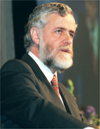
Eduardo Aninat
Biography
Speeches
Standards and Codes
Free Email Notification
Receive emails when we post new
items of interest to you.
Subscribe or
Modify your profile

|
|
|
|
Integrating All Countries into the
Increasingly
Globalized Economy
Eduardo Aninat
Deputy Managing Director, International Monetary Fund
At the High-Level Meeting of the UN Economic and Social Council
New York, July 5, 2000
Español
Deutsch
Français
Mr. Chairman, ladies and gentlemen, I am honored to participate in this year's high-level
meeting of ECOSOC, but at the same time, I would like to convey the regrets of our new
Managing Director, Horst Köhler, who was unable to attend. As you know, he is
undertaking intensive travel to a number of countries in various regions as part of his effort to
learn from the membership their views on the role of the IMF, and this week, he has begun his
travels in Africa.
Your theme—the role of information technology in a knowledge-based economy, or in
shorthand, bridging the "digital divide"—raises the critical issue of what I would
call "connectivity." What I am referring to is not the fact that some people, or
sections of society, are connected to the Internet and the latest in high-tech communications,
while others are not. Rather, it is the fact that some people, or sections of the global community,
are connected to the global economy, while others are not. Some are partaking in the immense
opportunities of globalization—higher investment, job creation, and growth—while
others are not.
Not surprisingly, the "disconnected" also happen to be the world's poor. Those
who do not share the benefits of global growth, because they lack access to basic social services,
essential infrastructure, and income and employment opportunities—let alone access to the
Web. These days, being disconnected bears an ever higher cost; a cost of isolation and
marginalization, at a time when there is already a growing gap between the rich and poor within
and among nations.
So what can the UN family—and in particular, the IMF—do to help integrate all
countries into our increasingly globalized economy? I would like to explore this question in my
remarks today, but first a word on the world economic outlook, as it will largely shape our room
for maneuver.
A brighter world economic outlook
The encouraging news is that the global economy has recovered remarkably quickly from the
financial crises of 1997–98. After two years of slowdown, world growth should be around
4½ percent this year—the highest since 1988—and continue at close to this pace
next year. The global slowdown in the wake of these crises now looks to have been relatively
brief. Most of the emerging market countries that experienced crises are enjoying impressive
growth, reflecting in part resolute action by policymakers to stick to adjustment and reform
efforts, although much remains to be done. Other developing countries, as well as a number of
economies in transition, are also contributing to the pickup.
Even so, we cannot afford to be complacent. Three key concerns come to mind: (1) Are we
doing enough to ensure a gradual rebalancing of global growth, and thus external imbalances,
among the principal currency areas—the United States, where growth remains strong; Japan,
where a fragile recovery from recession is under way; and Europe, where a recovery from a
period of weakness is on track? (2) Are the values of the key currencies in line with their
medium-term fundamentals, notably the euro against the dollar? and (3) Are we doing enough to
ensure that any needed adjustments in financial markets occur in as orderly a manner as
possible?
Thus, it is more urgent than ever that we secure a smooth transition to a more balanced
pattern of global growth. In the United States, this means containing excess demand pressures,
being careful not to unduly loosen the fiscal stance. In Japan and Europe, this means tackling
structural rigidities, including intelligent deregulation of key sectors. In Latin America, this means
continuing to reduce fiscal deficits to build investor confidence and contain the risks associated
with high external financing requirements. In Asia, this means persevering with bank and
corporate restructuring. In Africa, this means stepping up economic and institutional reforms to
broaden the economic base and create a welcoming atmosphere for the private sector, the future
engine of growth.
A safer global economic environment
What all this adds up to is a world economy that is basically in good shape, giving us a
much-needed opportunity to step up our efforts to spread the benefits of globalization to the
disconnected. Globalization, of course, is not just a recent phenomenon. But what is different
about the current episode is the enormous impact that new information technologies are having on
market integration, efficiency, and industrial organization—along with its implications for
human capital development.
How do these new technologies help? They boost efficiency and growth by reducing
information and transaction costs. Lowering these costs tends to lower barriers to entry, increase
competition, and contributes to higher investment. Higher market efficiency, and the structural
change in the ways businesses operate, represent a positive supply shock that could lead to a
quantum shift in overall productivity.
Advances in information processing, financial innovation, and financial liberalization have also
unleashed a dramatic expansion in domestic and international financial flows, even after
accounting for recent crises. Overall, capital flows have become more important than trade flows
in determining the short-term evolution of exchange rates (worldwide, less than 10 percent of
foreign exchange transactions are trade-related).
However, the major drawback is that many of these flows have been highly volatile. Until a
few years ago, when crises erupted, they were mainly rooted in macroeconomic disequilibria and
associated with current account imbalances. But now crises increasingly originate in the capital
account and are associated with weaknesses in the domestic financial sectors. Indeed, in all of the
recent financial crises, weaknesses in banking supervision emerged. These were exacerbated, in
some cases, by the liberalization of short-term flows before longer-term ones. Not helping
matters was the absence of complete or timely information on the extent of foreign currency
exposures—especially short-term debt—making it difficult to detect emerging
vulnerabilities and design appropriate policy responses.
So what can the UN family, and in particular the IMF, do to create a safer global economic
environment? Policymakers in developed and developing countries should now tackle the critical
structural adjustments that in too many cases have been delayed, awaiting better times. In support
of this, the IMF should strengthen its focus on its core activities—macroeconomic stability;
monetary, fiscal, and exchange rate policies; and financial sector issues—and step up its
work with its development partners in other areas, mainly the social realm.
In the past year, the IMF, working closely with the international community, has continued to
explore ways to better prevent crises and better manage those that inevitably do
occur—what is often referred to as strengthening the international financial architecture. We
have also continued to explore ways to make the institution itself more focused and more
effective, seriously weighing the many reform recommendations being made by governments and
task forces. We are listening, and we are carefully assessing the possible avenues of reform.
In many areas, much progress has been made, although a good deal of the work is still
experimental or in its pilot stages. These include:
- promoting transparency and accountability;
- developing internationally recognized standards and codes;
- strengthening domestic financial systems;
- increasing the capacity to assess countries' external vulnerability; and
- carrying forward the debate over the choice of exchange rate regimes.
Let me elaborate on a few of these. First, the IMF has been beefing up its surveillance of
national economic developments and policies, especially financial system stability
issues. This is to help ensure the creation and maintenance of strong and well-regulated
financial systems. One initiative—a particularly innovative one—is the Financial Sector
Assessment Program, begun last year as a pilot project with the World Bank. It is aimed at
identifying strengths and vulnerabilities, assessing the observance of financial sector standards,
and helping countries in identifying and sequencing necessary financial sector reforms. It draws
on a large and expanding number of cooperating institutions, such as central banks, supervisory
agencies, and standard-setting bodies. This has greatly helped the international acceptance of the
peer-review concept embedded in the whole exercise. The feedback so far is quite favorable,
prompting us recently to increase the size of the program to 36 countries from the original
12.
Second, countries and market participants need guideposts for health checks of financial
systems and economies in general, and that is why the international community has been working
on setting better international standards and codes of good practice. The IMF
now has standards for data dissemination, and codes of good practice for the transparency of
fiscal, monetary, and financial policies. In fact, the data standards were recently strengthened to
better pinpoint international reserves, and public and private external debt. Other agencies have
developed, or are developing standards, for banking supervision and regulation, securities and
insurance regulation, payment and settlement systems, accounting and auditing, corporate
governance, and insolvency regimes. The IMF is also contributing to these efforts.
Third, the IMF has been releasing more information than ever as part of its commitment to
greater transparency and accountability, both for itself and its member countries.
A look at our Website, www.imf.org , should convince any
skeptics. We firmly believe that timely and detailed information can prevent the accumulation of
problems by forcing governments to take appropriate measures at the right time. Of course, this
only works if policymakers and the public take the information seriously and use it in their
analyses. We also firmly believe that better information and standards should benefit—and
help integrate—the poor countries as well as the rich ones.
Here, the theme of your conference ties in strongly, for the revolution in information
technology has revolutionized communications. The challenge now is to make sense of all the
information that is out there. Until about 15 years ago, the IMF was the major, if not the only
source of information on the economies of very many countries. It was our job to develop
information, store large amounts of it, and make it compatible through time and across countries.
Although we still play this role for some countries, increasingly our activities have shifted toward
setting standards and codes for the information that countries themselves gather. This includes
amassing timely, comprehensive information in a common format from countries worldwide.
Turning to other areas of the reform agenda, however, the bulk of our work is still ahead.
This pertains in particular to the role of the private sector in preventing and resolving crises, but
even here, some principles are emerging. The Managing Director, Horst Köhler, has made
it clear that he favors "constructive engagement"—cooperation among the
borrowing countries, the private sector, and the official international sector, in good times as well
as in crises. As one part of this strategy, he envisages establishing a Capital Markets Consultative
Group, with representatives of the private financial sector.
A sharpened focus on poverty reduction
What does this push for a safer global economic environment mean for the world's poor? It
means that the international community is trying to ensure that the benefits of globalization are
shared by all. It means that we are striving for inclusive growth, not just growth for the
elite. It means that the IMF, working closely with the World Bank, the UN, and other partners,
will continue to place a high priority on poverty reduction. Here I would like to emphasize that
poverty is a multidimensional phenomenon, encompassing not only a lack of adequate income, but
also a lack of access to basic social services and general social exclusion.
We now better understand the complex links between growth and poverty. We had long
known that sound macroeconomic policies favor growth. We had also long known that sound
macroeconomic policies and growth-enhancing structural reforms favor the poor, since growth is
the single most important source of poverty reduction—a point I cannot stress
enough—as well as a key source of sustained financing for targeted social outlays.
But there now is greater acceptance that causation also runs in the other direction. Poverty
reduction and social equity can help policies such as investing in primary education and basic
health that boost the potential of the poor to contribute to output, helping to speed up economic
growth itself. Without poverty reduction, it is difficult to sustain sound macro policies and
structural reforms long enough to eradicate inflation and increase the growth rate—there is
unlikely to be the political support to persevere. Thus, what is needed is a virtuous cycle of
poverty alleviation, sustained growth, higher saving and investment, and rising productivity.
This does not happen overnight. But it can happen in a reasonably limited period of time. If I
might be permitted to offer an example from my own country: in about a decade, poverty in Chile
has fallen drastically, from 45 percent of the population in 1987 to 23 percent in 1998. This was
achieved in an environment of very strong economic growth and gains in price
stability—which led to real wage growth of more than 3 percent per year and the rapid
expansion of employment. Social outlays were increased and carefully targeted, and protected
and inefficient sectors opened up to competition and mobility.
What can we hope to achieve globally? At the UN summit in 1995 in Copenhagen, countries
formally pledged to reduce by half the proportion of people living in extreme poverty by 2015.
This is an ambitious goal, and important progress has been made. However, while some regions,
such as East Asia and the Pacific are likely to meet these targets, others—including Africa
and large segments of Latin America and the Caribbean—are far behind.
Our best hope now lies with a new approach to poverty reduction endorsed by the
international community last September, as it builds on good practices in countries and donor
agencies. The main innovation is deriving programs from comprehensive strategies for poverty
reduction drawn up by individual governments, with the involvement of a broad range of
stakeholders, including civil society and the donor community. The emphasis is on ownership,
transparency, good governance, and accountability.
Of course, this is a collaborative effort, with the countries concerned in the driving
seat, and each partner playing a vital but specialized role. The World Bank, along with the
regional development banks and UN agencies, takes the lead on discussions with authorities on
the design of policies aimed at poverty reduction—including social safety nets to protect the
poor and vulnerable. The IMF does its part by supporting economic policies that provide an
environment conducive for sustainable, inclusive growth. Our key instrument is our new
concessional lending facility, the Poverty Reduction and Growth Facility, which replaced
ESAF.
Stepped up debt relief
Another important component of this new approach is an enhanced debt initiative, agreed by
the international community last September, to give the world's heavily indebted poor countries
deeper, faster, and broader debt relief. We are now talking about 36 countries, most of which are
in Africa, instead of the original 29. It should result in a reduction of their external debt burdens,
in aggregate, by nearly two thirds.
Why isn't the debt relief process going faster? Is it a case of the IMF and World Bank
insisting on rigid or unreasonable conditions? Let us take a look at some of the early cases where
we are being held back from going faster. The reasons have been armed conflict, civil unrest,
governance issues, and major slippages in economic, social, and structural programs—not
delays, I would submit, due to "rigid or unreasonable conditions." For the initiative
can only contribute to poverty reduction and growth if conditions are in place to use the
additional resources effectively and to support the country's development agenda.
The IMF and World Bank are committed to do everything we can to speed up the process.
Indeed, we have recently established a Joint Implementation Committee to oversee the timely and
effective delivery of these programs. However, more generous debt relief brings with it higher
financing requirements. For multilateral creditors, this will come to around $14 billion in 1999 net
present value terms. Not all of the financing is yet in place; in fact, there is still a financing
gap—excluding the IMF and the World Bank—of around $5.5 billion. I cannot stress
strongly enough the urgency of developed countries fulfilling their stated commitments.
* * * *
In closing, let us join together and seize the immense opportunities afforded to us by the more
stable economic environment and current economic calm. We must now tackle head-on the more
intractable areas of reform that are turning out to be so critical in an era of globalized
markets—and yes, globalization is here to stay. Ultimately, our goal is higher living
standards, the elimination of poverty, and shared global prosperity--and to accomplish that, we
must ensure that all nations are fully connected to the global economy. We have not a moment to
waste!
IMF EXTERNAL RELATIONS DEPARTMENT
|