

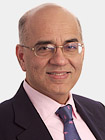

Transcript of a Press Briefing by Masood Ahmed
Director, External Relations DepartmentInternational Monetary Fund
Washington, DC, Thursday, April 26, 2007
| View a Webcast of the press briefing |
MR. AHMED: Good morning. I am Masood Ahmed, and I would like to welcome you to our regular press briefing embargoed until 11:00 Washington time which is 15:00 GMT.
As you know, this is our first briefing after the Spring Meetings, so let me start off by thanking you all for your interest in covering the meetings themselves. From our point of view, the meetings concluded with broad support of the membership represented in the IMFC for the Fund's reform agenda and in particular for the work we have been doing on multilateral consultations of global imbalances.
Before going to your questions, let me just give you a couple of public engagements that we have coming up for our management. To start with, the Managing Director will be participating tomorrow in the 10th MIT Sloan Latin America Conference in Boston where he will be speaking, and on May the 2nd, this next Wednesday, the Managing Director will participate in the 37th Washington Conference of the Council of the Americas. On the same day, he will be attending also an award ceremony of the Congressional Hispanic Leadership Institute.
All these events are open to the press, and I remember you contact the organizers for additional information and registration. The speeches that he gives at these events will be posted on our web site.
Let me also mention that next week, our Deputy Managing Director, Murilo Portugal, will be traveling to Tanzania, Burundi and Rwanda where he will have meetings with authorities, with legislators and with a range of people from civil society. This will be his first trip to the region since his appointment in December.
I gather we issued a press release on this yesterday with details on the trip. Again, if you have questions about press opportunities there, please contact my colleagues in Media Relations.
I will take any questions now. But before I do, let me also encourage those of you, and I see there is quite a few who are, participating through the Media Briefing Center to get in your questions early, so we can get to them during the course of the briefing.
I will take questions now.
QUESTIONER: I had seen a news report yesterday about the IMF stepping up their surveillance of the yen carry trade. I was wondering if you had any further information on that and what concerns the Fund has about the current practice.
MR. AHMED: Well, I think in terms of the overall, that particular news report I haven't seen, so I am not going to comment on that.
But in terms of the stepping up of our surveillance, we have, as you know, a whole ongoing program to step up the surveillance work of the Fund, and it is part of that that does focus indeed on the work we are doing on looking at surveillance of foreign exchange. Part of it is also looking at issues of spillovers. Part of it is a question of multilateral consultations. So on a variety of fronts, we have got surveillance work underway and underpinning it all is, of course, the forthcoming review or the review that is now underway of the 1977 Decision.
Now on the specific question of what our views are on the yen carry trade, I refer you to the comments that were made by the Managing Director in his speech about I think four weeks ago where he set out our views on it. We have moved any further on it since then.
QUESTIONER: About the euro that keeps going up pretty intensely and, of course, the dollar going down, has the IMF any further concern for the global balances or imbalances coming from this if the euro keeps going up?
MR. AHMED: I don't like commenting on bilateral movements in exchange rates or exchange rate movements in that sense, but I think the view that we have taken on the euro more broadly and it has been repeated on a number of occasions is that we think that on a multilateral real effective basis, the euro remains within a broad range of being fairly valued. But I don't want to get into bilateral movements of exchange rates.
QUESTIONER: Can I follow up on that one? What do you see as the knock-on effect of a stronger euro? I mean where do you see that impacting? Are there potential negatives or positives for this?
MR. AHMED: I am not sure I have an answer for you now which is beyond what we have been saying, but perhaps I can look at that and then come back to you.
QUESTIONER: You were speaking of the success of the meetings from your point of view. With your colleague across the street, it was a little more dominated by Mr. Wolfowitz. I was wondering from the Fund's point of view whether or not there are concerns as critics are saying the World Bank's credibility is in jeopardy, that since the IMF and the Bank are so often linked together that the IMF could be impacted in some way by a potential lowered opinion of the World Bank. Do you have any comment on that?
MR. AHMED: I think as far as the question of the Bank is concerned, the only comment I have is what the Managing Director has already said on it which is that the President of the Bank has made public a number of statements. The World Bank Board has also released documents and is in the process of looking at it and that we have every confidence that that institution will find a satisfactory resolution to the issue.
In terms of the Fund's own work, I think what we are focused on is making sure that we carry out and follow through on the program of modernizing the business of the Fund in a way that responds to the needs of the membership going forward and that we also do so in a way that looks at the governance of the Fund in terms of the rebalancing of quotas and votes, and part of this is to ensure that we not only have an effective institution but one that is seen by all parts of the membership as representative. I think that is what our focus is.
QUESTIONER: Masood, what do you expect for the next six months? A new work program? Where do you see focuses in the lead-up to the Annual Meetings and so on?
MR. AHMED: So, first of all, just in terms of process and then I will give you some substance on it.
In terms of process, we are now going through what we normally do after each meeting which is to put together a specific work program for the next six months, and that will lay out the dates of papers that are going to be done and when they are going to come to the Board and what we expect to complete before the Annual Meetings. That work program discussion will happen in the Board in the coming weeks, and we will then release it as soon as the Board discussion is over.
So, in early June, you should have a paper that will give you the details of the work program going forward through the Annual Meetings which, just as a reminder this year, of course, is a little bit later because they are, in fact, around the second half of October. So that will take you through that.
Now on the substance in terms of the direction we are following and which will then be detailed more in that work program document, well, the first one is to follow through on the discussions we have had on surveillance. In particular, over the coming months, we hope to move considerably forward and hopefully bring to a closure, the review of the 1977 Decision.
Also in the case of surveillance, as you know, we have been asked to look at the issue of financial globalization and whether that might lend itself to a second multilateral consultation. So there will be some further work on taking that idea forward. I can't give you today exactly where it is going to get to by the Annual Meetings.
Moving outside of surveillance now, the second area will be on quotas and voice, and again on quotas and voice, our aim remains to try and get to an agreement on the new formula that would guide the second round of increases by the Annual Meetings. Remember, our ultimate objective here is that by the Annual Meetings of 2008 to have all of the two-year reform program elements on governance in place. Just working back from that, it would be useful by this Annual Meeting to have got to progress on and hopefully agreement on the quota formula which we have said we would try to do either by this October or by next March. So we are going to keep pushing on that.
Third, on income, as you know, we have been asked, the Managing Director has been asked by the IMFC to report back with a proposal on income, a new income model, and that is something that we will be working on in the coming months. In that context, as you may know, the Board yesterday looked at the budget for next year and then there was also discussion about income. So there will be a follow-up process on that.
Finally, on votes, the work we are doing on a new instrument to support emerging markets as well as the work we are doing on low income countries and, in particular in that context, taking forward some of the recommendations of the Milan Committee on Bank-Fund Collaboration. Both of these are areas where we hope to advance in a variety of ways over the next few months, including in the case of the low income countries through a number of papers that are planned for the Board that will spell out in greater detail the Fund's role in different dimensions of work in low income countries.
Again, as I said, all of this will be spelled out in greater detail in the work program document that will go to the Board, but this sort of gives you the broad outlines that we will be working on for the next few months.
QUESTIONER: A quick follow-up to that, as far as on income, so we expect by the Annual Meetings the Managing Director will have his report ready to present to the IMFC following the eminent persons' reports that came out a couple months ago?
MR. AHMED: I think at this stage what I am going to say to you is that we have been asked to report back on this issue, and he is now going to take forward that work. He will be consulting broadly as he has been, and he has got inputs obviously now from the informal discussions we have had at the Board. He has got inputs from ministers in discussions they have had.
What will be the degree of formality of a proposal that we have by the time of the Annual Meetings, it is hard for me to say today, but again in the comings weeks, I think that will become a little bit clearer and I will come back to that.
QUESTIONER: Just a clarification on the 1977 Decision, so the staff submits a report. That is the next move, right?
MR. AHMED: I think the next move on it is that we will begin to now put together a proposal that will then have to be discussed in one or two goes, but our aim is to have a revised version of the decision that commands broad support across the membership. That is what we are working to achieve and that is what we are hopeful that we will, in fact, achieve in the coming months and hopefully before the annual meetings.
QUESTIONER: Going back to the euro and the European Central Bank, do you still see—there was commenting recently referring to documents—as a positive maneuver in this new context of the euro keep going up, et cetera, a little increase in the interest rate that is predicted from the European Central Bank?
MR. AHMED: I think the view that we have taken on the monetary policy in the euro area is that the stance the ECB has taken of a gradual withdrawal of stimulus is the right one and remains the right one, and we haven't changed our view on it.
QUESTIONER: Just coming back to this Bank-Fund collaboration issue, all the uncertainty and the turmoil going on in the Bank, does that at all affect that work that is going on between the Bank and the Fund on how better to collaborate or better to work together?
MR. AHMED: We continue to have collaborative, effective relations with the Bank at all levels. Our teams are working together in the field. Our teams are working together here at headquarters. We will continue to work together in the coming months, and one of the elements of that will be to take forward the recommendations of the Milan report and see how best we can implement them insofar as those recommendations relate to joint work.
Some of those recommendations apply simply to what the Fund should be doing or what the Bank should be doing which obviously each institution will take forward in their own way. But some of them do imply a common or collaborative response, and in those areas, I think we will just continue to take that forward.
No more questions? None from the Media Briefing Center?
Short and sweet, thank you very much.
See you in two weeks time, same place, same time, same rules.
IMF EXTERNAL RELATIONS DEPARTMENT
| Public Affairs | Media Relations | |||
|---|---|---|---|---|
| E-mail: | publicaffairs@imf.org | E-mail: | media@imf.org | |
| Fax: | 202-623-6220 | Phone: | 202-623-7100 | |