
Capacity Development
The IMF helps its members by providing technical assistance, training, and knowledge-sharing to improve their economic policies and make their institutions more effective.
Strengthening the capacity of institutions—including central banks, finance ministries, revenue administrations, statistical agencies, and financial sector supervisory agencies—results in more effective policies and greater economic stability and growth. The IMF, along with its partners, works with member countries to upgrade their economic policies and strengthen institutions by providing demand-driven, tailored hands-on technical assistance and training focused on issues that are critical to economic stability and growth. IMF capacity development (CD) also includes a suite of diagnostic tools and publications, and peer-learning opportunities.
Every five years, the IMF undertakes a comprehensive review of its CD strategy. The 2024 CD Strategy Review (CDSR) outlined the vision for Fund CD for building institutions and individual capacity. The CDSR reform proposals focused on making CD delivery more flexible, tailored, and better integrated with policy advice and program design. Over the medium term, priorities include further modernizing CD delivery by leveraging new technologies, enhancing the effectiveness of field presence through the IMF’s network of regional technical assistance and training centers, and reinforcing coordination with other development partners to improve traction, efficiency, and funding of CD. The ongoing Comprehensive Surveillance Review, which will identify the Fund’s surveillance priorities, will provide an opportunity to further advance CD-surveillance integration.
CD focuses on the IMF’s core areas of expertise, such as public finances, financial sector stability, central bank operations, macroeconomic frameworks, and economic statistics. It helps countries design better macroeconomic policies, mobilize revenue, spend better, produce better data for economic decisions, and strengthen monetary and financial stability. The IMF is uniquely positioned to support its membership in these areas, with its global reach and world-class institutional experience. All IMF members benefit from CD, but priority is given to low-income and fragile and conflict-affected countries, as well as members with IMF programs.
Figure 2.1
Phase I-V Budgets
(millions of US dollars)
Source: Prepared by the IMF Institute for Capacity Development.
At the request of country authorities, IMF country teams and technical experts develop and implement an integrated work plan tailored to member countries’ needs and absorptive capacity.. In addition, a variety of publications provide technical information and cross-country analyses useful to national authorities. The IMF works with member countries through a global network of 17 regional capacity development centers (RCDCs), in-country placements of long-term resident advisors, and short-term visits by IMF staff and experts (in person, remotely, or a combination of both—that is, through a hybrid model), classroom training, and free online courses. Donor partners of the IMF and RCDC member countries fund about two-thirds of direct spending on CD.
To help maximize the impact of IMF CD on members’ ability to conduct effective macroeconomic management and boost their institutional resilience, the IMF regularly reviews its CD strategy. The 2024 CD Strategy Review outlined the vision for Fund CD in terms of building institutions and individual capacity. The strategic vision for IMF CD is informed by its comparative advantage and the IMF’s surveillance priorities amid an evolving global CD and surveillance landscape.
The reform proposals in the review focused on making CD delivery more flexible, tailored, and better integrated with policy advice and program design. Over the medium term, priorities include further modernizing CD delivery by leveraging new technologies, enhancing the effectiveness of field presence through the IMF’s network of regional technical assistance and training centers, and reinforcing coordination with other development partners to improve traction, efficiency, and funding of CD.
Important milestones in FY 2025 included the launch of the second phase of the Data for Decisions (D4D), Fund the IMF’s main multi-partner funding vehicle for statistics training and technical assistance to developing economies, especially low- and middle-income countries as well as fragile and conflict-affected states. In this new phase, supported by current and new donor partners, the D4D Fund will expand its coverage to new areas relevant to IMF member countries, including big data and data standards. FY 2025 also marked the inauguration of the IMF Regional Office in Riyadh, which will step up the IMF support to economic policymaking in the Gulf Cooperation Council region and more broadly to the Middle East and North Africa (MENA). The regional office is an integral part of a wider capacity development partnership, put in place by the Ministry of Finance of Saudi Arabia and the IMF in August 2024— a 10-year, $279 million endeavor. In April 2025, the IMF and the Paraguayan authorities signed a letter of understanding for the establishment of a regional training program in Asunción, Paraguay.
The Middle East Regional Technical Assistance Center (METAC), a collaborative venture between the IMF, member countries, and bilateral and multilateral development partners, celebrated its 20th anniversary as a provider of providing technical assistance and training activities tailored to the needs of its 14 member countries (Box 3.1). METAC delivers capacity building, facilitates reform processes in member countries, and supports the region’s integration in the world economy. METAC’s location within the region and its close collaboration with regional organizations and other technical assistance providers facilitates closer coordination among donor partners and existing economic initiatives within the MENA region.

Egypt
Box 3.1
20 Years of Building Macroeconomic Capacity in the Middle East and North Africa
2024 marked the 20th anniversary of the Middle East Regional Technical Assistance Center (METAC), a significant milestone for IMF capacity development. Established as a collaborative effort among the IMF, member countries, and development partners, METAC has been instrumental in promoting reforms across the region and in supporting its member countries in building stronger macroeconomic institutions and implementing sound economic policies that aim to promote stability and inclusive growth across the Middle East and North Africa (MENA) region.
The idea of setting up a Middle East Regional Technical Assistance Center was proposed in October 2003 at the International Donors’ Conference for the Reconstruction of Iraq in Madrid, Spain. The original objective was to assist post-conflict countries in the MENA region in restoring macroeconomic stability and developing basic institutions for policymaking by providing targeted capacity development; eventually the center covered a broader membership including emerging market economies.
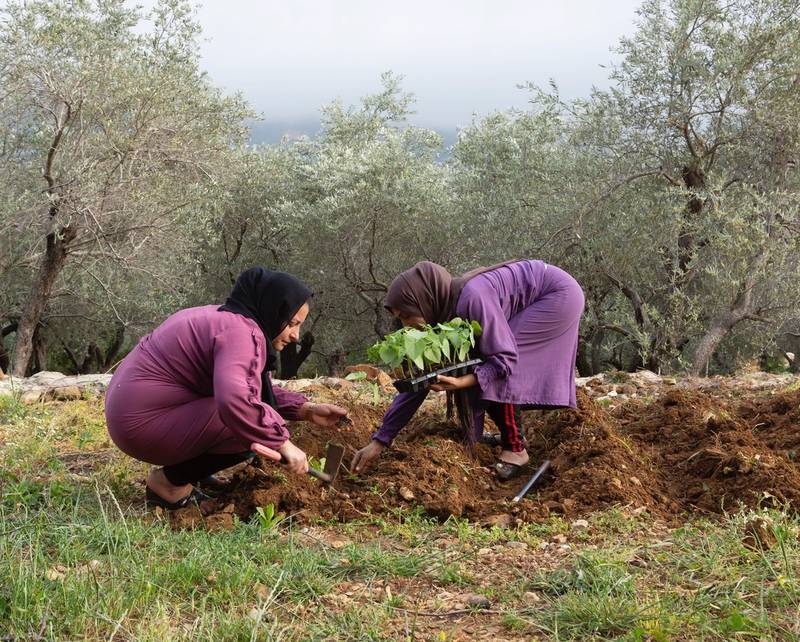
Lebanon
METAC was officially inaugurated October 25, 2004, in Beirut, Lebanon. Initially, the center served 10 members.: Afghanistan, Egypt, Iraq, Jordan, Lebanon, Libya, Sudan, Syria, West Bank and Gaza, and Yemen. Algeria, Djibouti, Morocco, and Tunisia joined METAC in 2016. Complementing METAC’s technical assistance, the IMF and Kuwait established in 2011 the Middle East Center for Economics and Finance (CEF) to provide economic training to the Arab League countries. The CEF is an IMF regional training center for the Arab League countries. METAC and the CEF are collaborating closely, with METAC experts providing hands-on training courses for country officials at the CEF in Kuwait.

Morocco
METAC’s activities are organized in funding cycles, called “program phases”. As shown on the chart, the center’s scale of operations has increased significantly. In the run-up to the current phase, the IMF committed to an ambitious expansion of its capacity development services to the MENA region. METAC’s growth was made possible by strong development partner support and a substantially increased financial contribution by the IMF itself in the context of its Fragile and Conflict-Affected States Strategy. Several new workstreams have been added to METAC’s portfolio, and the number of regional advisors managing and delivering capacity development services to member countries has almost tripled during this phase. Further growth is envisioned in the coming years, enabling METAC to better meet the large capacity development needs in the region.
The IMF online learning program continued its expansion, aligned with the recommendations of the CD strategy review, to enable ongoing delivery of CD through a range of modalities, and support the integration of CD and surveillance. In FY 2025, 17 new massive open online courses were launched—eight in English and nine in other languages—bringing the total number of course offerings for the year to 157. The program also expanded its microlearning portfolio on the IMF Institute Learning Channel, adding more than 80 new bite-size, on-demand videos designed to highlight specific topics, address knowledge gaps, and support the development of job-relevant skills. Seven new blended courses, incorporating online and in-person content, were also introduced. For the first time, Macroeconomic Policy Communication was offered as a self-contained and comprehensive course, intentionally designed in a blended format (Box 3.2).
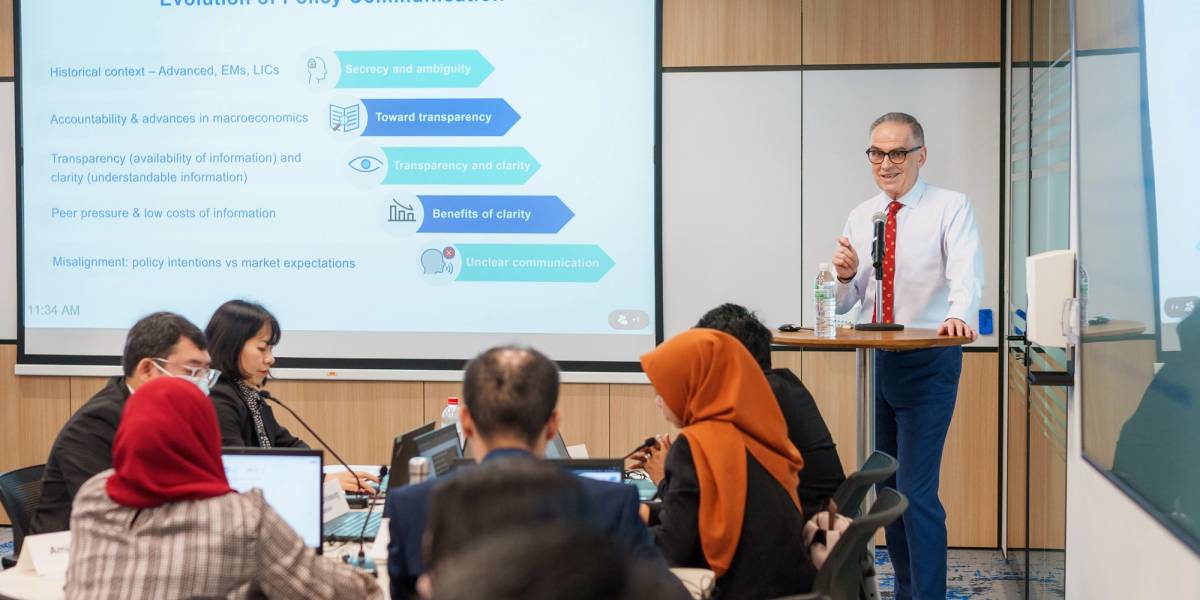
Singapore
Box 3.2
Macroeconomic Policy Communication: The IMF’s First Custom-Built Blended Course
In January 2025, the Singapore Regional Training Institute successfully delivered a blended course on Macroeconomic Policy Communication (MPC), marking a significant milestone in the IMF’s capacity development and training curriculum. For the first time, macroeconomic policy communication—a crucial aspect of macroeconomic policy—was offered as a self-contained and comprehensive course. This also marks the first time a new training course was intentionally designed in a blended format.
While face-to-face remains the cornerstone of capacity development training, rapid advances in learning sciences, instructional design, and education technology offer a remarkable opportunity to blend teaching modalities and improve outcomes. Since 2021, more than 20 blended courses delivered by the IMF have resulted in improved learning outcomes and enhanced learner satisfaction. Notably, these blended courses were all adaptations of existing in-person training.
The MPC course sets a new standard by being the first course fully crafted from the ground up in the blended learning format from its inception. The blended MPC course was developed to meet the demands of country authorities, particularly from low-income and fragile states, for tailored communication training that equips participants with skills to convey complex macroeconomic concepts clearly and effectively.
The course spanned 10 days of online self-paced learning, followed by one week of interactive in-person sessions. A total of 30 participants from 14 countries, including central banks and ministries of finance, were engaged in topics related to the principles of communication, strategies for public engagement, and impact assessment.
Figure 2.2
Key Target Audience

Source: Prepared by the IMF Institute for Capacity Development.
In-person sessions enhanced engagement, allowing participants to tackle real-world challenges through practical simulation exercises and case studies. The integration of generative AI tools further facilitated interactive learning, promoting active application of learned strategies.
The blended MPC course not only equipped participants with essential skills but also fostered a network of professionals dedicated to improving communication strategies within their institutions. This initiative exemplifies the IMF’s commitment to excellence in training, ultimately contributing to more informed and effective macroeconomic policymaking worldwide.
All courses on the online platform are available anytime, anywhere, and at no cost, which makes the program a global public good, spearheading knowledge and skills for a more sustainable and inclusive global economy.
Capacity Development in Numbers
FY2025
Figure 2.3
IMF Spending by Main Output, FY 2025¹
(percent)

Source: IMF staff calculations.
¹ Excludes central reserves. Direct country operations include only direct engagement with membership.
² Delivery only. Excludes capacity development activities related to policy, analytics, and other output areas.
Direct Capacity Development Delivery
By:
Figure 2.4
Capacity Development Delivery By Region
FY 2025 (Percent of total)
Sources: IMF, Capacity Development Management and Administration Program; and IMF staff calculations.
Training Participation
By:
Figure 2.7
Training Participation by Participant Region of Origin
FY 2025 (Number of participants)
Sources: IMF, Participant and Applicant Tracking System; and IMF staff calculations.
Note: Preliminary data. Most IMF training falls under the Institute for Capacity Development (ICD) training program, which includes training coordinated by ICD and delivered by ICD and other departments at IMF headquarters and globally at the IMF’s regional capacity development centers and in programs for country officials. Training also includes IMF online courses successfully completed by country officials. In addition, training is provided by functional departments or external partners at the regional capacity development centers outside the ICD training program.
Top 10 Partners for IMF Capacity Development
(Contributions in US dollars over the past three years, FYs 2023–25)
- Japan
- European Union
- Saudi Arabia
- Switzerland
- China
- France
- Germany
- India
- The Netherlands
- Kuwait
Note: Based on annualized average signed agreements from FY2021-2025, including support for regional capacity development centers provided directly by host countries.
Top 10 Recipients of IMF Capacity Development
(FY 2025, US dollar)
- Ukraine
- Sierra Leone
- Mauritania
- Madagascar
- Sri Lanka
- Cambodia
- The Gambia
- Uzbekistan
- Ghana
- Papua New Guinea
Source: Capacity Development Management and Administration Program and Participant and Applicant Tracking System; and IMF staff calculations.
Top 10 Recipients by Training Participation
(FY 2025, participant weeks)
- India
- Bangladesh
- Cameroon
- Philippines
- Sri Lanka
- Nigeria
- China
- Nepal
- Indonesia
- Cambodia
Sources: Preliminary data. IMF, Participant and Applicant Tracking System; and IMF staff calculations.
Note: Participant weeks = number of participants times course duration.
Table 2.4
Thematic and Country Funds for IMF Capacity Development
(As of April 30, 2025)
Table 2.5
IMF Regional Capacity Development Centers
As of April 30, 2023
United States
The IMF for a Stable Global Economic and Financial Order
The IMF supports and fosters international collaboration. It engages in initiatives to promote global economic governance, policy coordination, and financial stability. It does this by participating in major international organizations and financial standard-setting bodies, leveraging its expertise to help shape the global financial and economic landscape.
Although not a formal member of the Group of Twenty (G20), the IMF has been its trusted advisor and observer since the organization’s inception. Drawing on its core expertise, the Fund contributes to strategic macroeconomic and financial discussions led by finance ministers and central bank governors. It participates in the G20 Finance Track making regular contributions to the Framework and the International Financial Architecture Working Groups.
The Framework Working Group deals with a range of macroeconomic policy issues, including the global outlook and policies to achieve strong, sustainable, balanced, and inclusive growth; the International Financial Architecture Working Group engages with other topics central to the IMF’s mandate, including capital flows, debt vulnerabilities, global economic governance, the international monetary system, the global financial safety net, cross border payments and financial innovations.
In the context of the G20, the IMF is a member of the G20 Data Gaps Initiative whose members collaborate to address data deficiencies and improve the quality and availability of economic and financial data.
The IMF also leverages its expertise in the Group of Seven Finance Track, where it provides analytical support, policy recommendations, and updates on global macroeconomic and financial developments, including country cases.
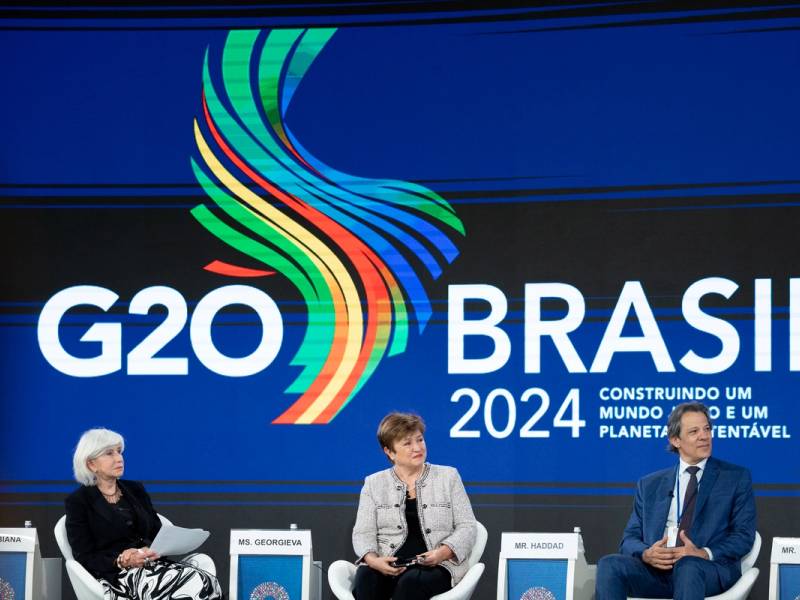
French economist Laurence Tubiana, Managing Director Kristalina Georgieva, and Brazilian Finance Minister Fernando Haddad at the G20 Event during the 2024 Spring Meetings of the World Bank Group and International Monetary Fund in Washington, DC.
The IMF management and staff are pivotal in ensuring that the organization’s insights help shape discussions on pressing economic challenges at gatherings of the world’s largest economies. The IMF’s Managing Director is a member of the UN Chief Executives Board, and staff members participate in international plenary meetings, committees, and working groups, including the Financial Stability Board and sectoral standard setting institutions such as the Basel Committee on Banking Supervision.
Through these engagements, the IMF represents the interests of its diverse membership, including countries that may not have direct representation in global financial regulatory discussions. It contributes to policy development in banking, insurance, securities regulation, and financial reporting standards, ensuring that emerging market economies’ perspectives are considered in global regulatory frameworks.
Tangible examples of the IMF’s work in fostering multilateral collaboration include its analysis of the global growth outlook and associated policy recommendations; its addressing of debt vulnerabilities; and its work in strengthening the global financial safety net, enhancing cross-border payment systems, and discussing risks associated with financial innovation.
Through its extensive participation in international forum, regulatory bodies, and policy initiatives, the IMF plays a vital role in strengthening global economic cooperation. Its contributions ensure that macroeconomic stability, financial regulation, and sustainable development remain at the forefront of global economic governance.
Read Next