Lending
The IMF assists countries hit by crises by providing them financial support to create breathing room as they implement adjustment policies to restore economic stability and growth.
IMF financing helps member countries tackle balance of payments problems and stabilize their economies while fostering sustainable economic growth. It can also be extended to address urgent balance of payments needs caused by natural disasters. IMF financing may also be provided on a precautionary basis to address potential balance of payments difficulties, that could arise , for instance, from future negative shocks.
IMF lending is provided primarily from one of two accounts: (1) General Resources Account (GRA) financing at interest rates determined as an average of those prevailing among the world’s main currencies plus a markup, and (2) Poverty Reduction and Growth Trust (PRGT) loans to low-income countries on concessional terms. In FY 2025, all loans from the PRGT were provided at zero interest.¹ With the operationalization of the Resilience and Sustainability Trust (RST) in 2022, the IMF now offers a third lending pillar, which encompasses a tiered interest rate structure differentiated across country groups, with low-income members benefiting from more favorable terms.
Lending Map
20 countries shown
Click on a Lending Agreement to see more info
SDR/USD Exchange Rate
On April 30, 2025: SDR 1 = US$ 1.356115
Source: IMF, Finance Department.
Aug. = Augmentation
Country borders do not necessarily reflect the IMF's official position.
Lending map as of April 30, 2025. Visit imf.org for the latest information.
General Resources
In October 2024, the IMF Executive Board concluded the Review of Charges and the Surcharge Policy, by reaching consensus on a comprehensive package of measures to meaningfully reduce the cost of borrowing for members, preserve incentive mechanisms for prudent and temporary borrowing, and safeguard the strength of the IMF’s balance sheet.


The Board approved the following changes: (1) lowering the margin paid over the special drawing right (SDR) interest rate to 60 basis points from 100 basis points; (2) increasing the borrowing threshold above which surcharges apply to 300 percent of quota from 187.5 percent of quota; (3) reducing the time-based surcharge rate to 75 basis points from 100 basis points; and (4) aligning the thresholds above which commitment fees apply to the overall normal annual and cumulative access limits under the GRA (200 and 600 percent of quota, respectively). These changes became effective on November 1, 2024. The reform package is expected to lower borrowing costs by about $1.2 billion (SDR 880 million) annually. It will reduce payments on the margin and surcharges on average by 36 percent. The number of surcharge payers is expected to decline from 20 to 13 countries in FY 2026.
The Board also approved: (1) setting a regular review cycle for the surcharge policy to allow for timely assessment and updates to the surcharge policy framework every five years, or sooner if warranted; (2) strengthening disclosures and operational procedures to ensure that the authorities have adequate information on the cost of IMF borrowing earlier in negotiation of GRA financing; and (3) allocating net income after distribution to the special reserves until it reaches the precautionary balances floor of SDR 20 billion.


In December 2024, the Executive Board concluded a comprehensive review of GRA access limits. The decision maintained the overall normal annual and cumulative GRA access limits at 200 and 600 percent of current quotas, respectively, keeping them unchanged from the previous temporary limits set to expire at the end of 2024. The decision considered erosion of access limits relative to macroeconomic aggregates, evolving global conditions, available IMF resources, and necessary safeguards, among other factors. This enabled the IMF to continue meeting the evolving needs of its member countries, providing greater stability and predictability in their access to IMF resources.
Poverty Reduction and Growth Trust
In October 2024, the IMF Executive Board reviewed the PRGT facilities and financing and approved a set of reforms to the IMF’s concessional lending facilities and an associated funding strategy aimed at preserving the IMF’s ability to provide adequate support to low-income countries while restoring the PRGT’s self-sustainability. The IMF Executive Board endorsed a long-term self-sustained annual lending envelope of SDR 2.7 billion for the PRGT, which is more than twice the prepandemic capacity. The envelope was calibrated to ensure that the IMF can use its limited concessional resources to continue providing vital balance of payments support to low-income countries while supporting strong economic policies and catalyzing fresh financing from other sources.
The most significant financial measure in this package is a distribution framework for GRA resources to facilitate generation of additional PRGT subsidies.² The framework consists of (1) a multiyear distribution plan for a cumulative amount of SDR 6.9 billion of GRA net income or reserves to be achieved through annual distribution decisions of specific amounts subject to the financial conditions of the GRA and (2) the establishment of a new administered account, the Interim Placement Administered Account (IPAA), to which such amounts would be transferred from the GRA and temporarily placed and administered by the IMF pursuant to the terms of the IPAA instrument, pending sufficient assurances by members for new commitments of PRGT subsidy resources. The principal amounts held in the IPAA will become available to members for disposition based on their quota shares once the assurances equivalent to 90 percent of the aggregate amount have been reached. In the interim, interest income earned on the IPAA resources will be periodically transferred to the PRGT’s Subsidy Reserve Account.
The response so far shows strong support from the membership to ensure a self-sustained annual PRGT lending capacity of SDR 2.7 billion. In the seven months since the Executive Board approved the distribution framework, assurances corresponding to nearly 34 percent of the required total amount have been received.
Other measures to support the increased PRGT lending volume include additional bilateral subsidy contributions and extending the suspension of the reimbursement of PRGT administrative costs to the GRA through FY 2031.³
Furthermore, the review included policy changes that reflect the increasing economic heterogeneity among low-income countries. A new tiered interest mechanism (effective May 1, 2025) will enhance the targeting of scarce PRGT resources to the poorest low-income countries, which continue to benefit from interest-free lending, while higher-income low-income countries are charged a positive, and still concessional, interest rate.
The access norm was set at 145 percent of quota to help anchor the average size of future arrangements and the overall lending volume. At the same time, annual and cumulative limits for PRGT normal access remained at 200 and 600 percent of a member’s quota, respectively. This allows for flexibility in calibrating IMF support. Safeguards were strengthened and streamlined to maintain a robust and efficient risk management framework, in light of high lending volumes and risks. In March 2025, the IMF staff completed a guidance note that detailed the implementation of the new PRGT strengthened policy safeguards that were established by the IMF Executive Board as part of the 2024 review of the PRGT facilities and financing.
In April 2025, the IMF staff completed the Handbook of IMF Facilities for Low-Income Countries, which provides guidance to staff on the IMF’s concessional financial facilities and nonfinancial instruments for low-income countries. It updated the April 2023 handbook by incorporating modifications resulting from the 2024 Review of the Poverty Reduction and Growth Trust Facilities and Financing.
As part of the PRGT reforms, in October 2024, the IMF Executive Board also approved an increase in PRGT cumulative borrowing by SDR 16 billion from SDR 71 billion to SDR 87 billion to accommodate new PRGT loan resources and to meet expected demand for PRGT loan resources over the medium to long term. In FY 2025, two PRGT lenders provided SDR 16.5 billion in new PRGT loan resources—based on the estimates at the end of the financial year. Although lending should decline from recent highs as low-income countries gradually recover from successive shocks and implement domestic policy reform, demand for PRGT financing will remain significantly above prepandemic levels in a more shock-prone world.
The PRGT investment strategy was also enhanced to accommodate the new financing framework. The investment strategy refinements were aimed to accommodate potentially greater need for liquidity while allowing the majority of balances to be invested over a long horizon to generate income.
³ In July 2021, the Board approved the suspension of reimbursement to the General Resources Account of the costs of administering the PRGT for financial years (FYs) 22/26. A further five-year suspension for FYs 2027–31 was approved in the 2024 Review of the Poverty Reduction and Growth Trust Facilities and Financing—Reform Proposals. In April 2025, the Executive Board approved carving out a small amount from the suspension of reimbursement of the GRA by the PRGT to recover the increased administrative costs related to PRGT investments.
Resilience and Sustainability Trust
The Executive Board completed the RST interim review on May 8, 2024. The review took stock of the initial experience with RST implementation, proposed some fine-tuning of the RST design, and assessed the resource adequacy and the financial outlook of the RST. The review noted that demand for the RST has been high since it became operational in October 2022, with 18 arrangements by the time of the review. The review also found that additional bilateral contributions would be needed to meet strong demand and that the trust’s reserves were adequate in the baseline and under a range of risk scenarios. The Executive Board also approved a targeted change to the RST Instrument for cases where an arrangement under the Resilience and Sustainability Facility (RSF) is allowed to continue when the member switches from a Flexible Credit Line (FCL) arrangement to another qualifying upper credit tranche quality instrument.⁴


IMF staff updated the RST operational guidance note to reflect recent policy changes. Specifically, the guidance note incorporates the changes made in the RST interim review and the operationalization of the Enhanced IMF–World Bank Group Collaboration Framework for Scaled-Up Climate Action and provides guidance for country teams considering pandemic preparedness-related RSF operations (based on the approved principles for stepped-up cooperation with the World Bank Group and the World Health Organization on pandemic preparedness). The update also includes some clarifications and refinements to the operational guidance for country teams based on experience gathered since the original guidance note was published. It also covers changes to the RST instrument for cases in which the concurrent supporting upper-credit-tranche -quality instrument is an FCL.
Resource Adequacy of the PRGT, RST, and Debt Relief Trusts
In March 2025, the IMF Executive Board received an update of the resource adequacy of the PRGT, RST, and debt relief trusts.
- Regarding the PRGT, the update found that the lending outlook is broadly unchanged compared with previous expectations with additional demand in 2025 projected to largely offset lower than expected commitments in 2024. The PRGT’s lending capacity remains broadly consistent with the Board-endorsed average annual long-term lending envelope of SDR 2.7 billion, based on the agreed medium-term framework. The lending capacity and policy reforms defined as part of the 2024 PRGT review allow the PRGT to provide adequate balance of payments support to low-income countries in the next few years amid increased uncertainty in the global outlook.
- Regarding the RST, the update highlighted continued good progress on voluntary bilateral contributions, with sufficient resources to meet projected demand through the end of 2026. The update found that RST reserves remain adequate under the baseline, although the net reserve coverageto credit outstanding temporarily falls below the 10 percent threshold in some adverse scenarios, indicating increased risks, particularly from rising interest rates. Gross reserve coverage remains above the 35 percent threshold in the baseline and in the adverse scenarios. Despite these risks, the interest rate cap for Group A countries was deemed appropriate, while reserve adequacy will continue to be closely monitored. The RST comprehensive review, expected to be completed in calendar year 2026, will provide an opportunity to revisit medium-term demand and associated resource implications.
- The Catastrophe Containment and Relief Trust (CCRT)—the IMF’s vehicle for delivering IMF debt-service relief to its poorest members when they face qualifying catastrophic events—delivered unprecedented support during the pandemic. CCRT support freed up resources for additional spending that helped mitigate its impact. Since the pandemic, no qualifying cases or events have required CCRT funding. The next CCRT review, planned for FY 2027, provides an opportunity to address its financing challenges.
- The Heavily Indebted Poor Countries Initiative is nearly complete. The latest country to reach the completion point and receive debt relief was Somalia, in December 2023.

Special Drawing Rights
The Executive Board on May 10, 2024, authorized the use of special drawing rights by IMF members that want to channel SDRs for the acquisition of hybrid capital instruments issued by prescribed holders (official entities approved by the IMF to hold SDRs). A hybrid capital instrument is a financial instrument with perpetual maturity that has both equity and debt properties. The use of SDRs to acquire hybrid capital instruments adds to seven SDR prescribed operations already authorized, which are (1) the settlement of obligations, (2) loans, (3) pledges, (4) transfers as a security for performance of financial obligations, (5) swaps, (6) forward operations, and (7) donations. A review of the new SDR use is expected to be conducted when cumulative hybrid capital contributions surpass SDR 10 billion or two years after the authorization, whichever comes first.

Lending Overview
The IMF has continued to respond to economic challenges stemming from a series of shocks since the onset of the global pandemic, including through lending under IMF-supported programs.⁵
Demand for lending and support under the IMF’s facilities remained high in FY 2025. Between May 1, 2024, and April 30, 2025, new requests were approved for about SDR 46 billion, focused on the following areas:
- New GRA and PRGT lending arrangements, including precautionary arrangements: The Executive Board approved 10 new nonprecautionary IMF arrangements with 10 countries. These included four under the GRA’s Extended Fund Facility for a total of SDR 24.6 billion and six arrangements under the PRGT’s Extended Credit Facility for a total of SDR 4.5 billion. Two precautionary arrangements under the GRA’s Flexible Credit Line in the amount of SDR 13.9 billion were also approved. In addition to these lending arrangements, two members received emergency financing disbursements of SDR 146.9 million under the PRGT’s Rapid Credit Facility.
- Building on existing lending arrangements: The IMF augmented existing arrangements to accommodate urgent new financing needs in the context of ongoing policy dialogue for an amount of SDR 416.9 million. The Executive Board approved the augmentation of Extended Credit Facility arrangements with three members. It also approved a reduction in GRA access for one member in the amount of SDR 336.4 million.
- The Executive Board also approved requests for arrangements under the Resilience and Sustainability Facility for five countries: the Democratic Republic of the Congo, Egypt, Madagascar, Papua New Guinea, and Tanzania (totaling about SDR 2.8 billion).
- Debt relief under the HIPC Initiative:⁶ ⁷ Sudan’s prospects for reaching its HIPC completion point remain uncertain. The IMF-supported program for Sudan that was approved in June 2021 expired in December 2022. A new PRGT arrangement would be needed to support progress toward reaching the HIPC completion point.⁸
⁶ No country requested debt relief under the Catastrophe Containment and Relief Trust during FY 2025.
⁷ The Heavily Indebted Poor Countries (HIPC) Initiative was launched in 1996 by the IMF and the World Bank, with the aim of ensuring that no poor country face a debt burden it cannot manage. The initiative involves a two-step process through which countries must meet certain criteria, commit to poverty reduction through policy changes, and demonstrate a good track record over time. The IMF and World Bank Executive Boards determine that a country qualifies for debt relief under the HIPC Initiative, which is the first stage (HIPC decision point). Multilateral and official bilateral creditors may provide interim debt relief on a country’s HIPC-eligible debt in the interim period, and, when a country meets its commitments, full debt relief is provided, which is the second stage (HIPC completion point).
⁸ Sudan received interim assistance covering the period between its decision points on June 29, 2021, and June 28, 2022, to cover debt-service obligations on pre-arrears clearance debt falling due during that period. No further interim assistance is expected for Sudan, provided it reaches the HIPC completion point by December 29, 2026, as the country currently does not have any debt-service repayments to the IMF falling due before this date.

Somalia
IMF Programs and Global Economic Resilience
With external attention often placed on the challenging cases of high-profile Fund-supported programs, examples of success tend to be less noticed. Over the past 80 years, the IMF has played a pivotal role in assisting countries across the membership in implementing reforms, enhancing resilience, building robust policy frameworks, and restoring economic prosperity. During a recent seminar at the IMF-World Bank Spring Meetings, policymakers from Benin, Greece, and Paraguay shared their experiences of how the IMF's support has been instrumental in their countries’ economic journeys—highlighting the importance of country ownership, early engagement, and continued reform efforts. Other recent cases of the impact of IMF engagement include cases such as Costa Rica, Jamaica, and Somalia to name a few.
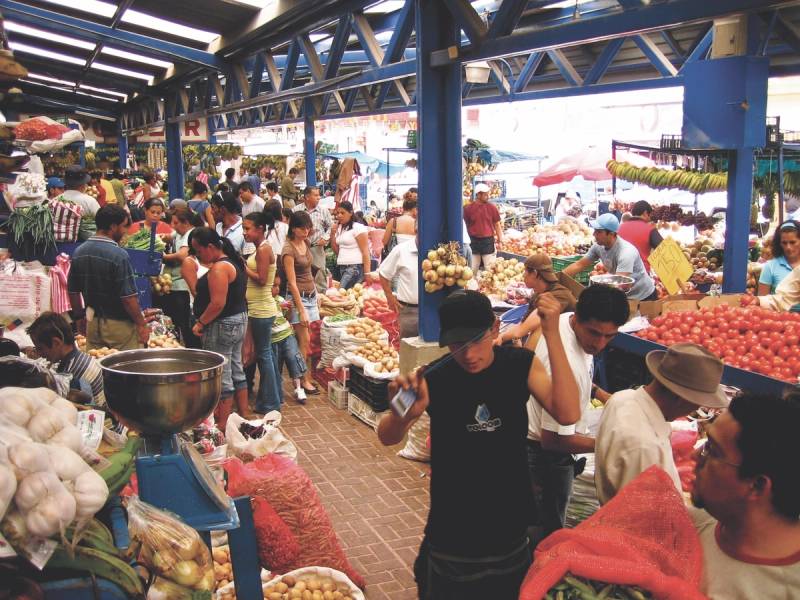
Costa Rica stands out as a notable example, having recently completed an Extended Fund Facility arrangement alongside the IMF’s inaugural Resilience and Sustainability Facility. This dual engagement has enabled Costa Rica to pursue structural reforms and sustainable growth, contributing to economic resilience against multiple external shocks and one of the fastest regional growth rates.

Jamaica
Jamaica's story is another testament to constructive engagement with the IMF. The commitment to reform, supported by the civil society and international and bilateral partners, has allowed Jamaica a historic opportunity to set an example for other small countries on how to emerge from a crisis with a steadfast commitment to macroeconomic prudence and strong institutional and policy frameworks.
In the context of low-income and fragile states, Somalia's progress is particularly noteworthy. Following devastating conflict, IMF support has been crucial in rebuilding the economy and institutions. Successive IMF engagements—first through four staff monitored programs and then two Extended Credit Facility arrangements—have enabled the implementation of close to 100 key reforms over the past decade in support of wide-ranging institutional reforms, improvements in reporting and accountability, and reintegration with the international community. Thanks to these efforts, Somalia reached the Heavily Indebted Poor Countries completion Point in December 2023, which provided the country with US$4.5 billion in debt relief. The IMF-supported program and IMF capacity development support have facilitated significant advances in domestic revenue mobilization, public financial management, central bank institutional framework, governance, and statistical systems.
Costa Rica
These examples underscore the transformative impact of IMF programs, highlighting the Fund's commitment to fostering economic stability and growth across diverse global contexts. A more comprehensive analysis of the impact of IMF programs will be covered in detail in the upcoming review of program design and conditionality.
Read Next