

Finance & Development, March 2018, Vol. 55, No. 1 PDF version
Point of View
The Low-Income Trap
Urgent steps are needed to end the cycle of poverty and debt
A sharp increase in the foreign debt of developing economies has raised concern that another crisis is looming. This is particularly true in Africa, where external debt in many countries has reached unsustainable levels. The burden of adjustment, when it comes, will inevitably fall on the most vulnerable—women, children, and the poor. That is why the international community must develop and implement new ways to restructure debt and measures to protect heavily indebted nations from the vicissitudes of the international credit markets. Borrowers and creditors alike must agree on responsible lending practices that have the support of democratically elected governments and civil society.
Developing economies in Africa and elsewhere benefited from debt relief under two programs sponsored by international lending institutions—the 1996 Heavily Indebted Poor Countries Initiative and the 2005 Multilateral Debt Relief Initiative. When debt relief allowed low-income countries to resume borrowing, they quickly took advantage of low global interest rates to sell securities on international capital markets. But the sharp decline in commodity prices has dealt a financial blow to countries that depend on exports of farm products, oil, gas, and other natural resources to generate the revenue they need to repay their obligations. The countries of sub-Saharan Africa are now struggling to service external debt that in many cases has risen above 90 percent of GDP. An IMF debt sustainability analysis (2018) lists 14 African countries in distress or at high risk of distress, including Burundi, Cameroon, the Central African Republic, Chad, Ghana, Sudan, and Zimbabwe.
Still struggling
To be sure, many countries have done much to improve their debt management capacity since the Heavily Indebted Poor Countries Initiative. They have computerized debt records, established debt management offices that consolidate previously scattered functions, adopted medium-term debt management strategies, improved analytical capacity in debt sustainability, and attempted to develop domestic debt markets. Low-income countries are still struggling though. Revenue shortages keep them from paying down debt, which forces them to borrow even more to meet basic needs. Budget cuts only make matters worse by slowing economic growth, thereby reducing tax revenue.
The next crisis will be more difficult to prevent and resolve than the last one because the debt landscape has grown more complex. In the past, developing economy debt was held mainly by sovereign creditors represented by the Paris Club and by international lending institutions, so negotiating debt relief was relatively straightforward. Today, debt is held by private, bilateral, and multilateral creditors, and there are new financial instruments to contend with. Speculators target countries in crisis, which has forced nations such as Ghana and Mozambique to return to the IMF for help. Countries that enter into debt restructuring agreements are at risk of attack by so-called vulture funds, which buy distressed bonds at a discount on the secondary market with the aim of forcing the debtor nation to pay a larger sum, as was the case with Argentina and Greece.
Flawed system
How can this vicious cycle of debt and impoverishment be broken? Overhauling the deeply flawed system of cross-border taxation would be one major step. Researchers at the IMF (2015) estimate that developing economies may be losing between $100 billion and $300 billion in revenue a year because of tax avoidance strategies by multinational corporations that subvert the spirit, if not always the letter, of the law. Poor countries lose another $170 billion in revenue every year when income is sheltered in tax havens. Countries also lose out by engaging in an international race to the bottom as they compete to attract foreign investment by cutting tax rates, offering incentives, and negotiating unfavorable trade agreements.
More important is an urgent need for an international mechanism to restructure sovereign debt. The lack of such a mechanism represents a severe gap in the international financial architecture. A fair and orderly mechanism could prevent debt crises by addressing unsustainable debt early, or at least mitigate the damage when a crisis is underway. Such a mechanism is critical to halting predatory behavior by creditors, promoting financial stability, reducing debt burdens, and encouraging responsible borrowing and lending.
The mechanism should be supplemented by a set of lending and borrowing principles intended to prevent future debt crises and increase transparency and accountability. Preventing reckless lending and borrowing requires a major change in the standards both sides must follow and how these are implemented. In particular, any decision to borrow must be approved by democratic institutions. Loans must comply with national and international laws, consider the debtor country’s ability to pay, charge reasonable interest and fees, avoid harmful policy conditionality, prevent future predatory debt litigation, and support development strategies.
Debt restructuring must also protect human rights, promote economic growth, and allow for public spending on essential services. A fair and rapid debt workout process would bring significant benefits not just to the debtor country, but also to the poor, women, and children, who are affected the most.
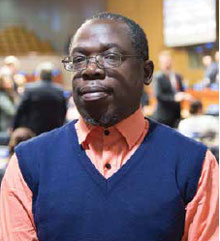
FANWELL KENALA BOKOSI is executive director of the African Forum and Network on Debt and Development.
References:
Crivelli, Ernesto, Ruud A. De Mooij, and Michael Keen. 2015. “Base Erosion, Profit Shifting and Developing Countries.” IMF Working Paper 15/118. https://www.imf.org/external/pubs/ft/wp/2015/wp15118.pdf
International Monetary Fund (IMF). 2018. “List of LIC DSAs for PRGT-Eligible Countries as of January 01, 2018.” https://www.imf.org/external/Pubs/ft/dsa/DSAlist.pdf
PHOTO: DANIEL GOODMAN
Opinions expressed in articles and other materials are those of the authors; they do not necessarily reflect IMF policy.