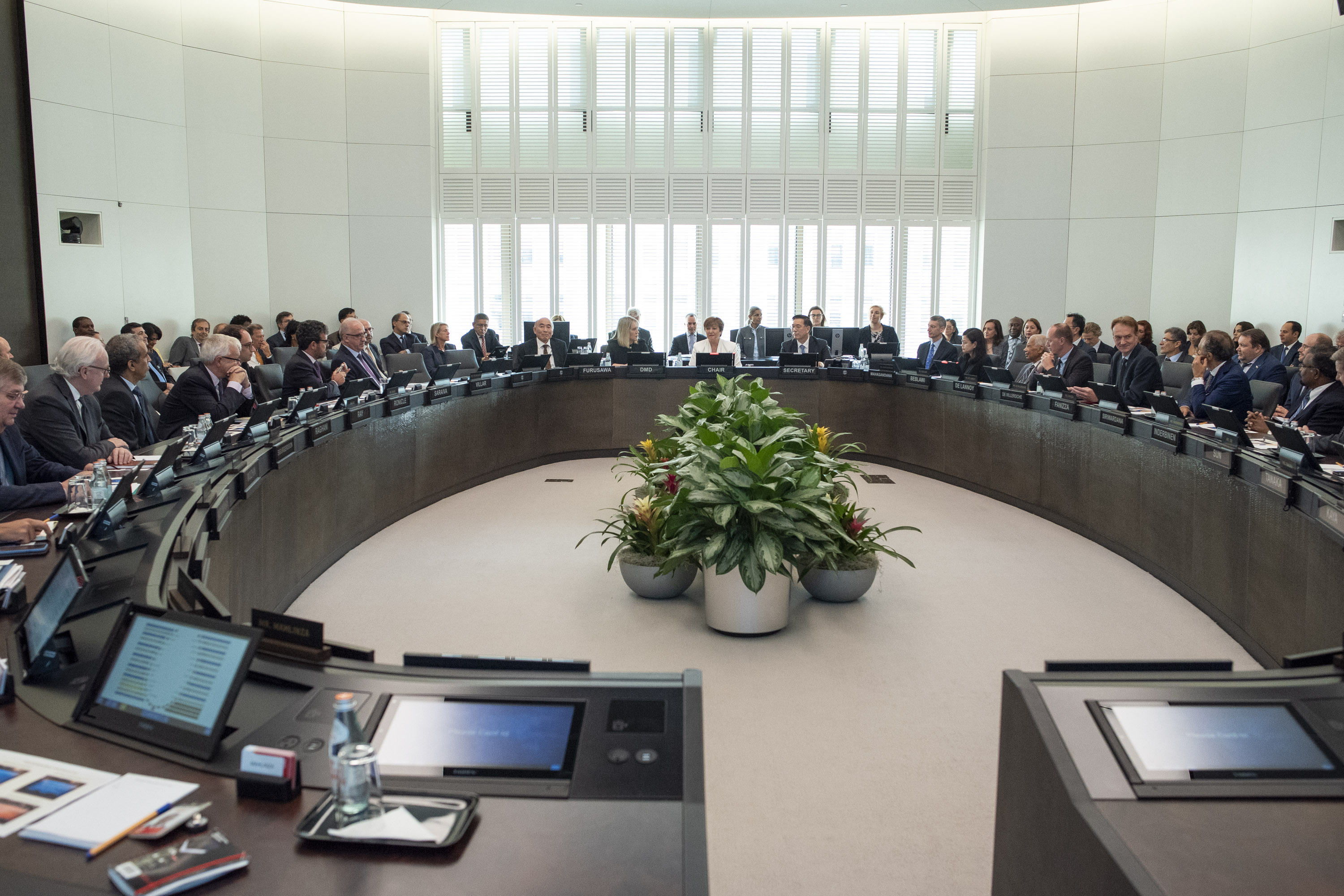
IMF Executive Board Completes Fifth Review Under Extended Credit Facility Arrangement for Central African Republic and Approves US$31.6 Million Disbursement
IMF News, December 21, 2018
Source details
- Canonical URL
- IMF Executive Board Completes Fifth Review Under Extended Credit Facility Arrangement for Central African Republic and Approves US$31.6 Million Disbursement
Other formats
Bibliographic details
- Published: December 21, 2018
Review completion and disbursement
- On December 19, 2018, the Executive Board completed the fifth review under the Extended Credit Facility (ECF) arrangement for the Central African Republic.
- Completion of the review enables the disbursement of SDR 22.84 million (about US$31.6 million).
- The three-year ECF arrangement was approved on July 20, 2016, and access has been augmented twice to a total of SDR 133.68 million (about US$185.2 million or 120 percent of the Central African Republic’s quota).
Program performance and policy commitments
- Performance under the ECF‑supported program described as satisfactory despite a challenging security environment and difficult humanitarian conditions.
- Authorities committed to maintaining fiscal policy consistent with macroeconomic stability while allowing a scale-up of social and capital spending in the 2019 budget.
- The 2019 budget integrates previously excluded revenues and expenses of government agencies and funds to enhance fiscal transparency.
- Authorities will step up the use of IT tools and modernize customs and revenue administration to mobilize domestic revenues.
- Given the country’s high risk of debt distress, continued reliance on grant financing is emphasized to support debt sustainability.
- Implementation of the investment program for the National Recovery and Peacebuilding Plan expected to boost economic prospects, create jobs, and reduce poverty.
Structural reforms and governance
- Progress reported on:
- Strengthening the treasury single account.
- Streamlining quasi-fiscal taxes.
- Improved budget transparency and traceability of domestic revenues.
- Quarterly publication of budget execution reports.
- Recommended additional actions:
- Strengthen financial oversight of public institutions and state-owned enterprises.
- Reduce exceptional payment procedures.
- Improve the business climate.
- Strengthen the asset declaration regime.
- Follow through on commitments to strengthen governance and transparency in the management of natural resources.
Regional and monetary support
- Program support continues from regional institutions through implementation of foreign exchange regulations and monetary policy framework reforms to support an increase in regional net foreign assets.
- Completion of the sixth review will be conditional on implementation of three policy assurances provided in the June 2018 Letter of Policy Support, as updated with respect to the assurance on NFAs by the December 2018 Letter, and as discussed in the December 2018 union‑wide background paper.
Economic outlook, risks, and medium-term projections
- Growth:
- Growth is estimated at 4.3 percent in 2017 and is expected to remain broadly unchanged in the near term.
- Growth could increase to 5 percent in the medium term.
- Projections predicated on progress in peace and reconciliation under the African Union Initiative, extension of security forces and public services in provinces, and steadfast implementation of reforms.
- Inflation:
- Inflation fell on the back of price declines for food and manufacturing products.
- Risks:
- Downside risks mainly due to the volatile security situation.
- Insecurity, high transportation cost, and weak judicial system undermine investment attractiveness.
Fiscal, external, and financial sector developments
- Fiscal:
- Parliament passed a revised budget in July 2018 to reflect fiscal performance in the first half of the year.
- Data through end-September confirms the fiscal deficit remains contained and the fiscal program is on track.
- Authorities envisage increasing social spending.
- External:
- Current account deficit estimated at 8.3 percent of GDP in 2017 and suggested to remain at a similar level in 2018.
- Oil import bill expected to increase; higher timber exports and sale of stockpiled diamonds projected to offset trade balance effects.
- Financial sector:
- Banking sector remained stable.
- Credit growth to the economy picked up to 5.2 percent (y-o-y) at end-September 2018.
- Debt and arrears:
- Noted high risk of debt distress; Directors recommended limiting borrowing and mobilizing grant financing.
- Continued efforts to resolve external arrears encouraged.
- Progress welcomed to clear domestic arrears with encouragement to ensure transparency and accountability.
Executive Board Assessment and recommendations
- Directors agreed with the staff appraisal and recognized the Central African Republic’s efforts given persistent insecurity and large humanitarian needs.
- Emphasized importance of rebuilding sound institutions and maintaining macroeconomic stability to exit fragility.
- Stressed need to implement the National Recovery and Peacebuilding Plan to boost economic prospects and reduce poverty.
- Encouraged continued Fund engagement through technical assistance and coordination with development partners, mindful of absorptive capacity.
- Recommended actions to improve revenue mobilization and public financial management, including:
- Strengthening customs and tax administration.
- Enhancing information exchange between government agencies.
- Modernizing payment systems and broader use of IT systems.
- Further streamlining quasi‑fiscal taxes and levies.
- Strengthening asset declaration regime and implementing the United Nations Convention against Corruption.
- Improving natural resource management and adhering to Extractive Industries Transparency Initiative principles.
Key statistics and selected indicators (2016–23, as presented)
- GDP at constant prices: 2016: 4.5; 2017: 4.3; 2018 (4th. Rev.): 5.0; 2019 (Proj.): (not separately listed beyond 2018 in table header).
- GDP per capita at constant prices: 2016: 2.6; 2017: 2.4; 2018: 3.1; 2019: 3.0.
- GDP at current prices (annual percentage change): 2016: 11.2; 2017: 8.1; 2018: 8.4; 2019: 7.4; 2020: 8.2; 2021: 7.6.
- GDP deflator: 2016: 6.3; 2017: 3.6; 2018: 3.9; 2019: 2.5.
- CPI (annual average): 2016: 4.6; 2017: 4.1; 2018: 4.0.
- CPI (end-of-period): 2016: 4.7; 2017: 4.2; 2018: 2.3; 2019: 2.7.
- Broad money: 2016: 5.8; 2017: 10.3; 2018: 8.5; 2019: 11.6.
- Credit to the economy (annual percentage change): 2016: 17.5; 2017: -0.1; 2018: 5.9; 2019: 5.5; 2020: 3.3; 2021: 7.7; 2022: 7.3; 2023: 8.7; 2023 (additional value listed): 11.0.
- Export volume of goods (annual percentage change): 2016: 52.3; 2017: 42.5; 2018: 9.3; 2019: 10.0; 2020: 10.4; 2021: 8.6.
- Import volume of goods (annual percentage change): 2016: 13.4; 2017: -2.5; 2018: 6.7; 2019: 5.2; 2020: 6.2; 2021: 5.4; 2022: 5.7; 2023: 5.3.
- Terms of trade (annual percentage change): 2016: -0.4; 2017: -19.0; 2018: -11.4; 2019: -13.4; 2020: 0.2; 2021: 1.2; 2022: 0.6; 2023: 0.4.
- Gross national savings (percent of GDP): 2016: 6.9; 2017: 9.0; 2018: 9.9; 2019: 10.6; 2020: 11.3; 2021: 12.0.
- Current official transfers (percent of GDP): 2016: 3.7; 2017: 1.9; 2018: 2.8; 2019: 2.0; 2020: 1.8; 2021: 1.6; 2022: 1.4.
- Gross domestic savings (percent of GDP): 2016: -3.3; 2017: -3.7; 2018: -3.0; 2019: -2.9; 2020: -0.3.
- Government savings (percent of GDP): 2016: -1.0; 2017: -1.5; 2018: -0.5; 2019: 0.3; 2020: 0.5; 2021: 0.8; 2022: 1.1.
- Consumption (percent of GDP): 2016: 103.3; 2017: 103.7; 2018: 103.0; 2019: 102.9; 2020: 100.3; 2021: 98.8; 2022: 98.0; 2023: 97.0; 2023 (additional series): 96.0.
- Gross investment (percent of GDP): 2016: 13.7; 2017: 13.8; 2018: 15.3; 2019: 15.9; 2020: 16.6; 2021: 16.8; 2022: 16.2.
- External current account balance with grants (percent of GDP): 2016: -5.5; 2017: -8.3; 2018: -8.4; 2019: -8.6; 2020: -7.6; 2021: -7.0; 2022: -5.7; 2023: -4.9; 2023 (additional values): -4.7.
- External current account balance without grants (percent of GDP): 2016: -10.7; 2017: -11.7; 2018: -13.2; 2019: -13.3; 2020: -10.6; 2021: -9.2; 2022: -8.0.
- Overall balance of payments (percent of GDP): 2016: 0.9; 2017: -1.6; 2018: -1.8; 2019: -0.2; 2020: 2.1.
- Central government finance:
- Total revenue (including grants, percent of GDP): 2016: 14.1; 2017: 18.8; 2018: 18.3; 2019: 17.9; 2020: 18.0; 2021: 18.1.
- Domestic revenue (percent of GDP): 2016: 8.3; 2017: 9.2; 2018: 10.7; 2019: 10.9; 2020: 11.5; 2021: 11.8.
- Total expenditure (cash basis, percent of GDP): 2016: 12.6; 2017: 14.8; 2018: 15.8; 2019: 18.4; 2020: 17.7.
- Capital spending (percent of GDP): (values listed in table but not individually specified in the narrative).
- Overall balance excluding grants (percent of GDP): 2016: -4.4; 2017: -6.5; 2018: -6.6; 2019: -7.4; 2020: -6.2; 2021: -5.9.
- Overall balance including grants (percent of GDP): 2016: -1.1; 2017: 0.1.
- Domestic primary balance (excludes grants, interest payments, externally-financed capital expenditure, percent of GDP): 2016: -1.4; 2017: -1.2; 2018: -0.9.
- Public sector debt (percent of GDP): 2016: 56.0; 2017: 52.8; 2018: 47.0; 2019: 48.5; 2020: 42.2; 2021: 39.2; 2022: 36.4; 2023: 33.8; 2023 (additional): 31.5.
- Domestic debt (percent of GDP): 2016: 26.3; 2017: 25.1; 2018: 21.2; 2019: 22.5; 2020: 14.0; 2021: 12.9.
- External debt (percent of GDP): 2016: 29.6; 2017: 27.8; 2018: 25.8; 2019: 26.0; 2020: 24.2; 2021: 22.6; 2022: 21.1; 2023: 19.7; 2023 (additional): 18.6.
- PPP per capita (PPP dollars): 2016: 651.8; 2017: 676.9; 2018: 705.9; 2019: 735.8; 2020: 765.0; 2021: 795.0; 2022: 824.8; 2023: 855.9.
- Nominal GDP (CFAF billions): 2016: 1,041; 2017: 1,126; 2018: 1,218; 2019: 1,209; 2020: 1,308; 2021: 1,408; 2022: 1,515; 2023: 1,630; 2023 (additional): 1,754.
IMF Executive Board press release, December 21, 2018.