IMF Executive Board Completes Fifth Reviews under Extended Credit Facility Arrangement and Extended Arrangement under the Extended Fund Facility for Côte d’Ivoire and Approves US$133.9 Million Disbursement
IMF News, June 14, 2019
Source details
- Canonical URL
- IMF Executive Board Completes Fifth Reviews under Extended Credit Facility Arrangement and Extended Arrangement under the Extended Fund Facility for Côte d’Ivoire and Approves US$133.9 Million Disbursement
Other formats
Bibliographic details
- Published: June 14, 2019
Executive action and financing
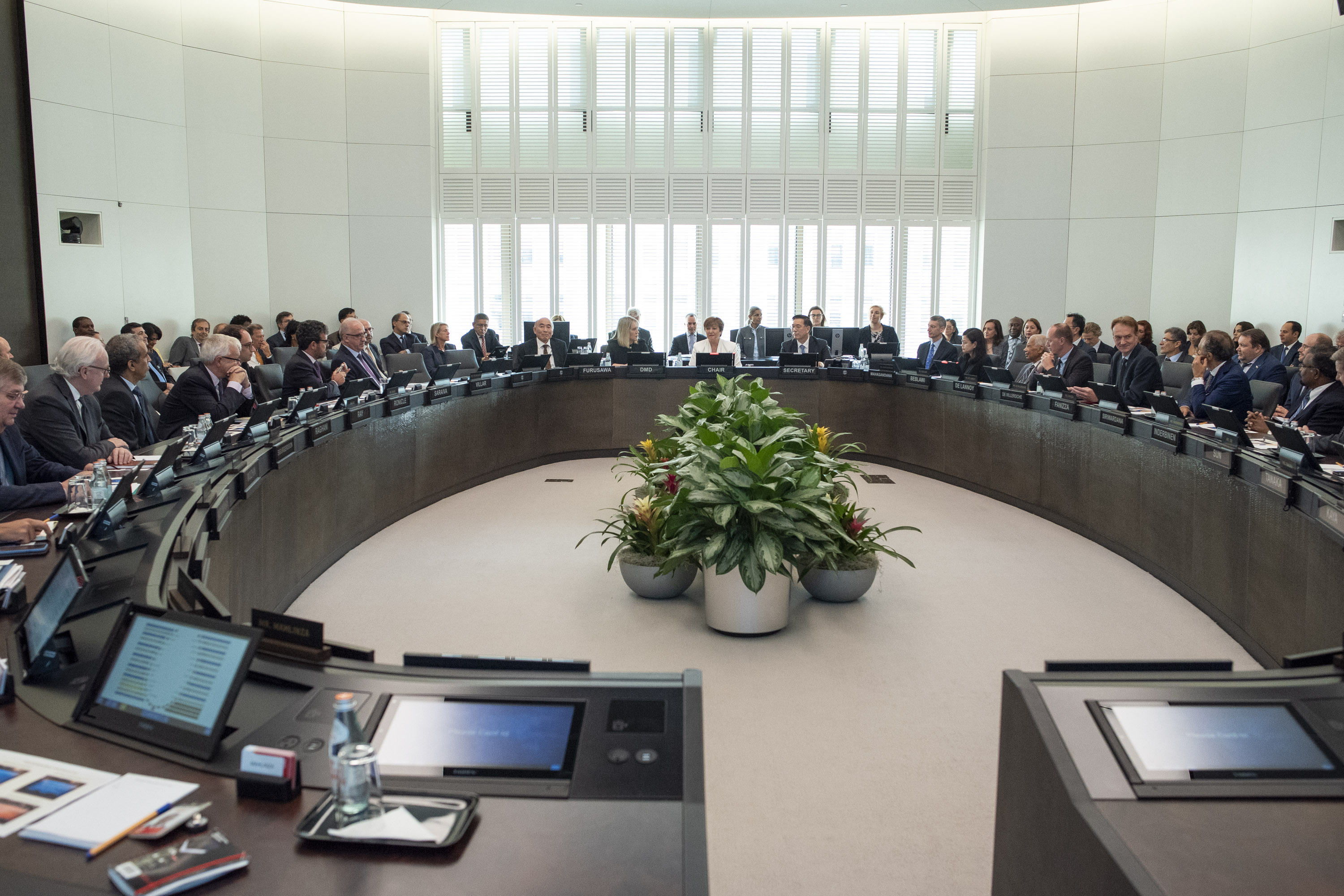
- On June 14, 2019, the Executive Board completed the fifth reviews under the Extended Credit Facility (ECF) arrangement and the extended arrangement under the Extended Fund Facility (EFF) for Côte d’Ivoire.
- Completion of the reviews enables the immediate disbursement of SDR 96.786 million (about US$133.9 million).
- Total disbursements under the arrangements now total SDR 553.6 million (about US$765.8 million).
- The three-year ECF/EFF arrangements have total access of SDR 650.4 million (about US$889.7 million or 100 percent of Côte d’Ivoire’s quota) and were approved on December 12, 2016.
Program objectives and performance
- Program aims:
- Foster inclusive growth and poverty reduction.
- Support fiscal discipline.
- Enhance domestic revenue mobilization.
- Ensure debt sustainability.
- Achieve a sustainable balance of payments position.
- Performance under the IMF-supported program:
- All performance criteria met at end-December 2018.
- All but one indicative target met at end-December 2018.
- Five out of six structural benchmarks were met.
- Authorities’ fiscal commitment:
- Reiterated commitment to reach a budget deficit of 3 percent of GDP in 2019 and onwards (WAEMU regional norm).
- Emphasis on additional tax revenue mobilization and revenue administration reforms.
- Need to broaden the tax base to tap currently untapped revenue potential.
- Debt and borrowing guidance:
- To preserve debt sustainability, continue prudent management of public debt, including limiting contingent liabilities.
- Borrowing policy should carefully assess the cost and benefits of new loans to keep debt on a sustainable path.
- Structural reforms:
- Ongoing reforms to strengthen revenue administration and public financial management.
- Efforts to consolidate banking sector stability, promote inclusive growth, improve the business climate, and reinforce the statistical apparatus.
Economic outlook and projections
- Overall outlook:
- “The country’s economic outlook remains strong, with growth projected at about 7½ percent in 2019.”
- “The medium-term growth outlook is expected to remain robust, predicated on sound policies to lock in macroeconomic stability and improve the business environment.”
- Key projected and estimated indicators (2016–21):
- National income — GDP at constant prices (annual percentage changes):
- 2016: 8.0
- 2017: 7.7
- 2018 Est.: 7.4
- 2019 Projections: 7.5
- 2020: 7.3
- 2021: 7.0
- GDP deflator:
- 2016: -1.1
- 2017: -1.7
- 2018 Est.: 0.4
- 2019 Projections: 1.0
- 2020: 1.6
- Consumer price index (annual average):
- 2016: 0.7
- 2017: 2.0
- External sector — Exports of goods, f.o.b., at current prices (annual percentage changes):
- 2016: -7.0
- 2017: 6.8
- 2018 Est.: -4.9
- 2019 Projections: 7.9
- 2020: 9.5
- 2021: 8.4
- Imports of goods, f.o.b., at current prices (annual percentage changes):
- 2016: -8.5
- 2017: 6.5
- 2018 Est.: 7.1
- 2019 Projections: 2.9
- 2020: 11.8
- 2021: 8.8
- Money and credit:
- Money and quasi-money (M2) (annual percentage changes):
- 2016: 10.1
- 2017: 13.5
- 2018 Est.: 11.0
- 2019 Projections: 12.3
- Credit to the economy (annual percentage changes):
- 2016: 13.3
- 2017: 15.2
- 2018 Est.: 11.3
- 2019 Projections: 13.2
- (Percent of GDP unless otherwise indicated)
- Total revenue and grants:
- 2016: 20.0
- 2017: 20.4
- 2018 Est.: 19.9
- 2019 Projections: 20.3
- Total revenue:
- 2016: 18.6
- 2017: 19.2
- 2018 Est.: 18.8
- 2019 Projections: 19.0
- 2020: 19.5
- Total expenditure:
- 2016: 24.0
- 2017: 24.9
- 2018 Est.: 23.8
- 2019 Projections: 23.3
- 2020: 23.4
- Overall balance, incl. grants, payment order basis:
- 2016: -4.0
- 2017: -4.5
- 2018 Est.: -3.0
- 2019 Projections: -2.9
- Gross investment:
- 2016: 17.7
- 2017: 20.8
- 2018 Est.: 22.0
- 2019 Projections: 22.9
- Central government (percent of GDP):
- 2016: 6.9
- 2017: 7.2
- Nongovernment sector (percent of GDP):
- 2016: 10.3
- 2017: 12.0
- 2018 Est.: 13.7
- 2019 Projections: 15.1
- 2020: 15.8
- 2021: 16.6
- Gross domestic saving:
- 2016: 22.1
- 2017: 21.3
- 2018 Est.: 23.7
- 2019 Projections: 24.4
- 2020: 25.2
- Current account balance (percent of GDP):
- 2016: -1.2
- 2017: -2.7
- 2018 Est.: -4.7
- 2019 Projections: -3.5
- 2020: -3.3
- 2021: -3.1
- Overall balance (percent of GDP):
- 2016: 1.7
- 2017: 0.8
- 2018 Est.: -0.1
- 2019 Projections: 0.6
- Central government debt, gross (percent of GDP):
- 2016: 48.4
- 2017: 49.8
- 2018 Est.: 53.2
- 2019 Projections: 52.5
- 2020: 51.2
- 2021: 49.6
- Central government debt (excluding C2D) (percent of GDP):
- 2016: 43.1
- 2017: 45.3
- 2018 Est.: 49.7
- 2019 Projections: 49.9
- 2020: 49.3
- 2021: 48.0
- External debt (percent of GDP):
- 2016: 29.0
- 2017: 30.5
- 2018 Est.: 36.5
- 2019 Projections: 37.8
- 2020: 35.3
- 2021: 34.8
- External debt (excluding C2D) (percent of GDP):
- 2016: 25.4
- 2017: 32.5
- 2018 Est.: 34.7
- 2019 Projections: 33.1
- 2020: 32.9
- Memorandum item — Nominal GDP (CFAF billions):
- 2016: 20,931
- 2017: 22,151
- 2018 Est.: 23,900
- 2019 Projections: 25,955
- 2020: 28,308
- 2021: 30,786
Key messages from the Acting Chair (Mr. Furusawa)
- Commended implementation: program performance “has been commendable.”
- Fiscal discipline: 2018 budget deficit target was met; commitment to 3 percent of GDP deficit in 2019 and onwards is critical for domestic macroeconomic stability and regional external stability in WAEMU.
- Revenue mobilization: authorities have embarked on revenue administration reforms; broadening the tax base offers untapped revenue potential to create fiscal space for socio-economic and infrastructure needs.
- Debt management: prudent public debt management and limiting contingent liabilities remain essential.
- Structural reforms: need to be sustained across revenue administration, public financial management, banking sector stability, inclusive growth, business climate improvements, and statistical systems.
IMF Press Release No. 19/218, June 14, 2019