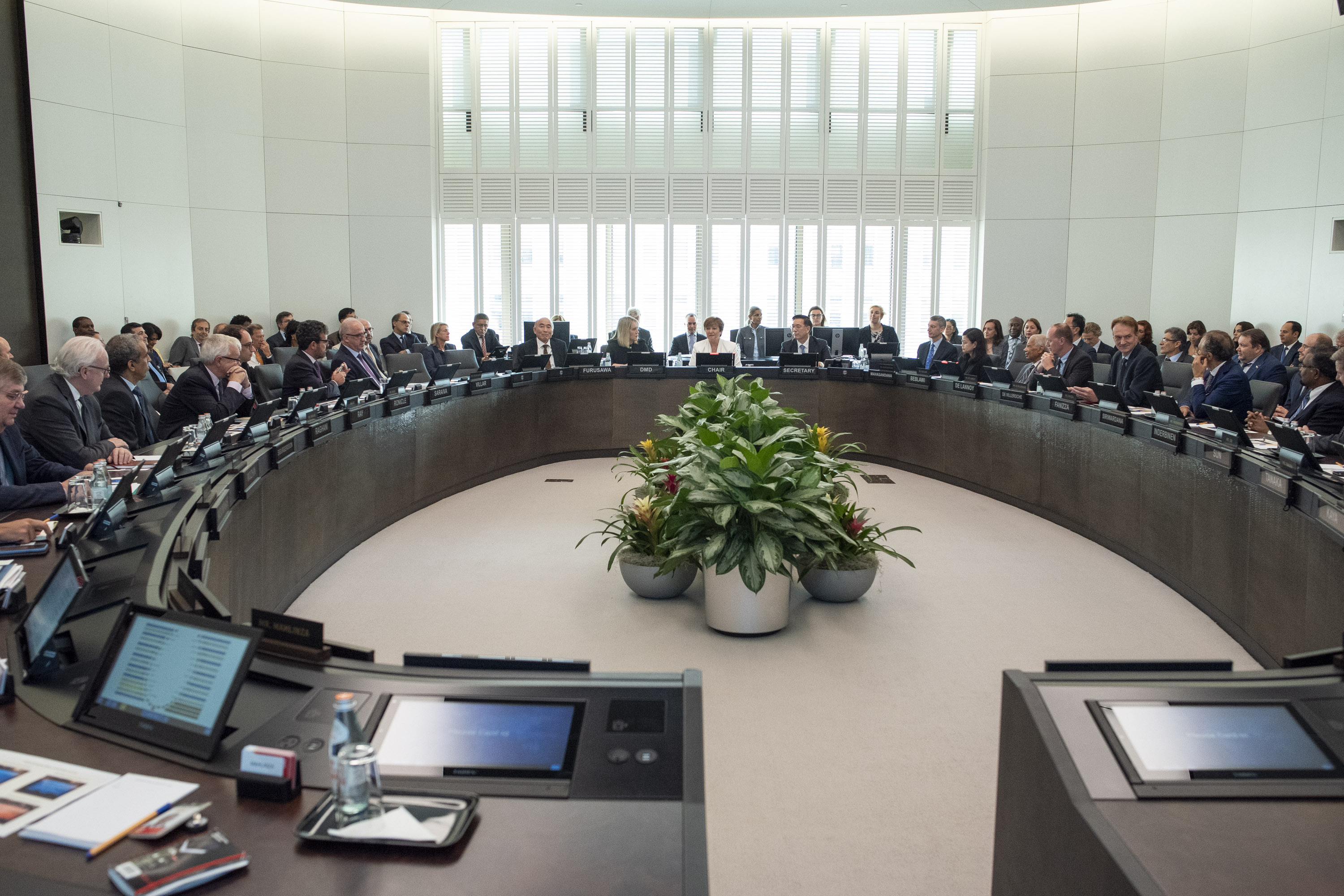
IMF Executive Board Approves a US$114.49 Million Disbursement to Niger to address the COVID-19 Pandemic
IMF News, April 14, 2020
Source details
- Canonical URL
- IMF Executive Board Approves a US$114.49 Million Disbursement to Niger to address the COVID-19 Pandemic
Other formats
Bibliographic details
- Published: April 14, 2020
Approval and financing
- The Executive Board approved the disbursement of SDR83.66 million (about US$114.49 million) to be drawn under the Rapid Credit Facility (RCF).
- The RCF funds are intended to help address Niger’s urgent balance of payments need by filling important financing gaps in Niger’s fiscal and external accounts and to help catalyze additional donor support.
- The Executive Board also approved a rephasing of disbursements under the Extended Credit Facility (ECF) that has been supporting Niger’s economic reform program since January 2017, to allow more time for the completion of the next program review while maximizing financial support under the RCF.
Purpose, context, and IMF stance
- The pandemic is inflicting significant economic damage on growth, public finances, and the balance of payments.
- The government of Niger has acted quickly to put in place containment measures and is seeking support from the international community for its crisis response plan.
- The IMF continues to monitor Niger’s situation closely and stands ready to provide policy advice and further support as needed.
Statement by Mr. Geoffrey Okamoto, First Deputy Managing Director and Chair
- “The COVID-19 pandemic is having a pronounced negative economic impact on Niger and downside risks are significant. The economic downturn, fiscal pressures, and tightening financial conditions are giving rise to large financing gaps in Niger’s public finances and balance of payments this year.
- “The authorities have moved quickly to formulate and implement a three-pronged plan with measures to contain the pandemic and alleviate its social and economic fallout. The IMF’s financial assistance under the RCF covers an important part of the financing gap, thus supporting implementation of the anti-crisis plan. However, timely additional support from the international community is indispensable.
- “A substantial widening of this year’s budget deficit is appropriate, reflecting unavoidable revenue shortfalls and pressing spending needs for health care, social protection, and support for hard-hit businesses. The Ministry of Finance is comprehensively overseeing crisis measures, which should be as well-targeted and carefully assessed as possible. Transparency and good governance are important.
- “The government remains committed to its economic reform program supported by an ongoing ECF arrangement with the IMF. It is centered on mobilizing domestic revenues, improving public spending efficiency, and strengthening the private sector while preserving macroeconomic stability and sustainable public finances.”
Selected economic and financial indicators (Niger: Selected Economic and Financial Indicators, 2018-22)
- GDP at constant prices (Annual percentage change): 2018: 7.0; 2019: 5.8; 2020: 1.0; 2021: 8.1; 2022: 13.2
- Export volume (Annual percentage change): 2018: -5.2; 2019: 6.0; 2020: 0.5; 2021: 15.2; 2022: 66.8
- Import volume (Annual percentage change): 2018: 8.7; 2019: 11.8; 2020: 19.5; 2021: -4.7; 2022: (no value shown)
- CPI (annual average): 2018: 2.8; 2019: -2.5; 2020: 4.4; 2021: 1.7; 2022: 2.0
- CPI (end-of-period): 2018: 1.6; 2019: -2.3; 2020: 2.7
- Broad money (Annual percentage change): 2018: -2.1; 2019: 15.0; 2020: -0.7; 2021: 13.1; 2022: 14.6
- Domestic credit (Annual percentage change): 2018: 11.4; 2019: -12.2; 2020: 3.9; 2021: 14.3; 2022: 12.9
- Credit to the government (net) (Annual percentage change): 2018: 127.8; 2019: -89.5; 2020: -46.7; 2021: 1.1; 2022: 50.7
- Credit to the economy (Annual percentage change): 2018: -4.5; 2019: 13.0; 2020: 5.4; 2021: 14.5; 2022: 12.4
- Government finances (Percent of GDP)
- Total revenue: 2018: 12.1; 2019: 11.2; 2020: 10.2; 2021: 12.2
- Total expenditure and net lending: 2018: 21.1; 2019: 21.5; 2020: 22.6; 2021: 21.7; 2022: 20.6
- Current expenditure: 2018: 9.9; 2019: 9.6; 2020: 10.8; 2021: 10.1; 2022: (no value shown)
- Capital expenditure: 2018: 12.0; 2019: 11.6; 2020: 10.5; 2021: (no value shown)
- Basic balance (excl. grants): 2018: -2.9; 2019: -3.5; 2020: -5.0; 2021: -1.1
- Overall balance (incl. grants): 2018: -3.0; 2019: -3.6; 2020: -3.3; 2021: -2.6
- Investment and external sector (Percent of GDP)
- Gross investment: 2018: 29.0; 2019: 30.2; 2020: 31.5; 2021: 31.3; 2022: 24.6
- Non-government investment: 2018: 18.7; 2019: 19.2; 2020: 20.8; 2021: (no value shown)
- Government investment: 2018: 10.3; 2019: 11.0; 2020: 10.6; 2021: 9.7
- External current account balance (incl. grants): 2018: -12.7; 2019: -13.2; 2020: -15.1; 2021: -16.6; 2022: -9.7
- External current account balance (excl. grants): 2018: -14.7; 2019: -16.0; 2020: -17.4; 2021: -18.4; 2022: -11.0
- Debt indicators (Percent of GDP)
- Total public and publicly-guaranteed debt: 2018: 39.0; 2019: 42.0; 2020: 45.4; 2021: 43.7; 2022: 40.1
- Public and publicly-guaranteed external debt: 2018: 25.4; 2019: 26.5; 2020: 30.3; 2021: 29.7; 2022: 27.3
- NPV of external debt: 2018: 24.5; 2019: 18.5; 2020: 21.8; 2021: 19.3
- Public domestic debt: 2018: 13.6; 2019: 15.5; 2020: 15.1; 2021: 14.0; 2022: 12.7
- GDP at current market prices (Billions of CFA francs): 2018: 7,121; 2019: 7,574; 2020: 7,830; 2021: 8,633; 2022: 9,971
Policy implications and recommendations (from the statement)
- Use IMF RCF financing to support implementation of Niger’s anti-crisis plan and help close financing gaps.
- Timely additional support from the international community is indispensable.
- A substantial widening of this year’s budget deficit is appropriate to address revenue shortfalls and pressing spending needs for health care, social protection, and support for hard-hit businesses.
- Crisis measures should be as well-targeted and carefully assessed as possible, with transparency and good governance emphasized.
- Continue commitment to the economic reform program under the ECF: mobilize domestic revenues, improve public spending efficiency, strengthen the private sector, and preserve macroeconomic stability and sustainable public finances.
- For information on the emergency financing requests approved by the IMF Executive Board, please see a link to the IMF Lending Tracker: https://www.imf.org/en/Topics/imf-and-covid19/COVID-Lending-Tracker
- For upcoming discussions on the emergency financing requests, please see a link to the calendar of the IMF Executive Board meetings: https://www.imf.org/external/NP/SEC/bc/eng/index.aspx
IMF Press Release No. 20/157, April 14, 2020 — IMF Communications Department