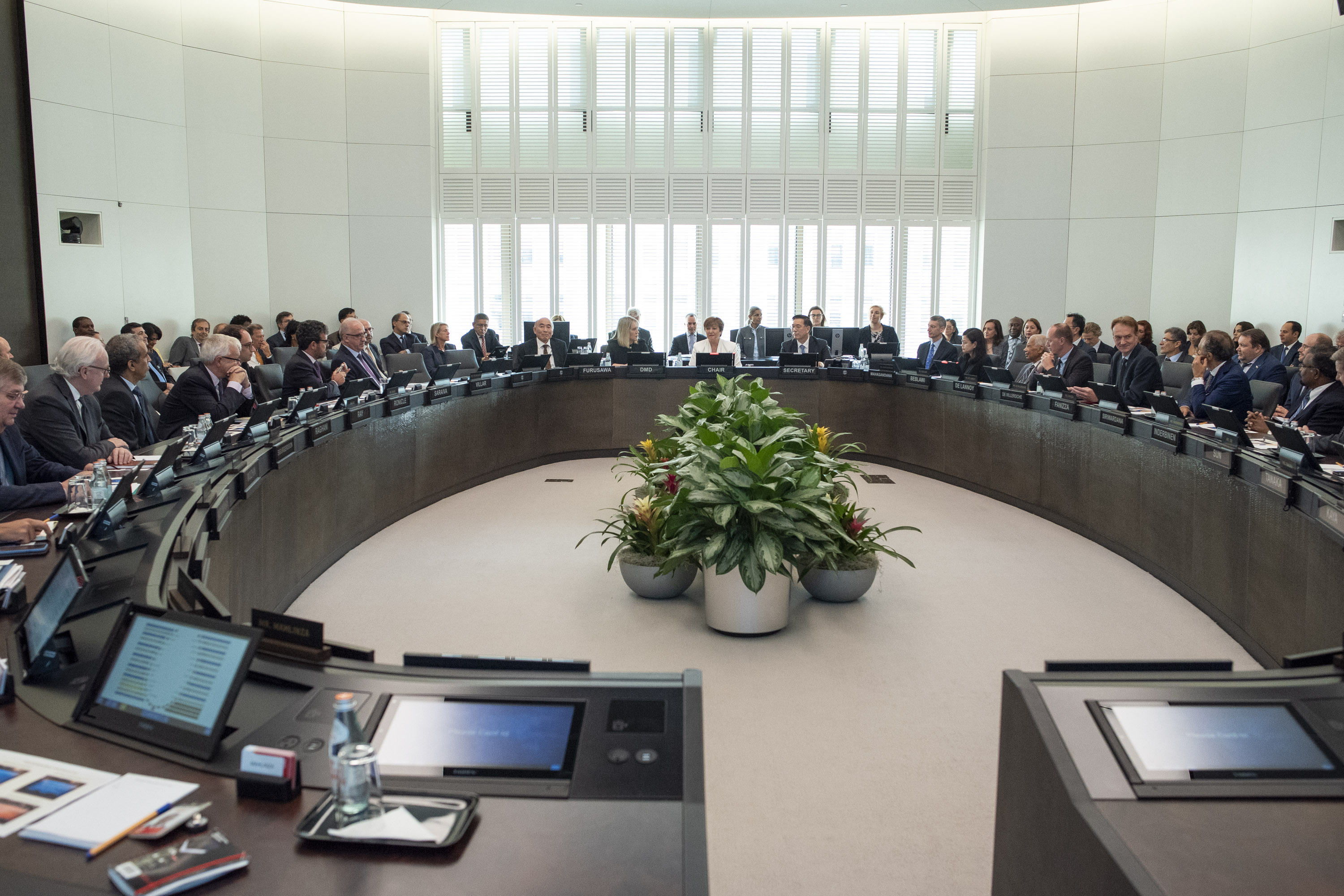
IMF Executive Board concludes the third review under the IMF’s Extended Arrangement under the Extended Fund Facility for Barbados
IMF News, June 3, 2020
Source details
- Canonical URL
- IMF Executive Board concludes the third review under the IMF’s Extended Arrangement under the Extended Fund Facility for Barbados
Other formats
Bibliographic details
- Published: June 3, 2020
Review conclusion and disbursements
- The Executive Board concluded the third review of the IMF’s extended arrangement under the Extended Fund Facility (EFF) for Barbados on June 3, 2020.
- Completion of the review allows the authorities to draw about US$139 million (equivalent of SDR 101 million).
- Total disbursements to date are the equivalent of SDR 206 million (about US$283 million).
- Including an augmentation approved at the review, the four-year extended arrangement is for an amount equivalent of SDR 274 million (about US$377 million). The extended arrangement was approved on October 1, 2018.
Program implementation and international reserves
- Program implementation is described as strong, with all performance criteria for end-March 2020 met.
- Since May 2018, international reserves have increased from a low of US$220 million to more than US$850 million at end-April 2020.
COVID-19 shock, augmentation, and access
- The economy faces a major challenge owing to the global coronavirus pandemic, with large expected impacts on the balance of payments and the fiscal accounts due to heavy dependence on tourism.
- Access under the extended arrangement has been augmented by about US$91 million (70 percent of Barbados’ quota in the IMF) to help accommodate the shock.
Fiscal policy stance and medium-term debt target
- The policy response includes a reduced primary surplus target of 1 percent of GDP for fiscal year 2020/21 to accommodate significant revenue losses and support spending on public health and social protection.
- The reduction of the primary surplus is financed by additional resources from international financial institutions, including an augmentation of the IMF’s extended facility.
- The accommodation in fiscal year 2020/21 will be compensated by higher primary surpluses in the medium term to ensure that the debt target of 60 percent of GDP in fiscal year 2033/34 is reached.
State-owned enterprise (SOE) reform
- SOE reform is emphasized as an essential element of the economic program.
- Policy actions recommended to reduce transfers to SOEs after the global coronavirus pandemic:
- Stronger oversight of SOEs
- Cost reduction
- Revenue enhancement
- Mergers and divestment
Central bank law, monetary financing, and AML/CFT
- Progress in restoring fiscal sustainability must be safeguarded by adopting a new central bank law that:
- Limits the central bank’s financing of the Government to short-term advances
- Strengthens the central bank’s mandate, autonomy, and decision-making structures
- Addressing identified deficiencies in the AML/CFT framework is important going forward.
Structural reforms and resilience
- A strong recovery after the global pandemic will depend on accelerating structural reforms.
- Specific recommendations to improve the business climate and access to finance:
- Establish a credit registry and credit collateral registry
- Broaden the types of eligible collateral to facilitate access to credit
- Priority should also be given to improving resilience to natural disasters and climate change.
Selected direct quotes from Mr. Tao Zhang, Deputy Managing Director and Acting Chair
- “Barbados continues to make good progress in implementing its comprehensive Economic Recovery and Transformation plan, with all performance criteria for end-March 2020 met. Prospects for continued strong program performance are good.”
- “The policy response to the global coronavirus pandemic is adequate with a reduced primary surplus target of 1 percent of GDP for fiscal year 2020/21 to accommodate significant revenue losses and support spending on public health and social protection. The reduction of the primary surplus is financed by additional resources from international financial institutions, including an augmentation of the IMF’s extended facility.”
- “The accommodation in fiscal year 2020/21 will be compensated by higher primary surpluses in the medium term to ensure that the debt target of 60 percent of GDP in fiscal year 2033/34 is reached.”
- “State-owned enterprise (SOE) reform remains an essential element of Barbados’ economic program. To secure fiscal space for investment in physical and human capital, transfers to SOEs need to decline after the global coronavirus pandemic with a combination of stronger oversight of SOEs, cost reduction, revenue enhancement, and mergers and divestment.”
- “Progress in restoring fiscal sustainability must be safeguarded by adopting a new central bank law that limits its financing of the Government to short-term advances and strengthens the central bank’s mandate, autonomy, and decision-making structures. Addressing the identified deficiencies in the AML/CFT framework is important going forward.”
- “A strong recovery after the global pandemic will depend on accelerating structural reforms. There is much room for improvement in the business climate. Establishing a credit registry and credit collateral registry, in addition to broadening the types of eligible collateral, would facilitate access to credit. In addition, priority should also given to improving resilience to natural disasters and climate change.”
IMF Press Release No. 20/234, June 3, 2020.