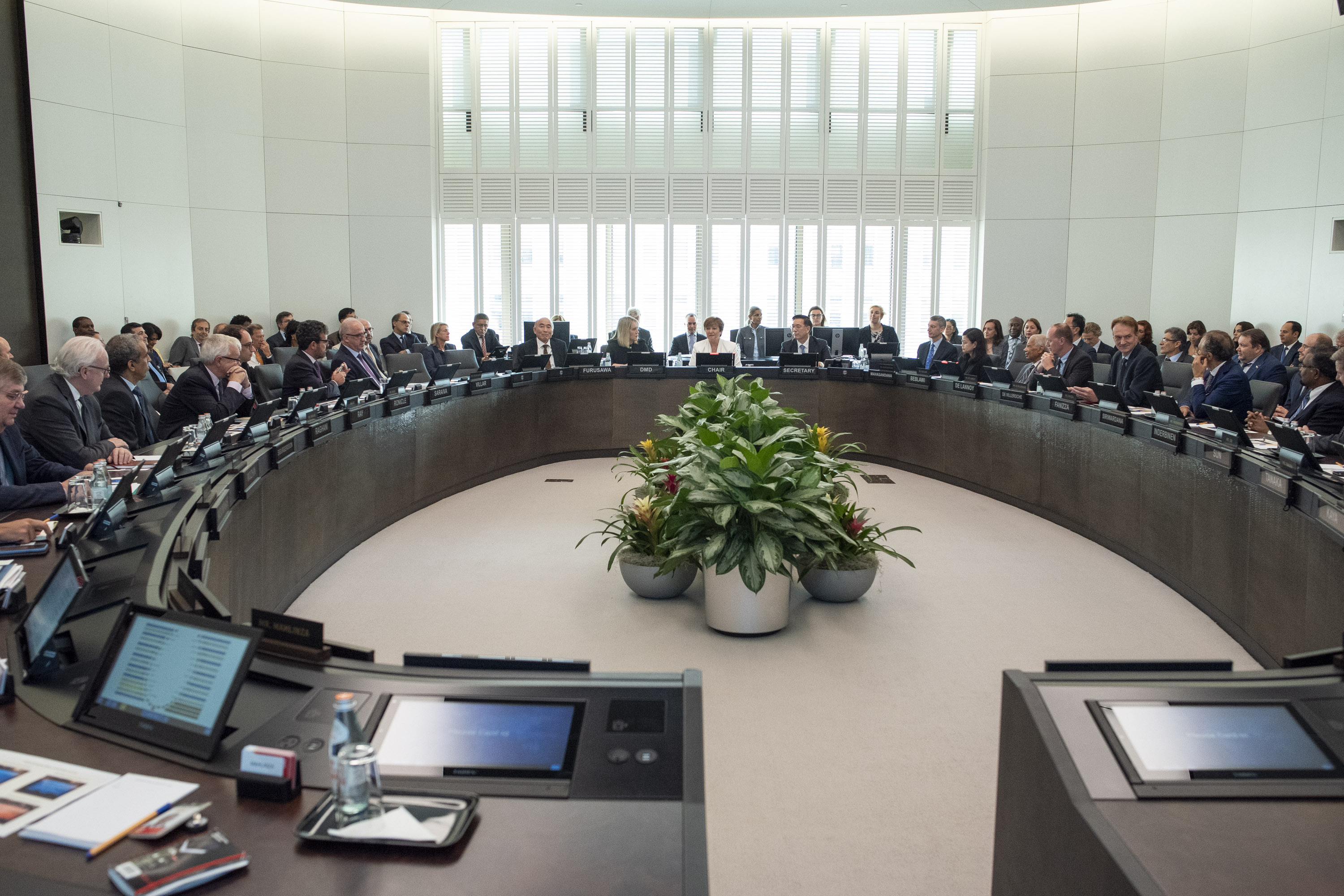
IMF Executive Board Concludes 2021 Article IV Consultation with the Philippines
IMF News, August 6, 2021
Source details
- Canonical URL
- IMF Executive Board Concludes 2021 Article IV Consultation with the Philippines
Other formats
Bibliographic details
- Published: August 6, 2021
Economic developments and outlook
- Real GDP contracted by 9.6 percent in 2020; a moderate recovery started in Q3 2020 but the second COVID‑19 wave in early 2021 likely slowed recovery in the first half of 2021.
- CPI inflation averaged 4.4 percent through June 2021, above the authorities’ target band of 2 to 4 percent, primarily reflecting food supply shocks and pandemic‑related transportation supply restrictions.
- A sharp import compression in 2020 resulted in a current account surplus of 3.6 percent of GDP in 2020.
- Vaccination has started and is poised to accelerate from midyear.
- Projections:
- Real GDP: 5.4 percent in 2021 and 7.0 percent in 2022.
- Medium‑term economic growth: return to pre-pandemic rate of 6.5 percent.
- Headline inflation: expected to decrease to 3.3 percent by end‑2021 and reach the mid-point of the target band over the medium term.
- Current account: surplus expected to narrow in 2021 and reach a deficit of 1.8 percent of GDP in the medium term.
- Risks:
- Risks to the outlook are larger than usual and tilted to the downside, given risks of a protracted pandemic and uncertainty around the vaccine program.
- Banks face rising asset quality risks despite strong capital and liquidity buffers.
Executive Board assessment and policy guidance
- Commendations and overall stance:
- Directors commended the authorities’ comprehensive policy response to the COVID‑19 pandemic, which helped cushion its socio-economic impact and maintain macro-financial stability.
- Strong fundamentals and prudent macroeconomic policies were noted as helping to maintain macro-financial stability.
- Directors underscored the importance of continuing supportive macroeconomic policies and prioritizing health policy responses to sustain the recovery.
- Fiscal policy:
- Directors agreed the expansionary fiscal stance strikes an appropriate balance between recovery needs and fiscal prudence, with priority given to health, social, and infrastructure spending.
- They noted the Philippines has some fiscal space to respond flexibly if downside risks materialize.
- Directors welcomed the authorities’ commitment to fiscal consolidation and emphasized benefits of adopting a medium-term fiscal strategy centered on revenue mobilization and expenditure control to anchor commitments.
- Encouraged continued efforts to enhance fiscal transparency and accountability, including procurement procedures.
- Monetary and external sector policy:
- Given economic slack and the inflation outlook, Directors agreed the monetary policy stance should remain accommodative and data driven, mindful of financial stability risks.
- Recommended gradually phasing out direct budgetary financing to safeguard the central bank’s operational capacity and independence.
- A clear communication strategy would help enhance monetary policy effectiveness as normalization begins.
- Observed that the large current account surplus in 2020 (leading to a large buildup of foreign reserves) is likely temporary; the exchange rate can play an important role in absorbing external shocks.
- Financial sector and supervision:
- Adequate credit provisioning and measures to strengthen prudential supervision remain important to preserve banking system soundness.
- Recommended allowing regulatory forbearance to expire as scheduled and saw merit in limiting dividend payouts to allow for capital retention when needed.
- Underscored urgent need to strengthen the bank resolution framework and enhance AML/CFT implementation, in line with the 2021 FSAP recommendations.
- Called for steadfast efforts to facilitate swift exit from the FATF grey list to reduce the risk of disruptions to cross-border financial flows.
- Structural and social policies:
- Directors welcomed emphasis on structural reforms to improve the business environment and foster sustainable, inclusive, and greener growth.
- Stressed importance of investment in training and education to facilitate sectoral reallocation.
- Encouraged efforts to increase spending on social protection, strengthen public service delivery, and implement climate-related initiatives.
Philippines: Selected Economic Indicators (highlights)
- Real GDP (annual percent change): 2017: 6.9; 2018: 6.3; 2019: 6.1; 2020: -9.6; 2021: 5.4 (Proj.); 2022: 7.0 (Proj.).
- Consumption (annual percent change): 2019: -5.2; 2020: 4.5.
- Private consumption: 2019: -7.9; 2020: 3.4; 2021: 6.4.
- Public consumption: 2019: 13.4; 2020: 9.1; 2021: 10.5; 2022: 9.9; 2022 (alternate line) 9.6.
- Gross fixed capital formation: 2019: 3.9; 2020: -27.5; 2021: 5.6; 2022: 10.3.
- Final domestic demand: 2019: 5.7; 2020: -10.6; 2021: 4.7; 2022: 7.7.
- Net exports (contribution to growth): 2019: -0.2; 2020: 4.0; 2021: 0.2; 2022: -1.4.
- Real GDP per capita growth: 2017: 5.2; 2018: 4.6; 2019: -10.8; 2020: 3.8.
- Output gap (percent, +=above potential): 2017: 0.4; 2018: -0.1; 2019: -8.6; 2020: -3.9; 2021: -0.7.
- Unemployment rate (percent of labor force): 2017: 5.3; 2018: 5.1; 2019: 10.4; 2020: 7.6.
- Underemployment rate (percent of employed persons): 2017: 16.1; 2018: 16.4; 2019: 13.8; 2020: 16.2.
- Consumer prices (period average): 2017: 2.9; 2018: 2.5; 2019: 2.6; 2020: 4.2; 2021: 3.0.
- Consumer prices (end of period): 2017: 3.5; 2018: 3.3.
- 3-month PHIREF rate (benchmark rate for the peso floating leg of a 3-month interest rate swap): 2017: 1.3.
- Claims on private sector (in percent of GDP): 2017: 45.6; 2018: 47.6; 2019: 48.0; 2020: 51.9; 2021: 48.5.
- Public finances (in percent of GDP):
- National government overall balance (IMF definition): 2017: -2.1; 2018: -3.1; 2019: -3.4; 2020: -7.6; 2021: -7.7.
- Revenue and grants: 2017: 14.9; 2018: 15.5; 2019: 15.9; 2020: 15.4.
- Total expenditure and net lending: 2017: 17.1; 2018: 18.7; 2019: 19.5; 2020: 23.6; 2021: 24.5; 2022: 23.1.
- General government gross debt: 2017: 38.1; 2018: 37.1; 2019: 37.0; 2020: 57.7; 2021: 60.2.
- Balance of payments (in percent of GDP):
- Current account balance: 2017: -2.6; 2018: -0.8; 2019: 3.6; 2020: -1.8.
- Total external debt: 2017: 22.3; 2018: 22.8; 2019: 22.2; 2020: 27.2; 2021: 25.0; 2022: 24.4.
- Gross reserves:
- Gross reserves (US$ billions): 2017: 81.6; 2018: 79.2; 2019: 87.8; 2020: 110.1; 2021: 103.6; 2022: 98.3.
- Gross reserves (percent of short-term debt, remaining maturity): 2017: 419.3; 2018: 364.9; 2019: 398.3; 2020: 552.6; 2021: 508.3; 2022: 459.0.
- Memorandum items:
- Nominal GDP (US$ billions): 2017: 328.5; 2018: 346.8; 2019: 376.8; 2020: 361.5; 2021: 400.6; 2022: 433.6.
- Nominal GDP per capita (US$): 2017: 3,153; 2018: 3,280; 2019: 3,512; 2020: 3,323; 2021: 3,628; 2022: 3,867.
- GDP (in billions of pesos): 2017: 16,557; 2018: 18,265; 2019: 19,518; 2020: 17,939; 2021: 19,390; 2022: 21,320.
- Real effective exchange rate (2010=100): 2017: 103.4; 2018: 100.5; 2019: 105.4; 2020: 111.5.
- Peso per U.S. dollar (period average): 2017: 50.4; 2018: 52.7; 2019: 51.8; 2020: 49.6.
IMF Executive Board concluding statement for the 2021 Article IV consultation with the Philippines.