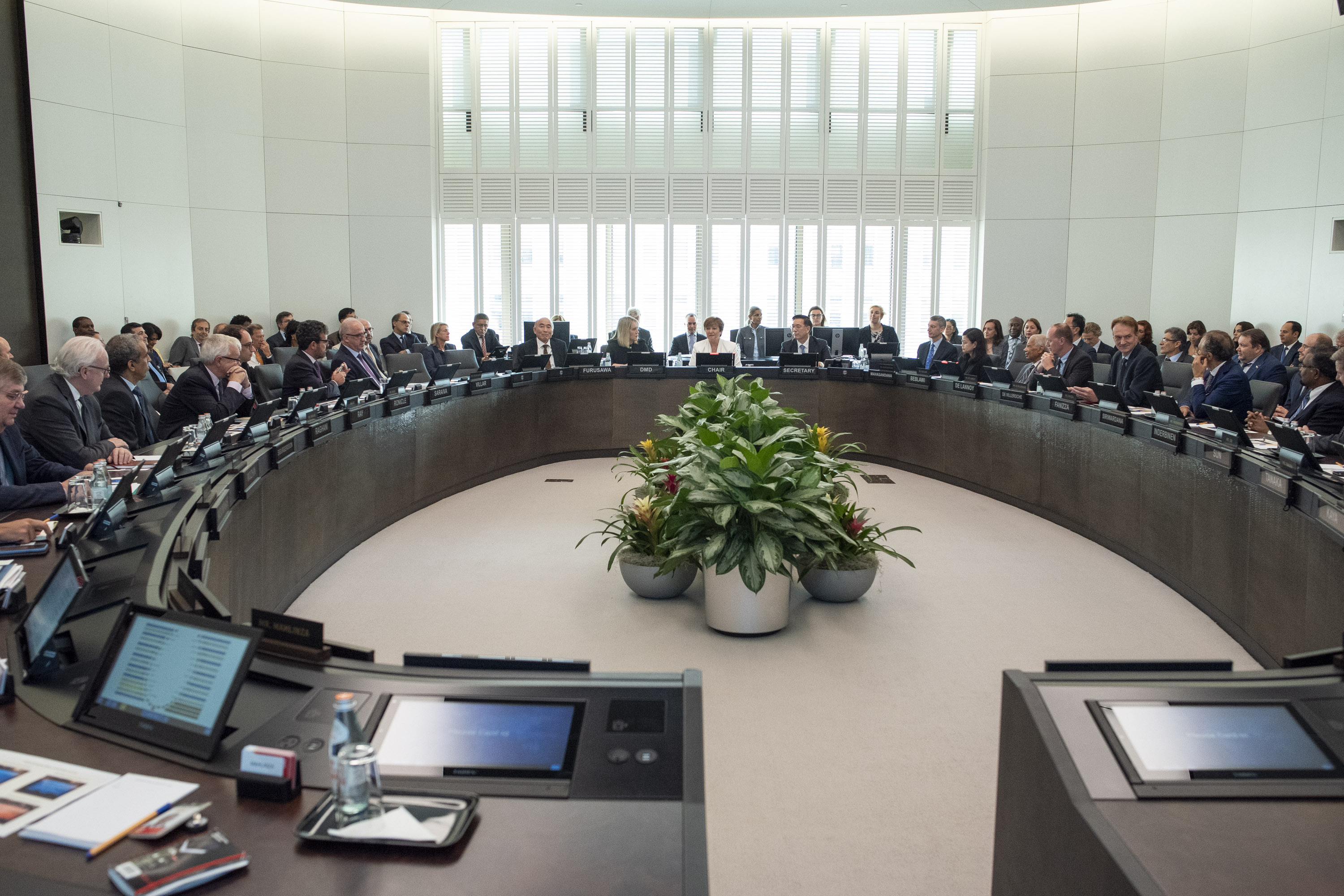
IMF Executive Board Concludes 2021 Article IV Consultation with the Republic of Congo
IMF News, September 28, 2021
Source details
- Canonical URL
- IMF Executive Board Concludes 2021 Article IV Consultation with the Republic of Congo
Other formats
Bibliographic details
- Published: September 28, 2021
Economic outlook and key indicators
- Overall growth projected to be around zero percent in 2021.
- Positive non-oil economic growth expected in 2021, buoyed by:
- easing of lockdowns,
- gradual vaccine rollout,
- social spending,
- domestic arrears repayments,
- some expansion of agricultural and mining activities.
- Oil sector developments:
- Contraction of oil production has slowed as oil field access and investment normalize.
- Value of oil revenues and exports are rising on the back of higher oil prices.
- Price and external balances:
- Subdued inflation: 2 percent (2021, as stated in the text).
- Current account surplus: 12 percent of GDP (2021, as stated in the text).
Fiscal position and debt
- Fiscal stance:
- Fiscal policy balances the fight against the pandemic, support for recovery, and prudent debt management.
- The non-oil primary deficit is expected to widen to 17 percent of non-oil GDP in 2021, driven by spending on social assistance, health care, education, and infrastructure.
- Grants from development partners are lower than last year.
- Non-oil revenues are improving.
- Reductions in transfers and subsidies to state-owned enterprises and cuts in goods and services spending are helping create fiscal space.
- The non-oil deficit is mainly financed by improved oil revenues.
- Debt and arrears:
- Debt sustainability has been restored though significant debt vulnerabilities remain.
- Overall debt anticipated at 84 percent of GDP by end-2021.
- Substantial repayments of domestic arrears and external debt have been facilitated by restructuring of external commercial loans, improved debt management, fiscal discipline, and oil revenue windfalls.
- Immediate liquidity needs supported by the G20 Debt Service Suspension Initiative (DSSI).
- Liquidity risks and vulnerabilities to negative oil price shocks are elevated.
- Pending clearance of external arrears and conclusion of remaining restructuring negotiations, debt is classified as being in “distress”.
Executive Board assessment and policy recommendations
- General assessment:
- Directors agreed the Republic of Congo has been hit hard by the COVID-19 pandemic and oil price shocks.
- The recovery is expected to take hold in 2022, while considerable uncertainty surrounds the outlook.
- Achieving the growth needed to exit fragility and sustain progress in poverty reduction will require strong efforts to address structural impediments, build climate resilience, and diversify the economy.
- Strengthened governance and transparency is critical to secure financing from the Fund and development partners.
- Directors welcomed the authorities’ intention to engage in discussions with the Fund on a possible Extended Credit Facility arrangement.
- Fiscal and debt-related recommendations:
- Continue near-term fiscal support for the recovery through increased spending on health and social assistance, and payment of domestic arrears.
- Pursue medium-term fiscal consolidation, enhanced debt management and transparency, and non-oil revenue mobilization.
- Recommend a comprehensive review of the fiscal regime of the oil sector.
- Reduce transfers to state-owned enterprises (SOEs).
- Improve public investment efficiency.
- Support authorities’ plan to use the newly allocated SDRs for critical social programs given financing constraints.
- Financial sector and governance:
- Welcome efforts to reduce financial sector vulnerabilities, including domestic arrears clearance.
- Continued close monitoring of the banking sector due to still high non-performing loans.
- Urge further efforts to improve governance and transparency.
- Welcome progress toward adopting a new anti-corruption law and encourage implementation of anti-corruption architecture.
- Support measures to improve SOE governance and enhance public financial management more broadly.
- Structural reforms:
- Emphasize advancing structural reforms to support economic diversification and adaptation to climate change.
- Encourage improving the business environment, facilitating private sector investment, and fostering competitiveness.
Risks, uncertainties, and medium-term challenges
- Key risks and uncertainties:
- New waves of the pandemic.
- Volatile oil revenue prospects.
- Climate change shocks.
- Successful implementation of reforms.
- Medium- and long-term challenges:
- Exiting fragility while adapting to climate change and reduced oil revenues in response to the global transition to low-carbon economies.
- Non-oil economic growth is expected to gradually recover driven by economic diversification and resilience-building, benefiting from continued governance and business environment reforms, increased social and infrastructure spending, and prudent debt management.
- Upside possibilities:
- Investment in mining and oil and gas could rise with new field discoveries.
- Accelerated reform implementation could catalyze more concessional financing.
Source: Press Release No. 21/277, IMF, September 28, 2021.