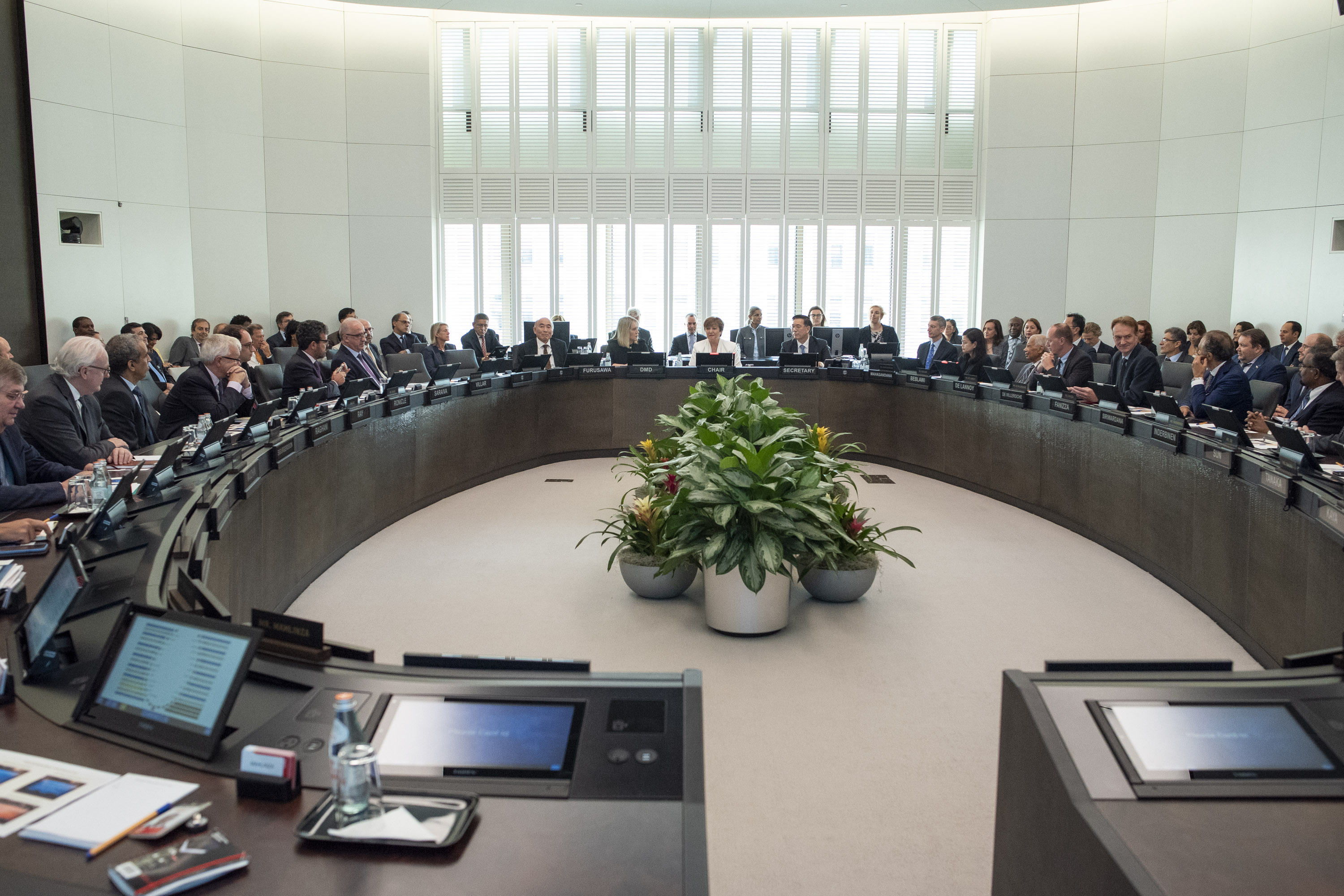
IMF Executive Board Concludes 2022 Article IV Consultation with Kosovo
IMF News, January 27, 2023
Source details
- Canonical URL
- IMF Executive Board Concludes 2022 Article IV Consultation with Kosovo
Other formats
Bibliographic details
- Published: January 27, 2023
Overview
- IMF Executive Board concluded the Article IV consultation with Kosovo on January 25, 2023.
- The increase in energy and food prices after Russia’s war in Ukraine is weighing on private demand, activity, and inflation.
- Real GDP growth is estimated to have decelerated to 2.5–3 percent in 2022, after recovering by 10.7 percent in 2021.
- Average inflation reached more than 11 percent in 2022.
Macroeconomic developments
- Real GDP growth:
- Estimated 2022 growth: 2.5–3 percent.
- 2021 growth: 10.7 percent recovery.
- Inflation:
- Average inflation in 2022: more than 11 percent.
- Credit and financial conditions:
- Credit to the private sector expanded by about 15 percent in nominal terms in 2022.
- Real credit growth decelerated compared to 2021.
- Domestic government bond yields and lending rates have begun to increase, reflecting tighter euro area financial conditions.
- Banking sector:
- Banking sector has remained resilient overall, with strong capital and liquidity buffers and low NPLs.
Fiscal policy and public finances
- Fiscal consolidation that began in 2021 continued in 2022.
- Primary fiscal position:
- Estimated to be balanced in 2022, compared with a deficit of about 1 percent of GDP in 2021.
- Drivers of fiscal tightening:
- Solid fiscal revenue growth.
- Low implementation of the public investment program (PIP).
- Increased transfers to lessen the impact of higher food and energy prices.
- Improvement in domestic tax collection reflecting progress in strengthening tax administration and tackling informality.
- Fiscal rule and balance:
- The “fiscal rule” caps the overall fiscal deficit at 2 percent of GDP, excluding investment financed with privatization receipts and donor financing contracted after 2015, as well as PAK-related current expenditure; the IMF calculates expenditures from carried-forward own-source revenue (OSR) as the difference in the municipal OSR stock.
Outlook and risks
- Growth forecast:
- Economic activity is forecasted to grow at 3.5 percent in 2023, around Kosovo’s potential of 3.5–4 percent.
- This forecast crucially depends on the assumption that international commodity prices will ease in 2023.
- Risks:
- Uncertainty around the outlook remains high; higher energy prices represent the main downside risk.
- Policy implications:
- Sound fiscal and financial policies will help mitigate the impact of downside risks.
- Structural reforms addressing infrastructure and governance gaps are essential to diversify Kosovo’s growth engines and create the conditions for greener economic growth.
- Boosting green energy generation capacity is important to increase energy security and decrease emissions.
Executive Board Assessment — findings and recommendations
- Directors' assessment:
- Noted that spillovers from Russia’s war in Ukraine, including high food and energy prices and tightening financial conditions, are weighing on growth, and the outlook remains uncertain with risks tilted to the downside.
- Commended the authorities’ swift policy response that helped cushion the impact of the terms of trade shock on households and firms.
- Encouraged continued commitment to prudent policies combined with a revitalized structural reform agenda to unlock growth.
- Supported continued close Fund engagement to help Kosovo advance its reform efforts and rebuild policy buffers.
- Fiscal policy recommendations:
- Welcome efforts to replenish fiscal buffers.
- Agreed that a return to the fiscal rule deficit ceiling in 2023 could support a soft landing without exacerbating inflationary pressures.
- Emphasized that measures to mitigate the impact of higher energy prices should be temporary, well targeted, and encourage efficient energy use.
- Urged improvement in absorption of public investment and addressing public investment management shortcomings.
- Commended progress toward reducing informality and encouraged exploring additional revenue measures.
- Recommended that public spending be better balanced between social transfers and promoting economic transformation and resilience.
- Agreed that the phased implementation of the law regulating public wages would ensure talent retention while keeping the wage bill within its legal ceiling.
- Emphasized that early withdrawals from Kosovo’s Pension Savings Trust should be avoided.
- Financial sector recommendations:
- Welcomed the resilience of the banking system, which has remained liquid and well-capitalized.
- Urged continued close monitoring of bank asset quality and liquidity given the uncertain outlook.
- Emphasized the importance of enhancing surveillance of the housing market.
- Welcomed authorities’ commitment to implement recommendations from the 2019 Financial Sector Stability Review and 2021 Safeguards Assessment.
- Underscored the key role of an independent and accountable central bank in maintaining financial stability.
- Governance and structural reforms:
- Urged addressing infrastructure and governance gaps, further enhancing transparency, and reducing corruption to improve the business environment and increase potential growth.
- Called for addressing weaknesses in the AML/CFT framework.
- Underscored importance of boosting green energy generation capacity.
Selected economic indicators and key statistics (2019–27) — selected lines preserved exactly
- Real GDP growth (selected years and estimates/projections):
- 2019: 4.8
- 2020: -5.3
- 2021: 10.7
- 2022 (Est.): 2.7
- 2023 (Proj.): 3.5
- 2024 (Proj.): 3.9
- Contribution to growth (percentage points of GDP) — Consumption, Investment, Net Exports (selected entries):
- Consumption (Private/Public) — private 2019: 4.6; 2020: 2.0; 2021: 6.5; 2022: 2.2
- Investment 2019: -0.1; 2020: -2.3; 2021: -0.5; 2022: 1.6
- Net Exports 2019: -0.3; 2020: -0.2; 2021: 1.4; 2022: -0.8
- Price changes:
- CPI, period average: 0.2; 11.6; 4.9; 1.9
- GDP deflator: 1.0; 6.1; 9.3; 3.4; 1.8
- General government budget (percent of GDP) — Revenues and grants:
- 2019: 27.0; 2020: 25.6; 2021: 27.8; 2022: 28.6; 2023: 27.3; 2024: 27.2
- Expenditures (percent of GDP):
- 2019: 29.9; 2020: 33.5; 2021: 29.0; 2022: 28.0; 2023: 30.8; 2024: 29.5; 2025: 29.2; 2026: 29.3
- Of which: Wages and salaries (percent of GDP): 8.7; 9.8; 8.4; 7.4; 8.1
- Subsidies and transfers (percent of GDP): 8.9; 12.8; 10.6; 12.0; 11.2; 10.2; 10.0
- Capital expenditure (percent of GDP): 5.3; 6.8; 6.3
- Overall Balance (Fiscal rule) 1/:
- 2019: -6.6; 2020: -1.0; 2021: 0.1; 2022: -1.1; 2023: -1.2
- Overall balance:
- 2019: -2.9; 2020: -7.9; 2021: -2.2; 2022: -2.1; 2023: -2.0
- Total public debt 2/ (percent of GDP):
- 2019: 17.7; 2020: 22.5; 2021: 21.6; 2022: 19.2; 2023: 20.6; 2024: 21.0; 2025: 21.4; 2026: 21.9; 2027: 22.3
- Current account balance, incl. official transfers (percent of GDP):
- 2019: -5.7; 2020: -7.0; 2021: -8.7; 2022: -10.4; 2023: -8.0; 2024: -7.5; 2025: -7.1; 2026: -6.5; 2027: -6.3
- Remittance inflows (percent of GDP):
- 2019: 12.1; 2020: 14.5; 2021: 14.1; 2022: 13.6; 2023: 13.3; 2024: 12.6; 2025: 12.4
- Financial account (percent of GDP):
- 2019: -8.3; 2020: -4.6; 2021: -6.9; 2022: -5.0; 2023: -5.1; 2024: -4.8; 2025: -4.2
- Bank indicators:
- Non-performing loans (percent of total loans): 7.0; 15.6; 15.1; 10.3
- Bank credit to the private sector (percent change): 7.9; 6.6
- Deposits of the private sector (percent change): 10.9; 8.6; 6.4
- Regulatory capital to risk weighted assets: 15.9; 16.5; 16.1; 15.8
- Memorandum items:
- Foreign Reserves (millions of euros, IMF Definition): 1,142; 1,149; 1,293; 1,310; 1,420; 1,426; 1,427; 1,430; 1,367
- Foreign Reserves (% of ARA metric): 126; 119; 106; 94; 88; 82; 76; 69
- GDP (millions of euros): 7,056; 6,772; 7,958; 8,932; 9,817; 10,547; 11,233; 11,879; 12,522
- GDP per capita (euros): 3,959; 3,766; 4,499; 5,055; 5,561; 5,980; 6,376; 6,749; 7,121
Source: IMF Communications Department — Press Release No. 23/23 (IMF Executive Board Concludes 2022 Article IV Consultation with Kosovo).