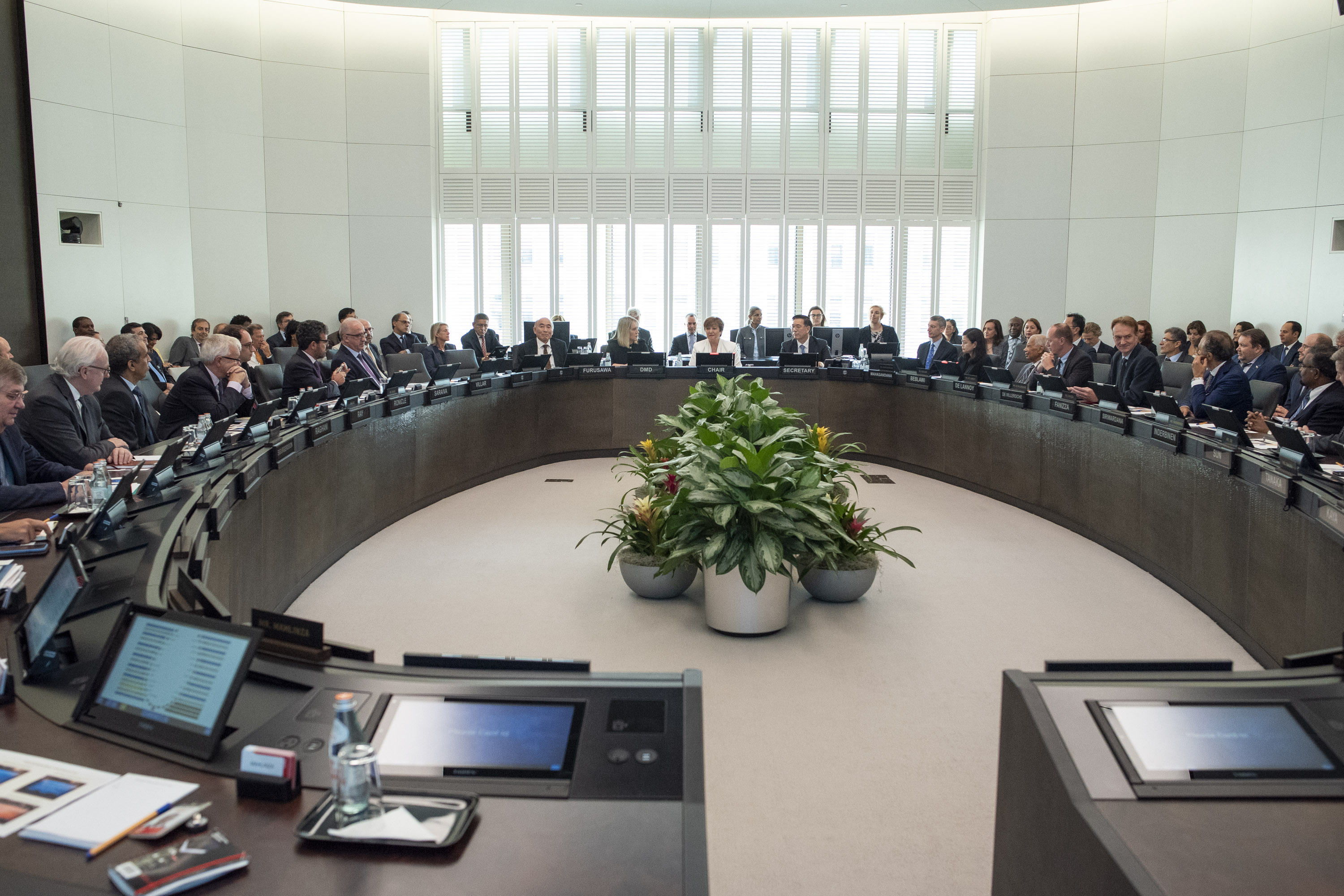
IMF Executive Board Concludes 2023 Article IV Consultation with Thailand
IMF News, January 22, 2024
Source details
- Canonical URL
- IMF Executive Board Concludes 2023 Article IV Consultation with Thailand
Other formats
Bibliographic details
- Published: January 22, 2024
Summary of macroeconomic developments
- Economic activity:
- Real GDP expanded by 2.6 percent in 2022.
- Growth moderated to 1.9 percent in 2023Q1‑Q3.
- Real GDP is projected to grow by 2.5 percent in 2023.
- Growth is projected to accelerate to 4.4 percent in 2024 and moderate to 2.0 percent in 2025.
- Demand composition:
- Private consumption described as "robust" and buttressed by the recovery in tourism.
- The economy faces headwinds from weak external demand and domestic investment.
- Inflation:
- Inflation decelerated in November 2023, owing to the base effect of energy and food prices, gradual monetary policy tightening, and the extension of energy price subsidies.
- Headline inflation is expected to average 1.3 percent in 2023.
- Headline inflation is expected to accelerate mildly in 2024 but remain within the Bank of Thailand’s target range.
- External sector:
- The current account balance declined in 2022, reflecting higher commodity prices and slower external demand.
- As of September 2023, the current account balance registered a small surplus aided by the recovery in tourist arrivals, the decline in shipping costs and a larger compression of imports relative to exports.
- The current account balance is expected to turn into a small surplus in 2023 and further increase in 2024.
Outlook and risks
- Near-term outlook:
- The recovery in 2023 is expected to remain timid before accelerating in 2024, supported by improvements in external demand and robust private consumption bolstered by the government’s fiscal stimulus.
- Downside risks (external and domestic):
- External risks include an abrupt global slowdown—including in China— hikes in commodity prices, tighter‑than‑expected global financial conditions, and deepening of geo‑economic fragmentation.
- Domestic risks include lack of fiscal discipline that could undermine macroeconomic stability, elevated private sector debt posing a threat to financial stability, and over‑reliance on tourism increasing vulnerability to external shocks.
Executive Board assessment and policy recommendations
- General assessment:
- Directors welcomed Thailand’s post-pandemic economic recovery and commended the authorities for maintaining macroeconomic stability amidst multiple shocks.
- Recovery has been slower than in ASEAN peers and the outlook remains uncertain, with risks tilted to the downside.
- Fiscal policy:
- Encouraged continuation of gradual policy normalization in the near term.
- Considered a neutral fiscal stance, with targeted and sustained support for vulnerable groups through enhanced social safety nets and greater progressivity in the tax system.
- Medium-term fiscal strategy should aim at placing public debt on a downward path while providing fiscal space for investments in human and physical capital and reducing risks from state-owned enterprises and extra-budgetary funds.
- Enhanced revenue mobilization is a priority, including gradually increasing the VAT rate and improving spending efficiency, including by removing costly universal energy subsidies.
- Monetary and financial sector policy:
- Bank of Thailand’s neutral monetary policy stance remains appropriate; authorities should be ready to tighten if domestic or external risks to inflation materialize.
- Welcomed unwinding of policy interventions in the financial sector.
- Encourage efforts to reduce elevated private debt by facilitating restructurings, promoting responsible lending and borrowing, and strengthening the macroprudential framework, instead of relying on debt moratoria that could cause moral hazard.
- Continue efforts to further strengthen the AML/CFT framework.
- Exchange rate and external policy:
- Exchange rate should continue to act as a shock absorber; foreign exchange intervention should be limited to addressing disorderly market conditions and preventing excessive deviations in hedging and financing premia due to large non‑fundamental shocks.
- Staff’s preliminary assessment indicates Thailand’s external position is stronger than implied by medium-term fundamentals and desirable policies; some Directors recognized authorities’ reservations about the External Balance Assessment framework and called on staff to continue work with them.
- Structural reforms:
- Implement reforms to promote investment and boost competitiveness and productivity.
- Remove excessive regulation, upskill the labor force, and reform the social protection system.
- Manage climate transition risks and build resilience to natural disasters.
Key statistics (selected indicators from Table 1)
- Real GDP growth (y/y percent change):
- 2019: 2.1
- 2020: -6.1
- 2021: 1.5
- 2022: 2.6
- 2023 (Est.): 2.5
- 2024 (Proj.): 4.4
- 2025 (Proj.): 2.0
- Consumption (y/y percent change):
- 2019: 3.4
- 2020: -0.3
- 2021: 1.3
- 2022: 5.0
- 2023: 4.8
- 2024: 6.0
- 2025: 0.3
- Gross domestic investment (percent of GDP):
- 2019: 23.8
- 2020: 23.7
- 2021: 28.6
- 2022: 27.8
- 2023: 21.9
- 2024: 19.7
- 2025: 20.7
- Headline CPI (period average, y/y percent change):
- 2019: 0.7
- 2020: -0.8
- 2021: 1.2
- 2022: 6.1
- 2023 (Est.): 1.7
- 2024 (Proj.): 1.9
- Current account balance (billions of U.S. dollars):
- 2019: 38.3
- 2020: 20.9
- 2021: -10.3
- 2022: -15.7
- 2023 (Est.): 4.1
- 2024 (Proj.): 7.7
- 2025 (Proj.): 12.3
- Current account balance (percent of GDP):
- 2019: 7.0
- 2020: 4.2
- 2021: -2.0
- Exports of goods, f.o.b. (billions of U.S. dollars):
- 2019: 242.7
- 2020: 227.0
- 2021: 270.6
- 2022: 285.2
- 2023 (Est.): 279.1
- 2024 (Proj.): 298.8
- 2025 (Proj.): 313.2
- Imports of goods, f.o.b. (billions of U.S. dollars):
- 2019: 216.0
- 2020: 186.6
- 2021: 238.2
- 2022: 271.6
- 2023 (Est.): 263.3
- 2024 (Proj.): 282.8
- 2025 (Proj.): 295.9
- Gross official reserves (end of period, billions of U.S. dollars):
- 2019: 259.0
- 2020: 286.5
- 2021: 279.2
- 2022: 245.8
- Months of following year's imports (reserves):
- 2019: 16.7
- 2020: 14.4
- 2021: 11.2
- 2022: 10.4
- 2023: 10.0
- 2024: 9.5
- Public sector debt (end of period, percent of GDP):
- 2019: 41.1
- 2020: 49.4
- 2021: 58.4
- 2022: 60.5
- 2023 (Est.): 62.4
- 2024 (Proj.): 65.8
- 2025 (Proj.): 66.9
- External debt (percent of GDP):
- 2019: 31.7
- 2020: 38.0
- 2021: 38.8
- 2022: 40.4
- 2023: 41.0
- External debt (in billions of U.S. dollars):
- 2019: 172.6
- 2020: 190.1
- 2021: 196.2
- 2022: 200.3
- 2023 (Est.): 213.2
- 2024 (Proj.): 223.7
- 2025 (Proj.): 236.6
- Public sector external debt (in billions of U.S. dollars):
- 2019: 37.2
- 2020: 41.5
- 2021: 41.2
- 2022: 44.6
- 2023: 46.2
- 2024: 48.0
- Private sector external debt (in billions of U.S. dollars):
- 2019: 133.9
- 2020: 152.9
- 2021: 154.7
- 2022: 159.1
- 2023: 170.3
- 2024: 179.1
- 2025: 190.2
- Short-term external debt (including portfolio flows, in billions of U.S. dollars):
- 2019: 59.3
- 2020: 73.5
- 2021: 72.4
- 2022: 76.8
- 2023: 74.5
- 2024: 78.8
- 2025: 83.6
- Debt service ratio:
- 2019: 6.9
- 2020: 8.4
- 2021: 6.7
- 2022: 7.3
- 2023: 9.2
- Nominal GDP (billions of baht):
- 2019: 16889.2
- 2020: 15661.1
- 2021: 16166.6
- 2022: 17370.2
- 2023 (Est.): 17839.5
- 2024 (Proj.): 18829.8
- 2025 (Proj.): 19509.2
Source: IMF press release "IMF Executive Board Concludes 2023 Article IV Consultation with Thailand", January 22, 2024.