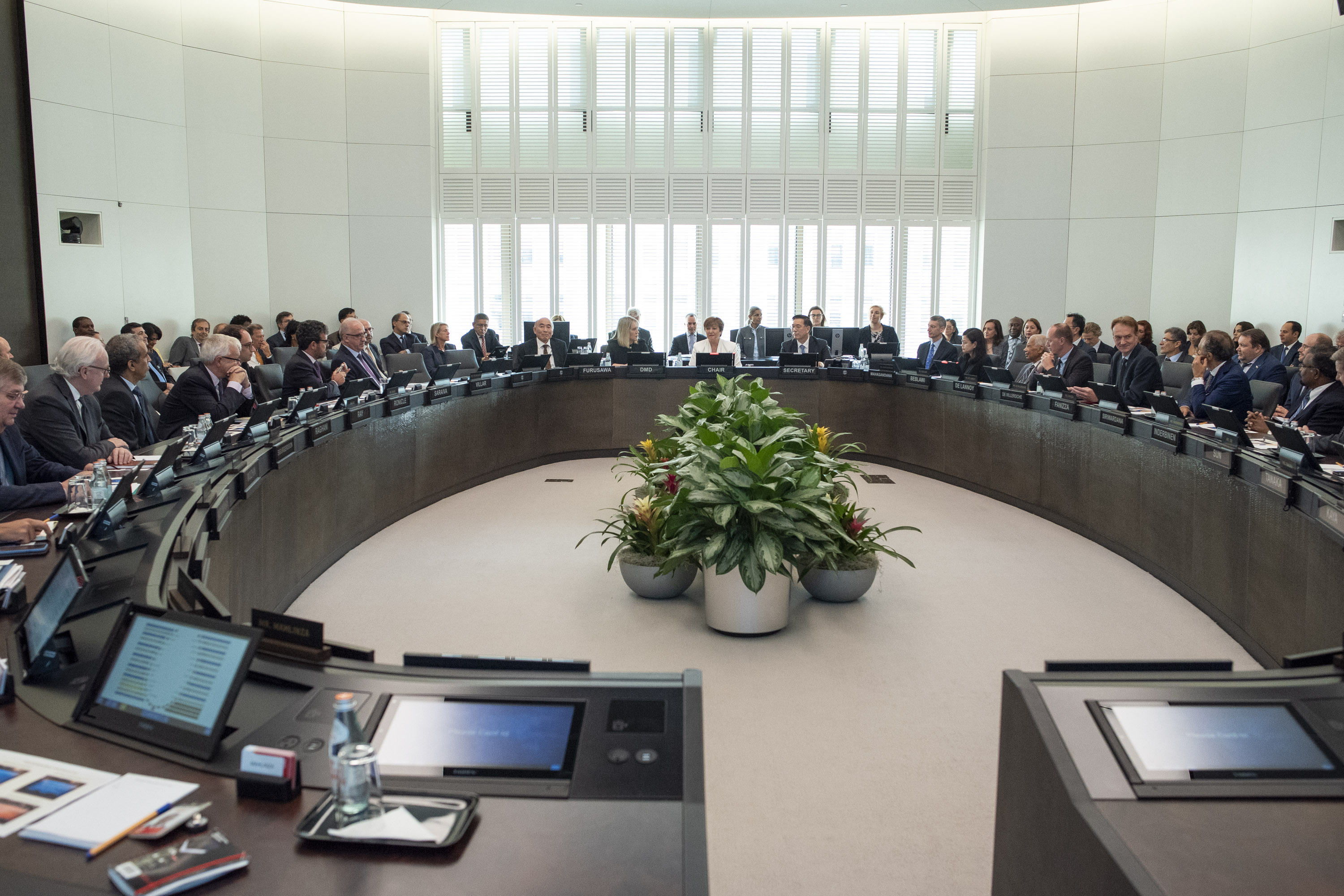
IMF Executive Board Concludes 2024 Article IV Consultation with Austria
IMF News, May 13, 2024
Source details
- Canonical URL
- IMF Executive Board Concludes 2024 Article IV Consultation with Austria
Other formats
Bibliographic details
- Published: May 13, 2024
Overview
- On May 3, 2024, the Executive Board of the International Monetary Fund (IMF) concluded the Article IV consultation with Austria.
- Economic policy support, including the use of available fiscal space, helped Austria recover rapidly from the pandemic and cushion the adverse impact of the energy-price shock following Russia’s invasion of Ukraine.
- Higher energy prices and higher interest rates weighed on growth, with the economy contracting in 2023.
- Inflation peaked in early 2023 and is now declining, but remains above the euro-area average, with services sector inflation described as relatively high and sticky.
Macroeconomic outlook and risks
- Baseline projections:
- A modest recovery is expected in 2024 as higher real wages support consumption.
- Growth is expected to gather pace during 2025–26 on stronger investment demand, supported by some expected monetary policy easing during 2024–25.
- In the medium term, growth is projected to be around 1 percent amid downward pressures from population aging.
- Inflation is expected to decline gradually to the target by the second half of 2025.
- Key risks (sizeable and two‑sided):
- Uncertainties around external demand.
- Energy market developments.
- Inflation persistence.
- Depth and speed of real estate market corrections.
- Executive Directors noted risks in both directions and reiterated vulnerabilities from high energy prices, elevated inflation, and higher interest rates that contributed to the 2023 contraction.
Executive Board assessment — Fiscal policy
- Directors welcomed Austria’s strong policy responses but urged fiscal policy to:
- Support disinflation and rebuild buffers.
- In the near term, save any revenue overperformance and avoid new deficit‑creating measures while remaining flexible as conditions evolve.
- Medium‑term fiscal priorities highlighted:
- Fiscal adjustment measures to offset rising spending pressures from aging.
- Bolster investment in the green transition.
- Strengthen buffers against adverse shocks.
- Put the public‑debt ratio on a clear downward path.
- Options to generate fiscal room suggested by Directors:
- Reducing environmentally harmful subsidies and tax expenditures.
- Updating property taxes.
- Increasing healthcare spending efficiency.
- Further reforming pensions.
Executive Board assessment — Financial stability
- Directors welcomed the financial system’s resilience through recent shocks but urged vigilance on key risks, especially:
- Commercial and residential real estate sector vulnerabilities.
- Specific recommendations:
- Close supervisory data gaps in the commercial real estate sector expeditiously.
- Retain the mandatory borrower‑based limits on mortgage lending as a permanent, structural measure.
- Banks should conserve recent high profits to strengthen buffers, including investment in cybersecurity technology.
- Swift implementation of key recommendations to improve financial crisis management.
- Continued strengthening of Austria’s AML/CFT framework.
Executive Board assessment — Structural reforms and green transition
- Need for further progress on structural reforms to address demographic headwinds and boost medium‑term growth:
- Commended efforts to boost labor‑force participation by expanding childcare resources and raising women’s standard pension age.
- Urged additional efforts to boost labor supply, including:
- Further expanding childcare.
- Closing gender wage gaps.
- Enhancing migrant integration.
- Exploring the scope for further pension reforms.
- On the green transition:
- Welcomed progress and urged additional measures, including removing regulatory bottlenecks, ensuring adequate resources for green investment, and addressing skill shortages.
- Emphasized that progress would also enhance energy security amid widening geoeconomic fragmentation pressures.
Key statistics (Table 1. Austria: Selected Economic Indicators, 2021–25)
- Population (million): 9.1
- Per capita GDP: $56,726
- Quota (SDR million, current): 3932.0
- Literacy rate 1/: 100%
- Main products and exports: Diversified
- Poverty rate 2/: 14.8%
- Key exports markets: Germany, CESEE
- Output — Real GDP growth (%):
- 2021: 4.2
- 2022: 4.8
- 2023: -0.8
- 2024: 0.3
- 2025 (Proj.): 1.6
- Employment — Unemployment (Harmonized) (%):
- 2021: 6.2
- 2022: 4.7
- 2023: 5.1
- 2024: 5.4
- 2025 (Proj.): 5.2
- Prices — Inflation (%):
- 2021: 2.8
- 2022: 8.6
- 2023: 7.7
- 2024 (Proj.): 4.0
- General government finances (% of GDP):
- Revenue:
- 2021: 50.4
- 2022: 49.7
- 2023: 49.4
- 2024 (Proj.): 49.6
- Expenditure:
- 2021: 56.2
- 2022: 52.9
- 2023: 52.1
- 2024 (Proj.): 52.4
- 2025 (Proj.): 51.6
- Fiscal balance:
- 2021: -5.8
- 2022: -3.2
- 2023: -2.7
- 2024 (Proj.): -2.8
- 2025 (Proj.): -2.2
- Public debt:
- 2021: 82.5
- 2022: 78.4
- 2023: 77.7
- 2024 (Proj.): 77.2
- 2025 (Proj.): 76.5
- Money and credit:
- Broad money (% change):
- 2021: 3.8
- 2022: -1.2
- 2023: 0.7
- 2024 (Proj.): 4.3
- Credit to the private sector (% change) 3/:
- 2021: 6.9
- 2022: -2.5
- 2023: 0.8
- Balance of payments:
- Current account (% of GDP):
- 2021: -0.3
- 2022: 2.7
- 2023: 2.0
- 2024 (Proj.): 2.2
- FDI (% of GDP):
- 2021: 2.3
- 2022: -0.4
- 2023: 1.1
- Reserves (months of imports):
- 2021: 1.4
- 2022: 1.3
- 2023: 1.2
- External debt (% of GDP):
- 2021: 146.9
- 2022: 131.7
- 2023: 130.5
- 2024 (Proj.): 129.6
- 2025 (Proj.): 128.5
- Exchange rates — REER (% change):
- 2021: 12.2
- 2022: 1.5
- 2023: 3.9
- Notes on sources: Sources: Authorities; and IMF staff estimates and projections. 1/ Percent of population aged 15-74 with education attainment between pre-primary and tertiary education. 2/ 2022, at risk of poverty rate after social transfers. 3/ Households and non-financial corporations. Exchange rate adjusted.
IMF Communications Department, May 13, 2024.