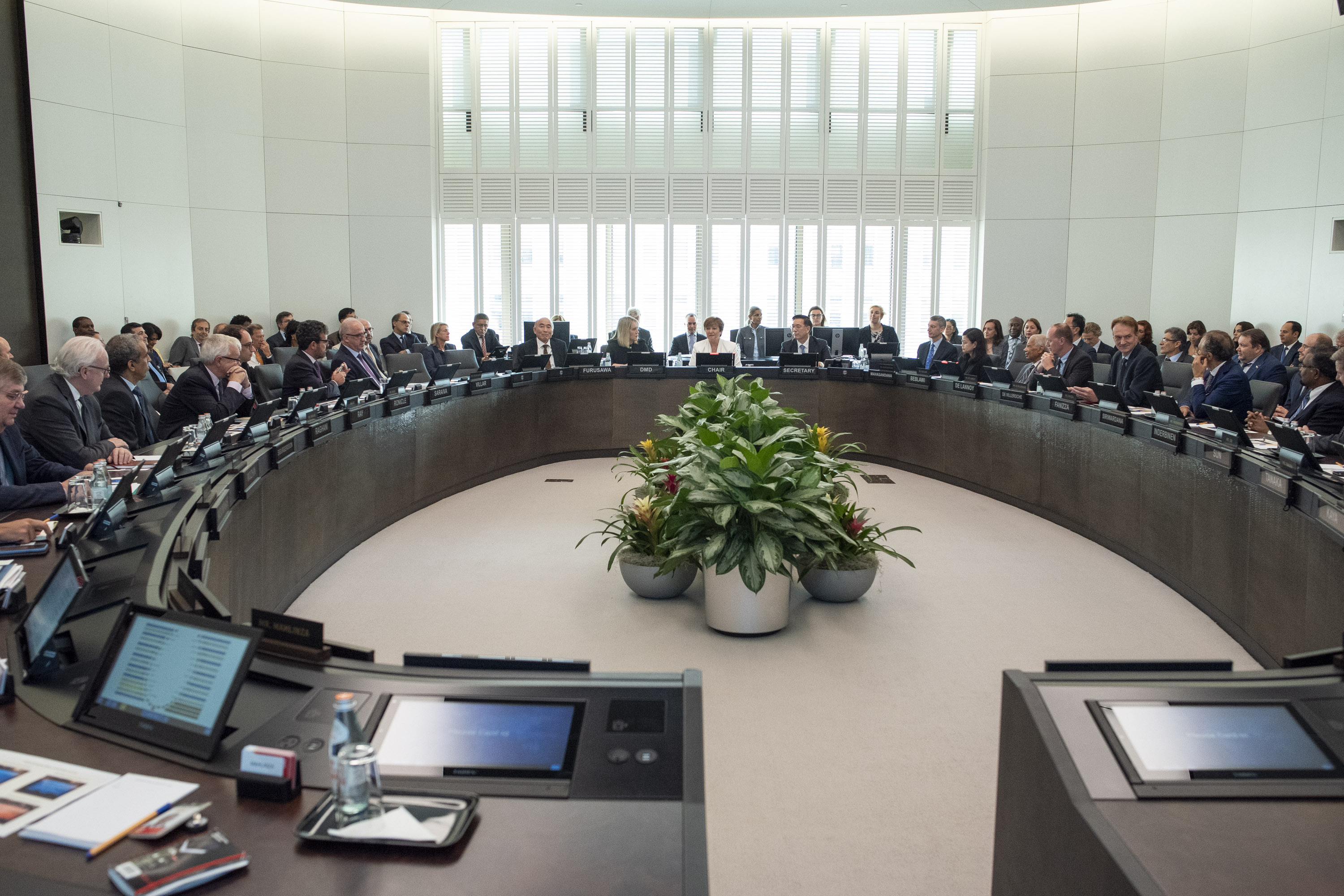
IMF Executive Board Approves 48-month US$20 billion Extended Arrangement for Argentina
IMF News, April 12, 2025
Source details
- Canonical URL
- IMF Executive Board Approves 48-month US$20 billion Extended Arrangement for Argentina
Other formats
Bibliographic details
- Published: April 12, 2025
Arrangement details and key financial terms
- 48-month Extended Fund Facility (EFF) arrangement.
- Total amount: US$20 billion (or 479 percent of quota).
- SDR equivalent: SDR 15.267 billion (equivalent to about US$20 billion, or 479 percent of quota).
- Immediate disbursement: US$12 billion (via SDR 9.2 billion).
- First review planned for June 2025 with an associated disbursement of about US$2 billion.
- Program aims to catalyze additional official multilateral and bilateral support and to facilitate a timely re-access to international capital markets.
Program objectives and expected outcomes
- Help transition Argentina to a new phase of stabilization and growth to:
- Entrench macroeconomic stability.
- Strengthen external sustainability.
- Deepen structural reforms to create a more open and market-oriented economy.
- Support path toward entrenching macroeconomic stability, strengthening external sustainability, and laying the foundation for stronger and more resilient growth.
Policy pillars and priorities
- Fiscal policy
- Sustain a strong fiscal anchor.
- Build on the authorities’ commitment to a zero-deficit target and their track record of delivering the first fiscal surplus in almost two decades.
- Strengthen the quality and durability of the fiscal anchor through spending discipline, efficiency measures, and well-sequenced reforms of the tax, revenue sharing, and pension systems.
- Continue to provide sufficient fiscal space for priority social assistance and priority infrastructure spending.
- Monetary and FX policy
- Transition toward a more robust monetary and FX regime with greater exchange rate flexibility.
- Establish an enhanced monetary targeting framework with strict limits on central net domestic assets to support money demand and disinflation, thereby limiting FX sales.
- Carefully sequence easing of distortive FX restrictions, combined with prudent macroprudential policies to avoid currency mismatches.
- Structural reforms to boost growth
- Deepen reforms to foster productivity, competitiveness, and growth, leveraging potential in energy and mining.
- Strengthen product and labor market flexibility and gradually open the economy.
- Improve state efficiency and regulatory predictability.
- Enhance governance and transparency, including further aligning anti-corruption and AML/CFT frameworks with international standards.
- Deregulation
- Build on ongoing efforts to deregulate the economy to foster a more dynamic, market-oriented environment.
Expected financing and catalytic effects
- Program expected to catalyze further official financing from multilateral sources — notably from the World Bank Group and IDB — and bilateral sources.
- Seeks to facilitate a timely return to international capital markets.
Risks, implementation, and contingency planning
- Program success depends on continued steadfast policy implementation and strong contingency planning, given elevated and rising global risks.
- Authorities have contingency plans in place to be complemented by agile policy making in the context of program reviews to refine macroeconomic policies as needed.
- Emphasis on clear communication and broadening social and political support for the reform program.
IMF leadership statement (Kristalina Georgieva)
- Highlights:
- Decisive implementation of stabilization plan has yielded rapid disinflation, a solid economic recovery, and incipient improvements in social indicators.
- Argentina continues to face vulnerabilities and structural challenges, including limited external buffers to address elevated and rising global risks and impediments to strong and sustainable growth.
- Program priorities: (i) sustaining the strong fiscal anchor; (ii) facilitating an immediate transition toward a more robust monetary and FX policy framework; and (iii) deepening reforms to create a more open and market-based economy.
- Stresses the need for contingency plans, agile policy making in program reviews, clear communication, and broad social and political support.
Source: Press Release No. 25/101, April 11, 2025, IMF Communications Department.