Why We Need a “Marshall Plan” for Haiti
IMF Blog, January 22, 2010
Source details
- Canonical URL
- Why We Need a “Marshall Plan” for Haiti
Other formats
Bibliographic details
- Authors: Dominique Strauss-Kahn
- Published: January 22, 2010
Scale of the disaster and immediate humanitarian needs
- The earthquake is described as "the worst in the region in more than 200 years."
- Some 80 percent of its nine million people live below the poverty line.
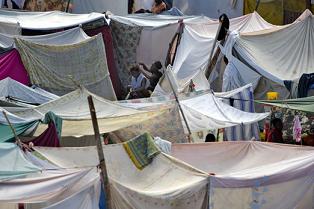
- According to the International Red Cross, three million people, nearly a third of Haiti's population, will need emergency food, water, and shelter for months to come.
- Much of Port-au-Prince has been flattened; victims are still being dug out of the rubble.
IMF immediate financial response and bridge financing
- The IMF and other international agencies "aim to make $100 million available to Haiti in the next few days as a bridge" from humanitarian relief to reconstruction.
- The Fund has the capacity to provide "urgently needed cash resources very quickly."
- For now, and for at least the next couple of years, Haiti has no payments to make on its existing debts to the Fund.
- The emergency loan provided is "interest-free, with no repayments due for five years."
- The Fund is assisting authorities to get cash to circulate in the economy so people can buy food and civil servants can be paid; banks will reopen shortly but the payments system is not fully operational yet.
Proposal for a Marshall Plan–style international reconstruction effort
- The author proposes a "type of Marshall Plan—an international effort to support the Haitian authorities in rebuilding the country and back its democracy."
- A first donors’ conference is scheduled to take place in Montreal next week, "in preparation for a larger conference in the spring that will mobilize financing for Haiti."
- The Fund will participate by "providing money and expertise" in a reconstruction plan coordinated across the international community.
- The goal is to plan now for the future even as immediate rescue efforts continue.
Reconstruction priorities and policy recommendations
- Restart private activity, including rebuilding businesses and encouraging guarantees for the banking sector so that lending can get under way again.
- Support the creation of jobs in rural areas, where large sectors of the population have moved because of the quake.
- Coordinate international donors to mobilize all available resources and deliver them as quickly as possible.
- Reassess Haiti’s debt situation "in light of the catastrophic damage to its economy" and prepare the international community to provide comprehensive debt relief at the appropriate stage.
- Emphasize that the focus on Haiti "must not result in the diversion of aid at the expense of other poor countries."
Framing and broader message
- The catastrophe presents an opportunity to "think on as massive a scale as then U.S. Secretary of State George C. Marshall did after World War II."
- The international community acting in concert is framed as essential to meet challenges beyond individual governments.
- The overarching objective: help the people of Haiti escape a cycle of poverty and deprivation fueled by recurring natural disasters.
Source: Dominique Strauss-Kahn, "Why We Need a “Marshall Plan” for Haiti", January 22, 2010, IMF blog post.