Global Safety Nets: Crisis Prevention in an Age of Uncertainty
IMF Blog, September 9, 2010
Source details
- Canonical URL
- Global Safety Nets: Crisis Prevention in an Age of Uncertainty
Other formats
Bibliographic details
- Authors: Reza Moghadam
- Published: September 9, 2010
Crisis context and rationale
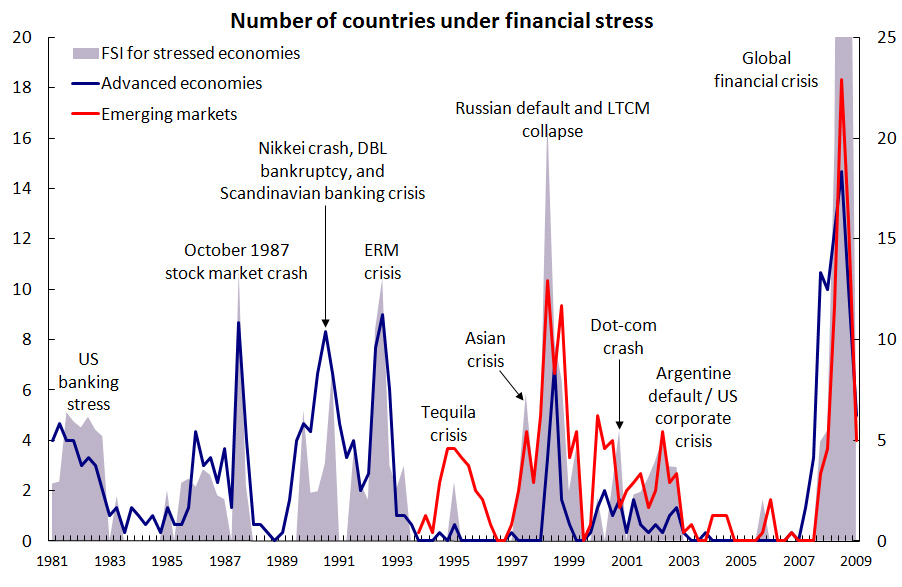
- The recent global crisis began in advanced economies but put most emerging markets under pressure; "no country, especially those most interconnected, was immune from tremendous economic strain."
- Emerging consensus: a better safety net is needed to enable countries with good policies to insure against bad outcomes, particularly when they are "innocent bystanders" in financial turmoil.
- The IMF enhanced its country insurance facilities to extend contingent financial support more broadly and to tailor support to members’ needs and circumstances.
- A new staff paper and supplement describe the main elements of these reforms.
Flexible Credit Line (FCL)
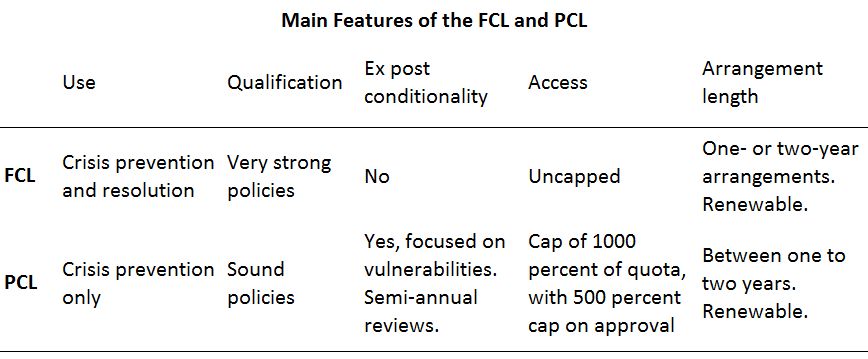
- Purpose: flagship insurance option for countries with very strong policies and economic fundamentals; intended to be "reserve-like" and more flexible.
- Early users: Mexico, Colombia, and Poland have made use of the FCL; all three FCLs have been renewed.
- Reported benefits by member countries: role in soothing market sentiment and providing "policy space" to take countercyclical measures.
- Two principal changes to the FCL:
- An FCL can be longer—up to two years, with a country’s policy strength reviewed after a year—providing an increased measure of predictability.
- The implicit cap on its size has been removed, allowing size to be determined by the amount of insurance that a member actually needs.
Precautionary Credit Line (PCL)
- Rationale: many countries with improved policy frameworks still have moderate residual weaknesses (including fiscal and financial areas and linkages to foreign banks) and lacked contingent protection during the crisis.
- Gap identified: the FCL’s high qualification bar made it unavailable for these countries; the Stand-by Arrangement (including precautionary forms) was not used much for crisis-prevention by these members.
- PCL design features:
- Intended to fill the gap for members with sound policies but moderate vulnerabilities.
- Rigorous qualification process provides a "seal of approval" regarding policy strengths while identifying residual vulnerability.
- Limited ex post conditions are used to address identified vulnerability, providing contingent financing as well as credibility to authorities’ policies.
- Access levels specified:
- As much as 500 percent of a country’s IMF quota could be available during the first year of the PCL.
- Up to a total of 1000 percent of quota could be available after a year.
A global financial safety net and broader policy work
- Good policies and frameworks, endorsed with FCLs and PCLs, are the first line of defense.
- Crises can be triggered by localized events that spark investor panic and contagion irrespective of fundamentals; investor withdrawals during the recent crisis were unusually intense.
- IMF and international community actions under consideration:
- Reform of the Fund’s lending facilities (already undertaken as one layer).
- Establishing synergies in lending and surveillance with key regional financing arrangements.
- Consulting with various stakeholders on these synergies.
- Considering a Global Stabilization Mechanism: a framework to allow proactive provision of financing during a systemic crisis to stem contagion.
- Process: the Executive Board has had a preliminary discussion; staff will develop these ideas further in the months ahead. Reader feedback is invited.
Source: Reza Moghadam, September 9, 2010.
Content in this bundle
- The Fund’s Mandate—The Future Financing Role: Reform Proposals; IMF Policy Papers; June 29, 2010
- 082510
References
- https://www.imf.org/wp-content/uploads/2010/09/moghadam090910a.jpg
- earlier reforms
- decided to extend the safety net
- wrote about earlier this year
- https://www.imf.org/wp-content/uploads/2010/09/moghadam090910b3.jpg
- https://www.imf.org/wp-content/uploads/2010/09/moghadam090910c.jpg
- https://www.imf.org/wp-content/uploads/2010/09/moghadam090910d.jpg