Quo Vadis México?
IMF Blog, December 13, 2010
Source details
- Canonical URL
- Quo Vadis México?
Other formats
Bibliographic details
- Authors: NicolsEyzaguirre
- Published: December 13, 2010
Context and overview
- Author: Nicolás Eyzaguirre
- Date: December 13, 2010
- Visit context: Arrival in Mexico with the IMF’s Managing Director Dominique Strauss-Kahn.
- Central message: Mexico has substantially strengthened economic institutions over the past decade, but must grasp global opportunities by making the economy more dynamic and addressing structural constraints.
Institutional and policy strengths
- Fiscal framework:
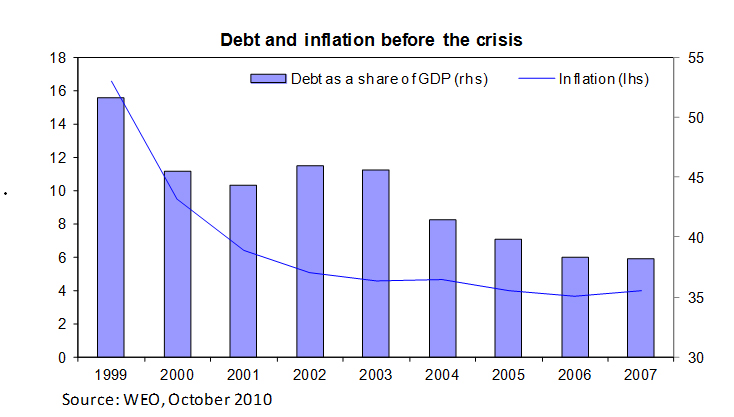
- A balanced budget fiscal rule has supported fiscal discipline and a reduction in public debt.
- The structure of public debt has been radically improved—Mexico has created a deep domestic bond market and extended maturities.
- Monetary policy:
- Introduction of inflation targeting has cemented the credibility of Banxico and fostered a reduction in inflation to low single digit levels.
- Exchange rate:
- Deep commitment to a flexible exchange regime has created an important safety valve for the economy.
- Crisis response and IMF engagement:
- During the global crisis, fiscal and monetary policies were eased to support the economy; the exchange rate and other prices adjusted to maintain economic equilibrium.
- The IMF invited Mexico to pioneer the new Flexible Credit Line as insurance against external shocks for countries with very strong economic policies; this contributed to warding off tail risks during the crisis.
Recent outcomes and macro figures
- Crisis impact:
- GDP fell by over 6 percent in 2009.
- Recovery:
- Mexico is recovering well, with growth expected at 5 percent in 2010.
Global context and opportunities
- Structural shift:
- The financial crisis marks a potential transformation in the world economy with emerging market countries becoming more central as sources of global growth and participants in global governance.
- Regional dynamics:
- Latin America, including Brazil, Chile and Peru, is contributing to the global recovery and expanding trade links with fast-growing Asian countries.
- Implications:
- The transformation creates challenges (managing pace of growth and capital flows) and opportunities (sustained rise in living standards).
Key challenges and policy priorities for Mexico
- Fiscal sustainability and public spending:
- Important fiscal reforms will maintain an orderly fiscal situation over the next several years while preserving fiscal space for priority spending.
- Mexico needs public investment in infrastructure and successful social safety net programs such as opportunidades.
- With oil revenues as a share of income forecast to decline and pressures from population ageing likely to rise, more fiscal resources will need to be found.
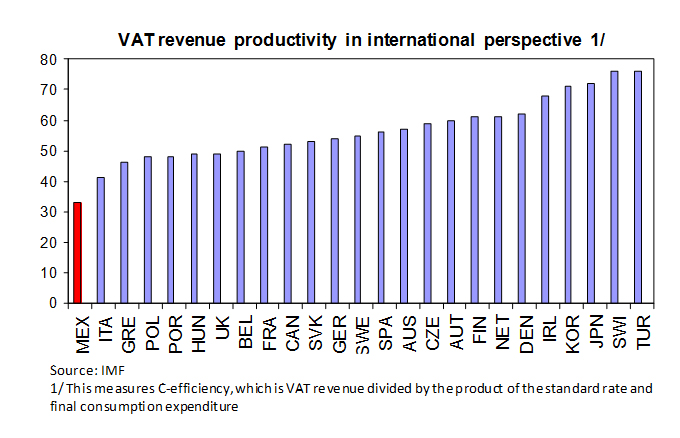
- Policy entry points: revisit the tax system (including the structure of the VAT and income taxes) and review the nature of spending, including subsidies, particularly in the electricity sector.
- Boosting long-term growth and job creation:
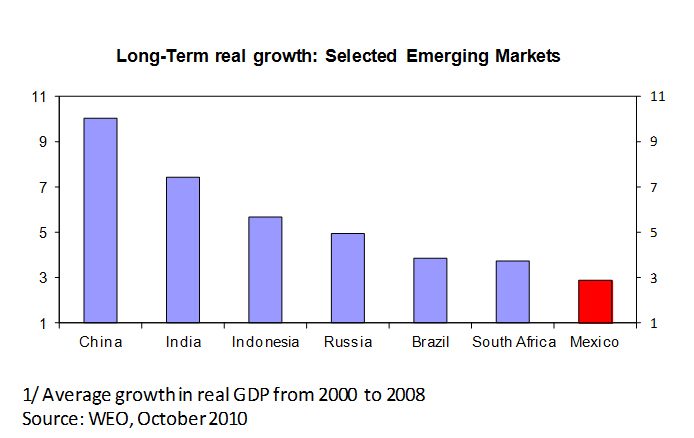
- Priority: raise very low long-term growth rate and create jobs for youth.
- Key structural reforms identified:
- Competition: Lack of competition in key sectors holds back economic dynamism; increased competition will lower costs and increase productivity. Recent efforts to reform the competition framework are encouraging, but implementation in the face of vested interests is critical.
- Public services: Government must provide services of the future (lower cost energy, better infrastructure), requiring further public sector and budgetary framework reforms and measures to support human capital formation, including raising education achievements.
- Labor markets: Large informal economy reflects rigidities in the formal labor market. Increasing flexibility while considering appropriate and affordable social protections is key to creating more and higher productivity jobs.
Engagement and dialogue
- Planned discussions in Mexico with leaders and young people to better understand Mexican perspectives and plans to secure the country’s place in the future global economy.
Source: Quo Vadis México?, Nicolás Eyzaguirre, December 13, 2010.