Beyond Growth: the Importance of Inclusion
IMF Blog, July 7, 2011
Source details
- Canonical URL
- Beyond Growth: the Importance of Inclusion
Other formats
Bibliographic details
- Authors: Antoinette M Sayeh
- Published: July 7, 2011
Overview
- Author: Antoinette M. Sayeh
- Publication date: July 7, 2011
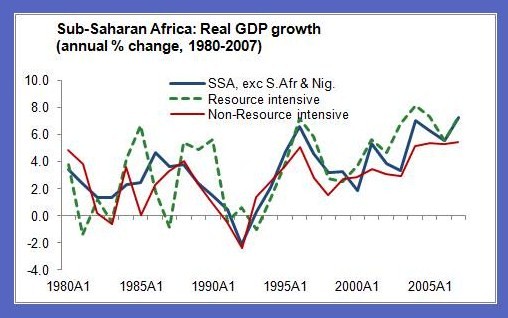
- Central question: While growth is necessary for poverty reduction and employment creation, is it sufficient to ensure that benefits accrue broadly across populations?
Why inclusive growth matters
- Inclusive growth creates jobs and raises income, which:
- Advances social justice, peace, and political stability.
- Can start a virtuous growth circle: the poor spend most of additional income on basic needs, supporting demand, which fuels further income and profit growth.
- Larger-scale production and better health and nutrition improve worker productivity, reducing costs and increasing output.
- Empirical suggestion: high income inequality, especially in low income countries, inhibits growth.
- Link to development goals: progress on inclusion matters for progress toward the Millennium Development Goals by 2015.
Constraints that have limited the benefits of growth
- Resource-concentrated growth:
- Growth concentrated in natural resource sectors (mining, oil) tends to be capital intensive, creating little domestic employment.
- These sectors can be difficult to tax and often result in only a small share of profits being retained domestically and used to reduce poverty.
- Persistent reliance on small-scale/subsistence agriculture:
- Majority of population in most African countries depends on small-scale or subsistence agriculture.
- Limited public infrastructure investment and limited access to financing have kept agricultural productivity low and households cash poor.
Country practices and policy examples toward more inclusive growth
- Policies to create jobs, increase productivity, and diversify activity:
- Mozambique: new poverty reduction action plan increases spending for job-creation in agriculture.
- Uganda: earmarked public savings to finance a new hydro-electric project.
- Tanzania: intensified efforts to eliminate red tape impeding private enterprise.
- Emphasis: public infrastructure (transportation, water, energy) and regulatory reforms.
- Strengthening social safety nets:
- Ethiopia: cash and food transfer program that improved food security and retained livestock holdings.
- Rwanda: cash transfer and public works programs that reduced extreme poverty dramatically.
- Purpose: reduce income inequality and protect vulnerable people during economic downturns.
- Managing natural resource revenues:
- Countries reviewing or changing tax regimes for natural resources to retain more profits domestically, including Democratic Republic of the Congo and Liberia.
- Simultaneous introduction of more transparent procedures to manage these resources.
IMF engagement and support
- Program and policy advice:
- Reinforce countries’ efforts to boost productivity and diversify production.
- Support processes to identify and select investment projects with widespread returns.
- Promote simple and transparent rules for starting businesses.
- Technical assistance for natural resource management:
- Redesigning tax systems.
- Establishing sovereign wealth funds as special accounts to manage and safeguard monies until needed.
- Advising on rules for spending and mandatory public monitoring.
- Social protection design and financing:
- Support for designing and financing social safety nets to provide social protection and create automatic stabilizers that rapidly expand government spending to contain impacts of economic shocks.
Outlook and priorities
- The IMF’s next Regional Economic Outlook for Africa will explore these questions in more depth (to be released in October of this year).
- Near-term priority for many countries: establish economic stability and create conditions for robust economic growth.
- For an increasing number of countries, the distribution of the benefits of growth has become a dominant policy agenda item as they strive to meet the Millennium Development Goals by 2015.
Source: Beyond Growth: the Importance of Inclusion — Antoinette M. Sayeh, July 7, 2011