Regional Spillovers in South America: How “Systemic” is Brazil?
IMF Blog, May 29, 2012
Source details
- Canonical URL
- Regional Spillovers in South America: How “Systemic” is Brazil?
Other formats
Bibliographic details
- Authors: Gustavo Adler, Sebastian Sosa
- Published: May 29, 2012
Overview
- Publication: Regional Spillovers in South America: How “Systemic” is Brazil?
- Authors: Gustavo Adler, Sebastián Sosa
- Date: May 29, 2012
- Central question: How important is Brazil’s influence on neighboring South American countries given its size and correlated economic fluctuations?
Key facts and context
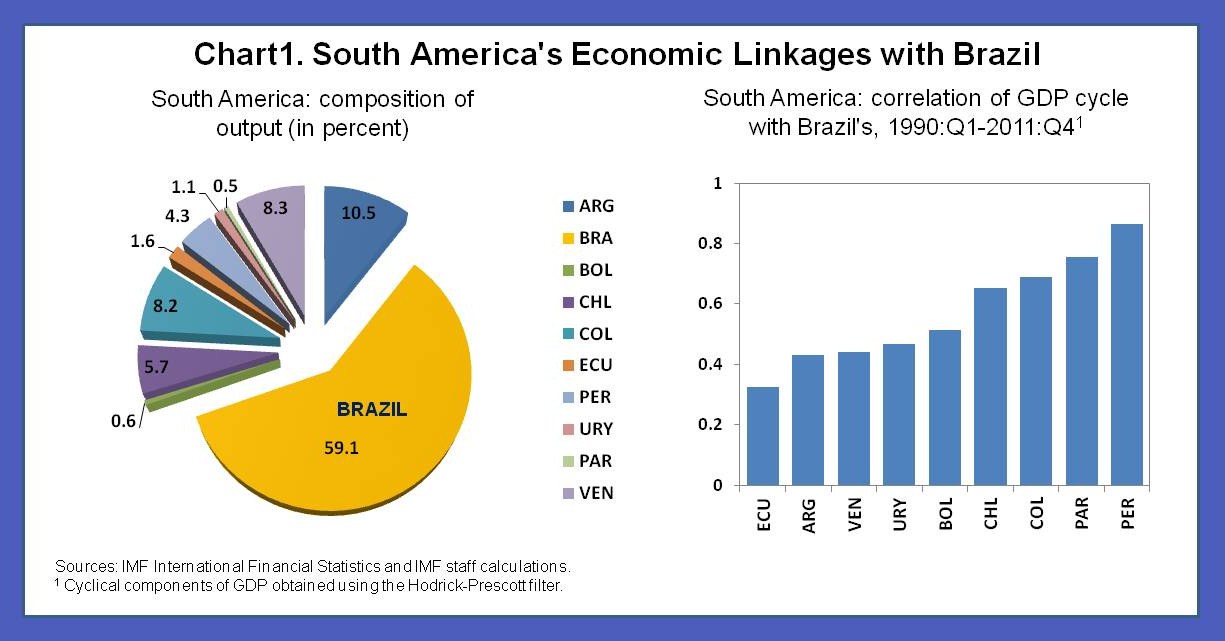
- Brazil accounts for 60 percent of South America’s output.
- High comovements in economic activity exist between Brazil and many neighboring countries, but these comovements may reflect common global factors (commodity prices, international financial conditions, global demand) rather than direct spillovers.
- Analysis period covered: 1990–2011.
Channels of transmission and trade linkages
- Primary transmission channel identified: trade linkages.
- Secondary channel (direct financial ties): described as almost negligible.
- Intraregional trade in South America increased markedly in the past decade, but Brazil’s share in total exports of its neighbors:
- Dropped in the early 2000s and reverted to the levels of the early 1990s.
- Heterogeneity across countries:
- Southern Cone economies (Argentina, Uruguay, Paraguay, Bolivia and—to a lesser extent—Chile) have relatively high export exposures to Brazil (measured both as percent of total exports and as a percent of GDP).
- Andean countries (Ecuador, Colombia, Peru, and Venezuela) have very limited trade linkages with Brazil—less than 3 percent of total exports or ½ percent of GDP.
Empirical approach and main results
- Methodology: statistical approach that strips effects of common external factors to quantify spillovers from Brazil.
- Main findings:
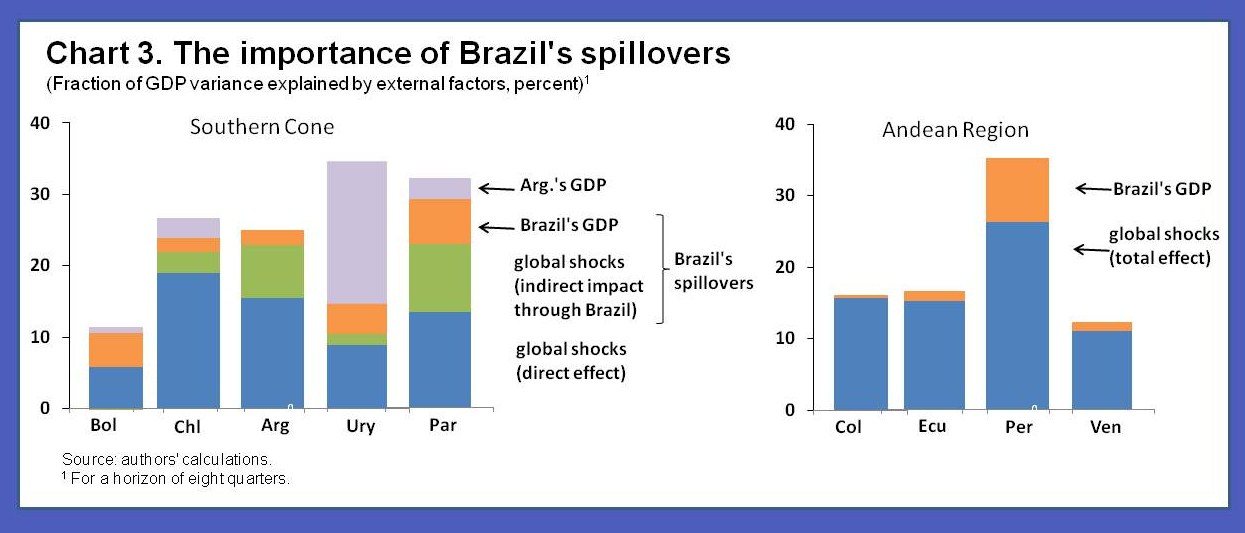
- Brazil exerts a significant influence on Southern Cone countries, particularly on Mercosur partners (Argentina, Paraguay, and Uruguay).
- Brazil does not exert a significant influence on the Andean economies.
- For Southern Cone countries, two forms of Brazilian-related effects are important:
- Transmission of shocks originating in Brazil.
- Amplification (through Brazil) of global shocks.
- These two factors explain an important share of fluctuations in economic activity in the Southern Cone.
Impact of Brazilian real depreciation
- Analysis finds no evidence of a significant impact of Brazil’s currency depreciation on the business cycle of South American economies, including Southern Cone countries.
- Interpretation offered:
- The dampening effect on output of neighboring countries resulting from the appreciation of their bilateral real exchange rate vis-à-vis Brazil is largely offset by the expansionary effect of the depreciation on Brazil’s output and domestic demand.
Source: Regional Spillovers in South America: How “Systemic” is Brazil? — Gustavo Adler and Sebastián Sosa, May 29, 2012.