Stabilizing Ukraine
IMF Blog, April 30, 2014
Source details
- Canonical URL
- Stabilizing Ukraine
Other formats
Bibliographic details
- Authors: Reza Moghadam
- Published: April 30, 2014
Overview and priorities
- Author: Reza Moghadam
- Date: April 30, 2014
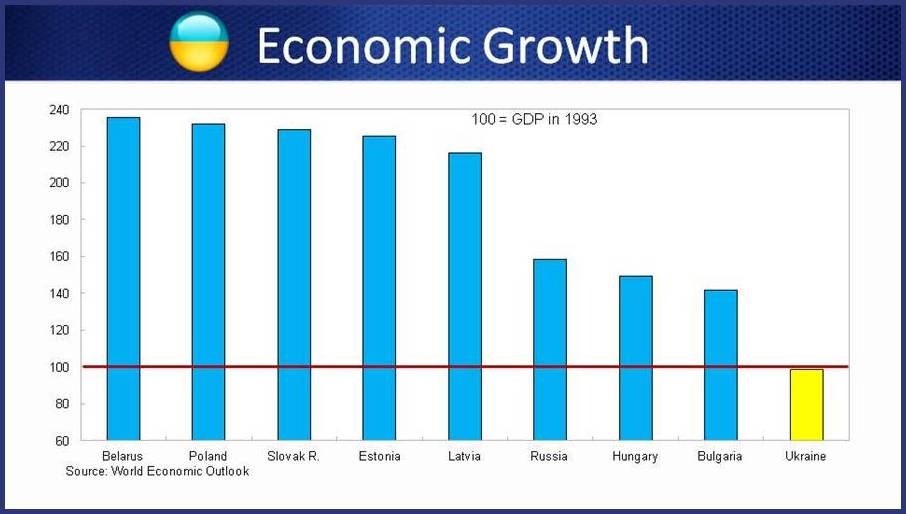
- Core assessment: Ukraine entered the acute crisis with pre-existing deep structural problems that made it vulnerable to funding shortfalls, currency flight, bank deposit withdrawals, and surging risk premiums.
- Program recognition: The economic adjustment program accepts that output will contract and inflation will remain high in the initial phases—these outcomes are described as unavoidable in the current circumstances.
- Five main elements of the program: Exchange rate flexibility; Banking stability; Fiscal policy; Energy policy; Transparency and business environment.
Exchange rate flexibility
- Policy action:
- The hryvnia has been allowed to float after years of exchange rate rigidity, falling foreign exchange reserves, currency controls, and high devaluation expectations.
- The central bank will shift its focus to controlling inflation, initially by targeting the money supply and later by shifting to inflation targeting.
- Rationale and expected benefits:
- Restore competitiveness and support exports and growth.
- Avoid a destabilizing loss of reserves.
- Provide a shock absorber for the economy.
Banking stability
- Recent problem: Events have shaken confidence and prompted deposit withdrawals.
- Policy actions:
- The central bank will continue to provide liquidity to solvent banks.
- Measures to ensure banks are well capitalized include strengthening regulatory and supervisory oversight, facilitating resolution of nonperforming loans, and conducting diagnostics of balance sheets followed by recapitalization as needed.
Fiscal policy
- Fiscal baseline risk: Without measures, the combined deficit of the government and energy utility would have reached an impossible-to-finance 12% of GDP.
- Policy imperatives:
- A substantial fiscal effort is required to restore confidence in public finances.
- Given the weak economy and political turmoil’s effect on revenue, the planned effort will still imply a higher combined deficit in 2014 than last year.
- The deficit is expected to decline only gradually thereafter.
Energy policy
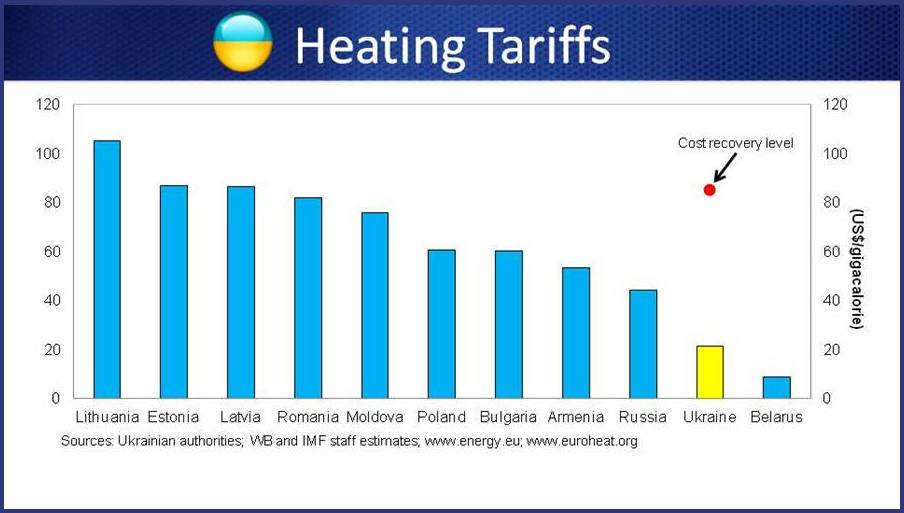
- Problem statement: The government’s precarious finances make its capacity to supply energy at very low prices untenable.
- Price changes:
- Heating and gas price increases of 40%-55% in 2014.
- Further increases of 20-40% in each of the next three years.
- Distributional and fiscal effects:
- Protections are included for the most vulnerable 25-30% of the population.
- Household expenditures on heating and gas rise from 3-7% of household budgets to 5-11%.
- The measures reduce the deficit of the energy utility by only 1% of GDP by 2016.
- Cost recovery begins only in 2018.
Transparency and business environment
- Diagnostic and reform commitments:
- Actions and diagnostics cover the anti-money laundering framework, procurement law, anti-corruption actions, the recovery of stolen assets, and tax administration.
- Purpose:
- Address lack of transparency that has allowed distortions and rigidities to persist.
- Improve the business environment to support medium- and long-term growth.
Risks, implementation, and outlook
- Risk environment:
- Multiple risks from outside (e.g., the conflict with Russia) and inside (e.g., reform efforts yielding to entrenched interests).
- Political economy:
- Success depends on political unity and determination to implement the program.
- The current government and leading candidates in upcoming elections have indicated support for key program objectives and policies.
- Early assessment:
- Major elements of the program have been implemented up front, which is described as a promising start in a still difficult and complex situation.
IMF blog post: "Stabilizing Ukraine" by Reza Moghadam, April 30, 2014.
Content in this bundle
- Стабилизация в Украине; Реза Могадам; Блог iMFdirect; 30 апреля 2014 года
References
- https://www.imf.org/wp-content/uploads/2014/04/figure-one1.jpg
- https://www.imf.org/wp-content/uploads/2014/04/figure-two.jpg
- https://www.imf.org/wp-content/uploads/2014/04/figure-three.jpg
- https://www.imf.org/wp-content/uploads/2014/04/figure-four.jpg
- https://www.imf.org/wp-content/uploads/2014/04/figure-five.jpg