Fixing International Corporate Taxation—Not Just a Problem for Advanced Economies
IMF Blog, June 25, 2014
Source details
- Canonical URL
- Fixing International Corporate Taxation—Not Just a Problem for Advanced Economies
Other formats
Bibliographic details
- Authors: Michael Keen
- Published: June 25, 2014
Overview and context
- Author: Michael Keen
- Date: June 25, 2014
- Core issue: tax rules set by countries create cross-border spillovers that allow some multinationals to pay very little corporate tax; these spillovers have powerful implications for macroeconomic performance and economic development.
Key findings on FDI and tax-driven capital flows
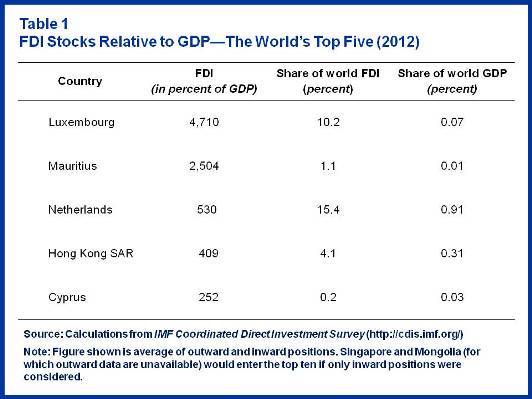
- Several countries’ tax arrangements make them attractive conduits to route investments (referenced: Table 1).
- Example observations:
- The Netherlands leads the world in its share of the world’s FDI.
- Mauritius is home to FDI “25 times the size of its economy.”
- Tax arrangements that exploit gaps between national tax systems can yield very large associated tax revenue losses—especially for developing countries.
Vulnerability of developing countries
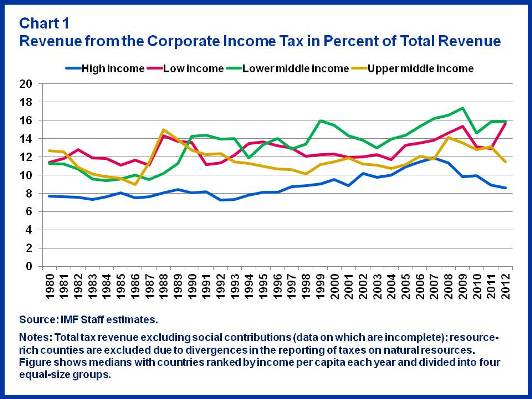
- Developing countries raise a larger revenue share from corporate taxation than advanced economies (referenced: Chart 1).
- In some country cases, revenue collected from a handful of foreign companies can be large not just relative to corporate tax but relative to all tax revenue:
- “10–15 percent” in some cases.
- New evidence in the paper shows patterns are systematic: developing countries are much more affected by spillovers from other countries' tax systems than advanced economies, making them overly vulnerable to taxation changes elsewhere.
Concerns about tax treaties
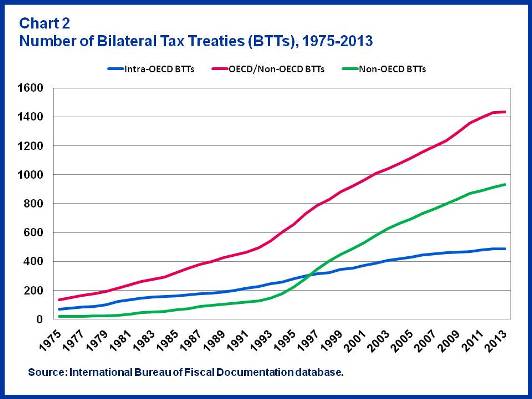
- Over the past two decades, developing countries have signed a huge number of tax treaties (referenced: Chart 2).
- Evidence on whether tax treaties deliver hoped-for benefits is mixed.
- IMF country work finds sometimes significant leakage of revenue through treaty provisions.
- The IMF has urged great care in ceding tax discretion by signing tax treaties; this view is now more widely accepted.
Nature of spillovers and challenges to the current architecture
- Spillovers occur when one country’s tax decisions affect others; common mechanisms include:
- Low or zero tax rates making a jurisdiction attractive to shift profits through paper transactions, eroding tax bases elsewhere.
- Preliminary estimates in the paper suggest these spillover effects are both “strongly significant and large.”
- Current international tax framework dates from the League of Nations “nearly a century ago” and is misaligned with modern realities:
- Growth of intra-firm trade
- Increased importance of services and intangibles (patents and the like)
- Increased digitalization
International responses and reform options
- The G20-OECD Action Plan on Base Erosion and Profit Shifting (BEPS) is an ambitious effort to address many current problems.
- Debate on more fundamental reform includes proposals such as:
- Taxing multinationals on a consolidated basis and using “formula apportionment” to allocate income across countries based on shares of assets, payroll, and/or sales.
- The paper stresses that “formula apportionment” could create significant new problems and might not necessarily benefit developing countries.
- Other fundamental reforms remain tentative; the IMF does not offer simple universal solutions.
Policy implications and IMF role
- These fundamental questions and the need for practical advice to countries taxing multinationals will persist.
- The IMF’s experience, mandate, and global membership position it as an increasingly important participant in this technically challenging policy debate.
Source: Fixing International Corporate Taxation—Not Just a Problem for Advanced Economies, Michael Keen, June 25, 2014.
Content in this bundle
- Spillovers in International Corporate Taxation; IMF Policy Paper; May 9, 2014