U.S. Monetary Policy: 3-2-1, Interest Rate Liftoff!
IMF Blog, September 10, 2014
Source details
- Canonical URL
- U.S. Monetary Policy: 3-2-1, Interest Rate Liftoff!
Other formats
Bibliographic details
- Authors: Francesco Columba, Jarkko Turunen
- Published: September 10, 2014
Overview
- After more than five years of exceptionally low interest rates, liftoff of U.S. policy interest rates from close to zero is expected to take place by around mid-2015.
- Timing is not set in stone and will depend on the state of the U.S. economy; stronger data could move liftoff earlier, weaker data could delay it.
- Based on the authors' most recent economic projections, there is some scope for policy rates to stay at zero for a little while longer than mid-2015, given remaining labor market slack and still low inflation.
Key factors determining liftoff timing
- Two main factors determine when the Fed will move policy onto the launchpad:
- How much “labor market slack” there is in the economy.
- The extent to which this slack translates into future wage and price inflation.
Labor market slack (findings)
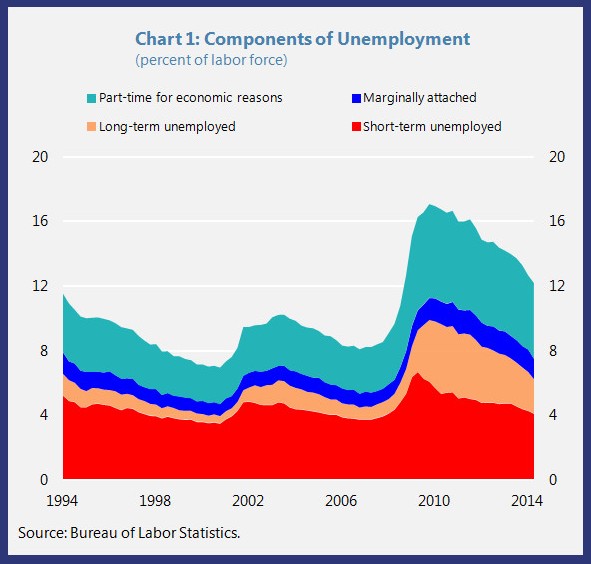
- Unemployment rate:
- Stood at 6.1 percent in August.
- Short-term unemployment is 4.2 percent and below its long-run average.
- Broader indicators of slack:
- Almost 3 million Americans have been jobless for at least 27 weeks.
- More than 7 million part-timers would like to work more.
- Close to 2 million others have stopped looking for work.
- Adjustment horizon:
- At current rates of job growth, it may take 3 or 4 more years for the economy to fully absorb these workers.
Inflation and wage trends (findings)
- Fed’s preferred measure of inflation (personal consumption expenditure inflation) was 1.6 percent in July.
- This is still well below the Fed’s 2 percent target.
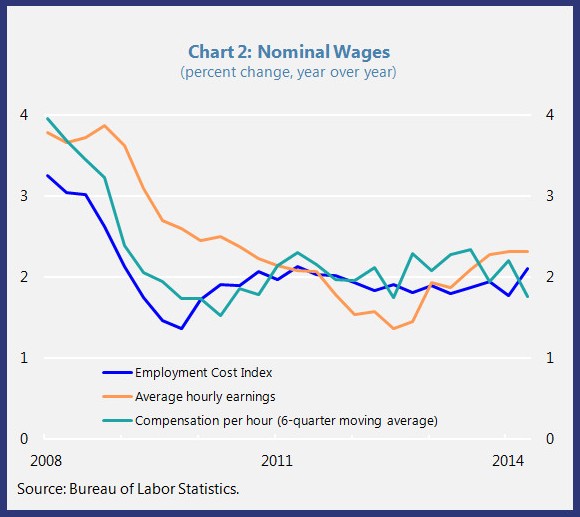
- There is little sign of a concerted increase in wage costs, particularly relative to productivity.
Financial stability risks (findings)
- Keeping policy rates at zero increases the likelihood that financial markets get ahead of themselves and investors over-reach.
- Specific vulnerabilities:
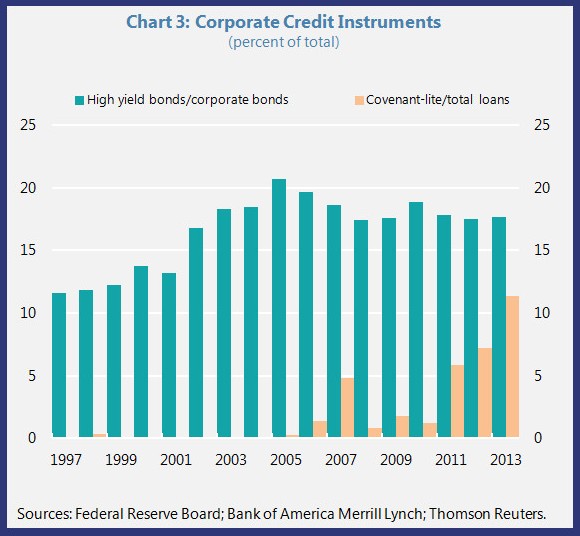
- Lower-rated corporate debt accounts for a bit less than a quarter of the corporate bond market; valuations appear stretched and issuance has been brisk.
- Authorities are monitoring developments in the leveraged loan market and working to enhance supervisory guidance as underwriting standards deteriorate.
- Asset management flows:
- Asset managers are increasingly investing in riskier and less liquid credit markets, raising the risk of a rush for the exits if expectations about Fed timing or pace change abruptly.
- Macroeconomic cost:
- An abrupt reassessment of Fed liftoff timing or an unwinding of high risk tolerance could lead to a sudden re-pricing of assets with macroeconomic costs in the United States and abroad.
Macroprudential policy recommendations (policy actions)
- Use macroprudential policies as the first line of defense against financial excesses while monetary policy remains committed to price stability and maximum employment.
- Examples of measures:
- More demanding underwriting standards for banks that extend intermediate leveraged loans.
- Tighter limits on large exposures to riskier assets.
- Tougher prudential rules for regulated entities that hold riskier assets.
- Actions to address the mismatch between liquidity promised to fund owners in good times and asset managers' ability to provide liquidity in stress.
Communication and governance (policy guidance)
- Timing and communication are both critical for a successful liftoff.
- The Fed’s communications toolkit should continue to evolve to update markets and the public on the outlook and policy stance.
- Possible communication enhancements:
- More frequent press conferences.
- A regular monetary policy report that gives the Fed policymakers’ majority view on the outlook.
- Providing clarity about the role of financial stability in monetary policy decisions.
Conclusion (scenario outlook)
- Timing the liftoff is a difficult judgement and will depend on how well the U.S. economy performs in the next several months.
- While tangible risks to financial stability exist, the authors remain optimistic that a solid period of economic growth will facilitate a Fed interest rate lift-off.
Francesco Columba, Jarkko Turunen — September 10, 2014 — U.S. Monetary Policy: 3-2-1, Interest Rate Liftoff!
References
- https://www.imf.org/wp-content/uploads/2014/09/newscom_capecanaveral-sipaphotosfour234459_532x797.jpg
- economic projections
- jobless
- https://www.imf.org/wp-content/uploads/2014/09/chart-1.jpg
- https://www.imf.org/wp-content/uploads/2014/09/chart-2.jpg
- https://www.imf.org/wp-content/uploads/2014/09/chart-3.jpg
- communications toolkit