Three Key Questions About the Slowdown in Emerging Markets
IMF Blog, September 18, 2014
Source details
- Canonical URL
- Three Key Questions About the Slowdown in Emerging Markets
Other formats
Bibliographic details
- Authors: Sweta Saxena
- Published: September 18, 2014
Are emerging markets slowing down?
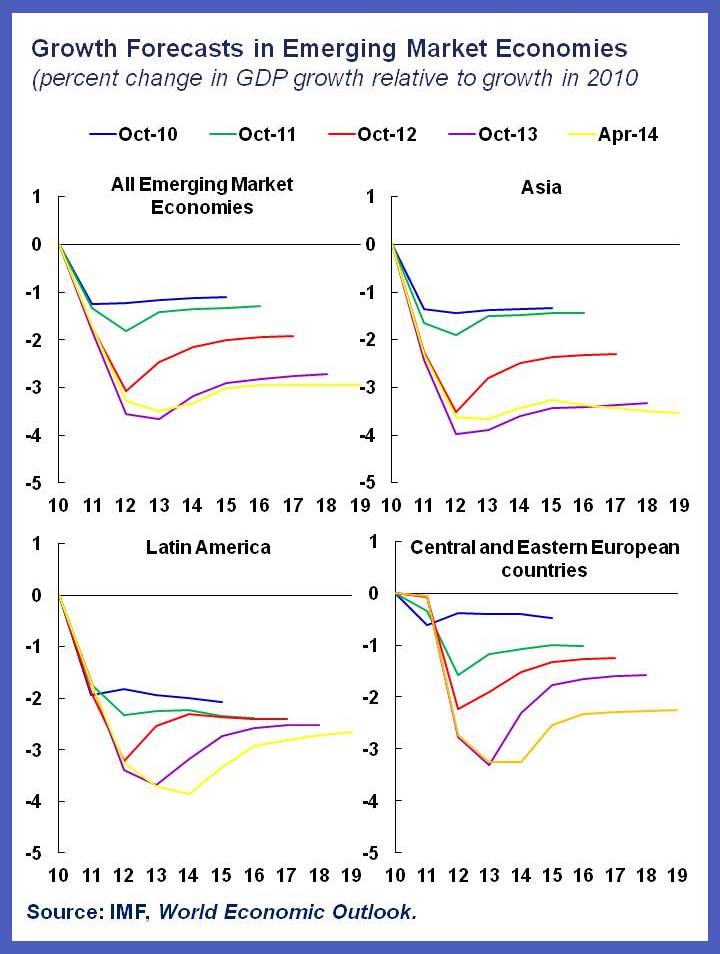
- Yes — they have been slowing down for some time.
- GDP growth path:
- "7 percent" during the pre-crisis period (2003-8)
- "6 percent" over the post-crisis period (2010-13)
- "5 percent, in our projections, over the next 5 years (2014-18)"
- Revisions to the medium-term outlook have been serially downward since 2010; this pattern of repeated downward revisions is highlighted as unique to the current downturn.
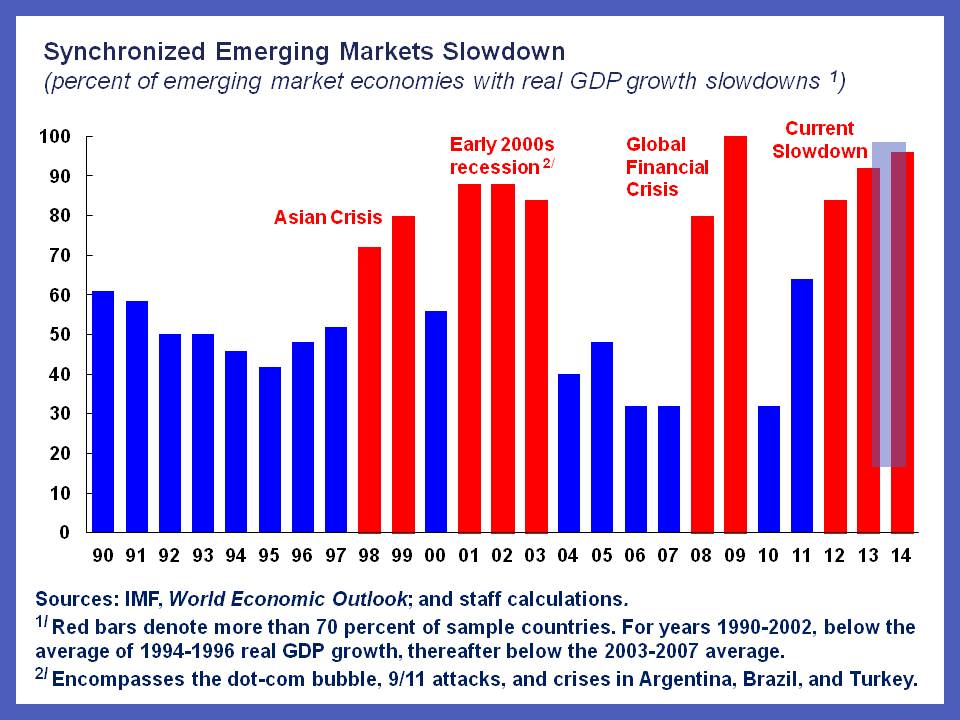
- The slowdown is broad based:
- Growth rates are lower than the pre-crisis average in "more than 70 percent" of emerging markets since 2012.
Implications for the world economy
- Overall assessment: Yes — the slowdown has meaningful spillovers (see the IMF's 2014 Spillover Report).
- Expected spillover channels and effects:
- Trade channel: A "1 percentage point" slowdown in emerging market economies lowers growth in advanced economies by "¼ percentage point," on average, through reduced trade.
- Commodity prices: Slower emerging market demand leads to lower commodity prices; the income effect depends on whether a nation mainly consumes (benefit) or produces (loss) those commodities.
- Financial sector: Slower growth can trigger loan repayment problems and capital losses for banks, including banks in advanced economies exposed to Emerging Market borrowers.
- Regional/neighborhood effects: Slowdowns transmit locally through trade, remittances, and financing/cooperation agreements. Examples cited:
- China → emerging Asia (trade)
- Brazil → Southern Cone countries (trade)
- Russia → Central Asian neighbors (remittances)
- Venezuela → Central American neighbors (financing and energy cooperation agreements)
Can anything be done to reduce risks?
- Yes — international coordination and policy preparedness are emphasized.
- Recommended approaches:
- Increased collaboration between advanced and emerging market economies to manage spillovers and potential spillbacks (effects on the original spillover source economies).
- Renewed attention to structural reforms in emerging economies to boost productivity and medium-term growth.
- Common reform priorities (national priorities differ, but common threads include):
- Addressing infrastructure needs
- Improving education and addressing skill shortages
- Enhancing competition and improving business climate
Sweta Saxena, Three Key Questions About the Slowdown in Emerging Markets, September 18, 2014.
Content in this bundle
- 2014 Spillover Report: IMF Multilateral Policy Issues Report -- IMF Policy Paper; June 25, 2014