How an Extended Period of Low Growth Could Reshape the Financial Industry
IMF Blog, April 6, 2017
Source details
- Canonical URL
- How an Extended Period of Low Growth Could Reshape the Financial Industry
Other formats
Bibliographic details
- Authors: Gaston Gelos, Jay Surti
- Published: April 6, 2017
Overview and scenario
- Publication: April 6, 2017.
- Authors: Gaston Gelos, Jay Surti.
- Core question: What happens if advanced economies remain stuck in a long-lasting funk marked by tepid growth, low interest rates, aging populations and stagnant productivity?
- Historical context noted: interest rates and economic growth have been low since the financial crisis in 2008; uncertainty whether this is temporary or a “new normal.”
- Comparative experience: Japan offers an example of the impact on banks.
- IMF timing: The IMF will release more analysis from the Global Financial Stability Report on April 19.
Depressed margins and macro-financial mechanics
- The yield curve has flattened (difference between short-term and long-term interest rates).
- For banks:
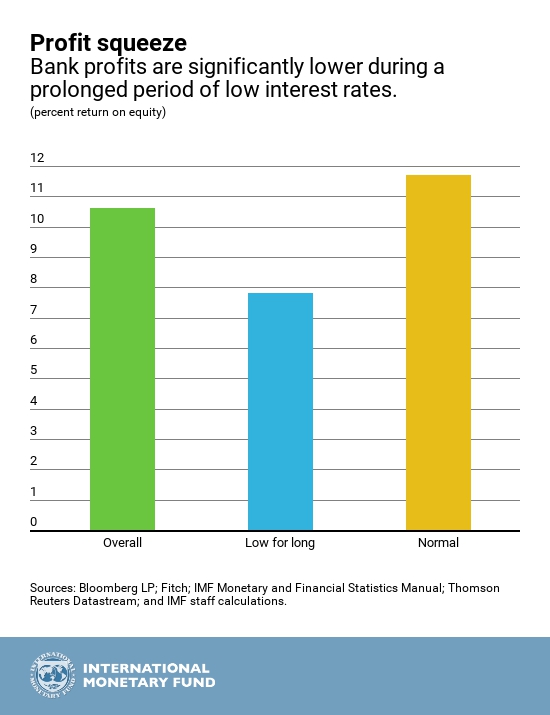
- Banks generally borrow relatively cheaply for short periods and lend for longer periods at higher rates; a flattened yield curve means less revenue.
- Banks typically find it difficult to lower rates on deposits to below zero, so lower rates tend to depress margins.
- Aging populations and slow growth imply a likely decline in demand for credit from households; higher lending volumes can’t compensate for low margins.
- By contrast, demand for fees-based and transactional services can be expected to rise.
Impact on banks
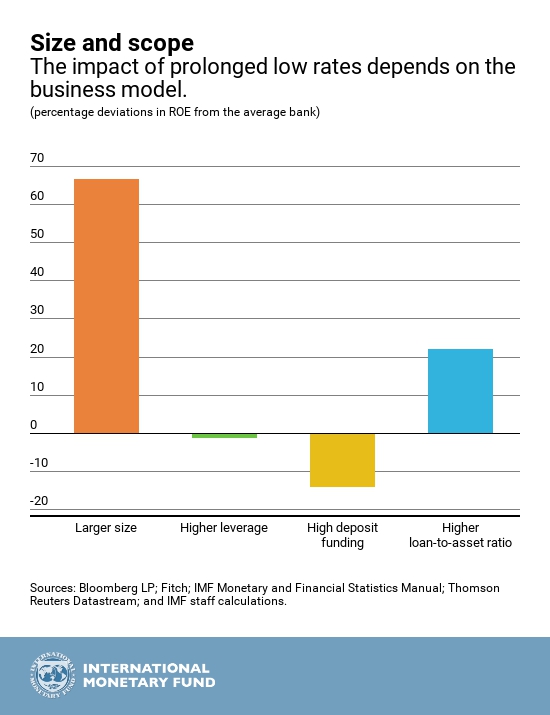
- Smaller, deposit-funded and less diversified banks will be hurt most in such a scenario.
- They may be pushed to reduce costs to preserve profits, and ultimately into mergers or bankruptcy.
- Larger banks:
- Are likely to diversify abroad as they seek new, more profitable outlets in emerging markets.
Life insurance companies and pension funds
- Life insurance companies:
- Face threats to their profits and solvency.
- Their assets, or investments such as bonds, are often shorter-term than their liabilities, or the policies they write.
- They may have to reinvest maturing assets at lower yields while continuing to make high payouts on their policies.
- As a result, they may be forced to raise more capital.
- Pension funds:
- Like life-insurance companies, may need more capital.
- They would also have to reduce benefits in the long term.
- The transition from defined-benefit to defined payment pension plans continues.
Asset managers
- Asset managers see their market share grow as more people invest retirement savings in stocks, bonds and mutual funds.
- They may also grab business from insurance companies as savers seek alternatives to lower-yielding guaranteed products such as whole-life policies.
- Supervision concerns:
- Asset management firms may need closer supervision as their its share of the financial system continues to grow.
- Regulators may need to monitor threats to financial stability posed by the increasing popularity of passive index-linked funds, which may reduce diversity of investments and encourage herd behavior among fund managers.
Policy recommendations and regulatory responses
- Make it easier to consolidate or liquidate failing firms, allowing remaining banks to improve their profitability.
- Limit incentives for banks to take on excessive financial risk.
- Introduce frameworks that recognize the financial conditions of insurance companies and pension funds by consistently evaluating assets and liabilities based on economic value, if they haven’t yet done so.
- Consider closer supervision of asset management firms, with particular attention to passive index-linked funds and potential systemic risks from reduced investment diversity and herd behavior.
Source: IMF blog article "How an Extended Period of Low Growth Could Reshape the Financial Industry" (April 6, 2017) by Gaston Gelos and Jay Surti.
Content in this bundle
- Как длительный период низкого роста может изменить структуру финансовой отрасли