Game-Changers and Whistle-Blowers: Taxing Wealth
IMF Blog, February 13, 2018
Source details
- Canonical URL
- Game-Changers and Whistle-Blowers: Taxing Wealth
Other formats
Bibliographic details
- Authors: James Brumby, Michael Keen
- Published: February 13, 2018
Overview
- Publication: February 13, 2018
- Authors: James Brumby, Michael Keen
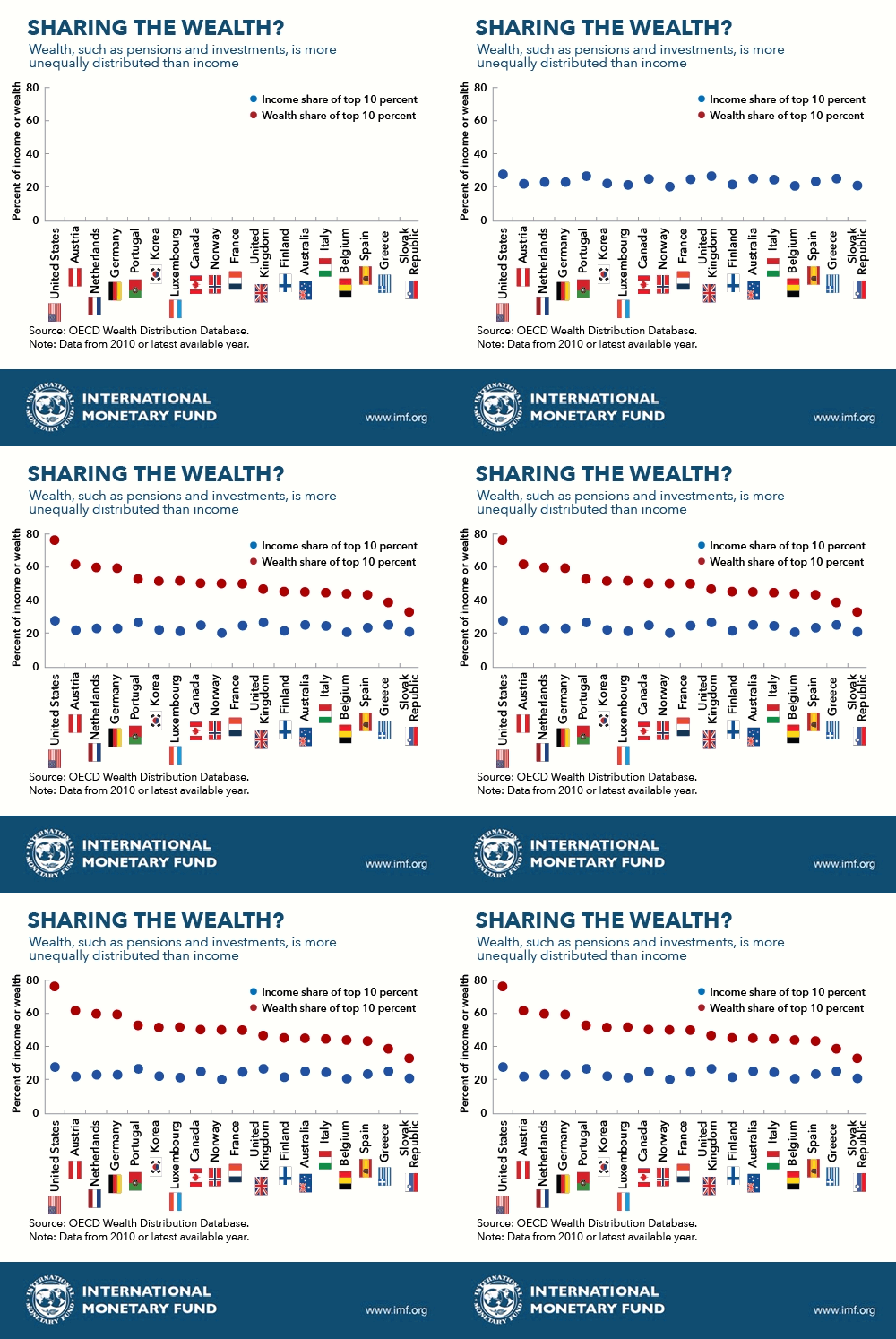
- Central concern: High and rising income inequality; wealth is distributed even more unequally than income.
- Reference policy proposal mentioned: Thomas Piketty’s coordinated global wealth tax of the wealthiest at two percent.
- Noted policy change: India removed its wealth tax in its last budget.
Distribution and scale of offshore wealth
- Estimates by Alstadsæter, Johannesen and Zucman:
- roughly eight percent of all household financial wealth —about 10 percent of global GDP—is held offshore in low-tax jurisdictions.
- roughly three-quarters of this goes unreported.
- Regional estimates:
- Some 22 percent of all Latin American financial wealth is estimated to be held overseas.
- For Africa, the number rises to a whopping 30 percent.
Historical trend in wealth taxation
- Between 1985 and 2007, the number of OECD countries with an active wealth tax fell from twelve to just four.
- Very few developing countries have a wealth tax on the books.
- Many existing wealth taxes have been of limited effectiveness.
Findings from practice and recent experience
- Risk-based approaches targeted at high net wealth individuals can yield dividends.
- Example: Over the past three years, the effective income tax rate for high net wealth individuals in Chile increased from about 9 to 10.5 percent.
- Property taxes can serve as a valuable if imperfect form of wealth taxation, though they are likely less effective at reaching the super-rich.
- Badly designed wealth taxes that are open to avoidance—through excessive exemptions, for instance, or weak taxation of gifts and bequests—can cause large distortions yet raise little revenue.
Policy recommendations and strategies
- Go after the big money
- Use a risk-based approach to high net wealth individuals.
- Establish units within the tax administration dedicated to the taxation of high net wealth individuals.
- Apply a graduated response using communication and enforcement tools.
- Tax system design matters
- Focus on taxation of capital income generated by wealth and its transfer between generations as alternatives to an annual wealth tax.
- Consider taxing different types of wealth in different ways.
- Avoid excessive exemptions and strengthen taxation of gifts and bequests to reduce avoidance and distortion.
- Go after the hearts and minds to get to the pockets
- Foster social responsibility among the wealthy by drawing on evidence of development impact from targeted spending (for instance in educational attainment).
- Build trust in efficient government and secure property rights to increase willingness to pay and reduce concealment of assets.
- Bring in coalitions for support
- Leverage civil society, investigative journalism, and public scrutiny to build support against aggressive tax avoidance by multinational companies.
- Think about the wealth managers
- Recognize intermediaries care about their reputations; they can be co-opted to help reform the system and sometimes act as whistleblowers.
- Note: in some cases, whistleblowers have received very substantial financial rewards.
- More transparency can help increase scrutiny
- Expand exchange of tax information between countries to address unreported income and wealth.
- Ensure tax authorities in developing countries reap benefits of information sharing.
- International organizations can assist in improving the fit of standards for developing countries and support movement towards greater public information on beneficial ownership and aggregate offshore wealth.
Institutional and international initiatives
- The topic was discussed at the regular IMF-World Bank session on taxation and at the first conference organized by the Platform for the Collaboration on Tax at the United Nations in New York.
- G20-led initiatives on exchange of tax information are characterized as a remarkable and perhaps ultimately game-changing approach to the taxation of the wealthy across borders.
Conclusion
- Immediate breakthroughs for more effective taxation of wealth in low-income countries are hard to see.
- However, there is reason to be less pessimistic than a few years ago about prospects for progress.
Source: IMF blog post "Game-Changers and Whistle-Blowers: Taxing Wealth", February 13, 2018.
Content in this bundle
- AJZ2017b — Offshore Wealth and Capital Flight
- Taxing across Borders: Tracking Personal Wealth and Corporate Profits