Canada’s Housing Market Slowdown
IMF Blog, August 7, 2019
Source details
- Canonical URL
- Canada’s Housing Market Slowdown
Other formats
Bibliographic details
- Authors: The Editors
- Published: August 7, 2019
Overview
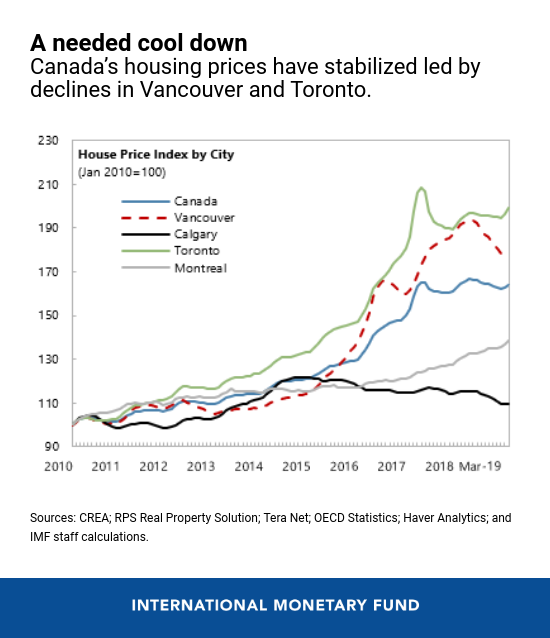
- Following a period of escalating prices, Canada’s housing market is cooling.
- Credit (photo: vkyryl/iStock by Getty Images)
- Chart of the Week — Financial sector risk
- The Editors — August 7, 2019
Housing market developments
- Residential mortgage credit slowed to just 3.4 percent annual growth in December 2018.
- Nationwide, house prices are 2.5 percent lower than the peak in mid-2018.
- Prices in most major cities have stabilized; in Toronto and Vancouver, declines in house prices reduced speculative “froth” but prices remain overvalued.
Financial stability and policy measures
- Policies designed to strengthen financial stability included more stringent tests of borrowers’ ability to repay their loans and higher interest rates, which together made mortgage financing more expensive.
- These measures succeeded in containing housing-related financial stability risks to some extent.
- The stock of household debt remains high at 176 percent of disposable income.
Risks and scenarios
- The IMF noted persistent housing market imbalances remain a key domestic risk factor.
- A sharp reversal in housing market prices, particularly if accompanied by a rise in unemployment and a collapse in people’s consumption, could spark additional risks to financial stability and growth.
Key statistics
- Residential mortgage credit growth: 3.4 percent (annual, December 2018)
- Nationwide house prices: 2.5 percent lower than peak in mid-2018
- Household debt: 176 percent of disposable income
Canada’s Housing Market Slowdown — The Editors, August 7, 2019