Fuel for Thought: Ditch the Subsidies
IMF Blog, August 14, 2019
Source details
- Canonical URL
- Fuel for Thought: Ditch the Subsidies
Other formats
Bibliographic details
- Authors: The Editors
- Published: August 14, 2019
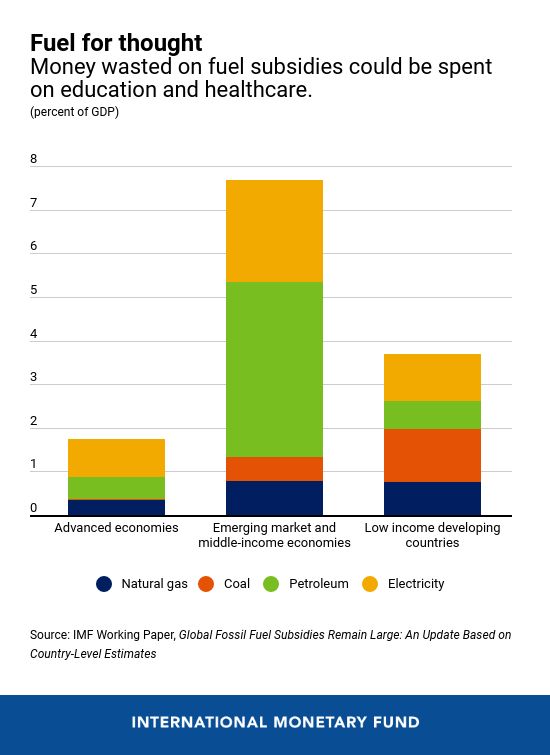
Key finding: potential fiscal gains from removing fossil fuel subsidies
- Removing fossil fuel subsidies could gain up to 4 percent of global GDP in additional resources over the medium term.
- Fossil fuel subsidies are defined broadly to include:
- government funding to artificially reduce the price of energy below cost: 0.4 percent of global GDP
- under taxation of fuel consumption: 6.1 percent of global GDP
- Total subsidies, by this definition, amount to 6.5 percent of GDP globally.
Rationale and distributional note
- Energy consumption contributes to global warming, local pollution, increased traffic congestion and more accidents.
- These subsidies typically benefit the rich more than the poor.
Policy implications and priorities
- Resources freed by removing subsidies can be redirected to growth-enhancing investment:
- pensions, education, healthcare
- better infrastructure (classrooms, hospitals, roads)
- technology and climate change mitigation
- Reallocating spending to these priorities can:
- help raise long-term economic growth
- reduce the burden of high public debt
- spread economic benefits more widely within and across countries
- help restore public trust in institutions necessary for economic stability
Upcoming IMF work
- The IMF’s Fiscal Monitor in April 2019 emphasizes that government policies on taxes and spending should adapt and shift to growth-enhancing investment.
- In October the IMF will publish the next Fiscal Monitor that will focus on climate change.
Source: The Editors, August 14, 2019 — "Fuel for Thought: Ditch the Subsidies" (Chart of the Week, Climate change)