South Africa: Bridging the Income Divide
IMF Blog, February 7, 2020
Source details
- Canonical URL
- South Africa: Bridging the Income Divide
Other formats
Bibliographic details
- Authors: The Editors
- Published: February 7, 2020
Extent and nature of inequality
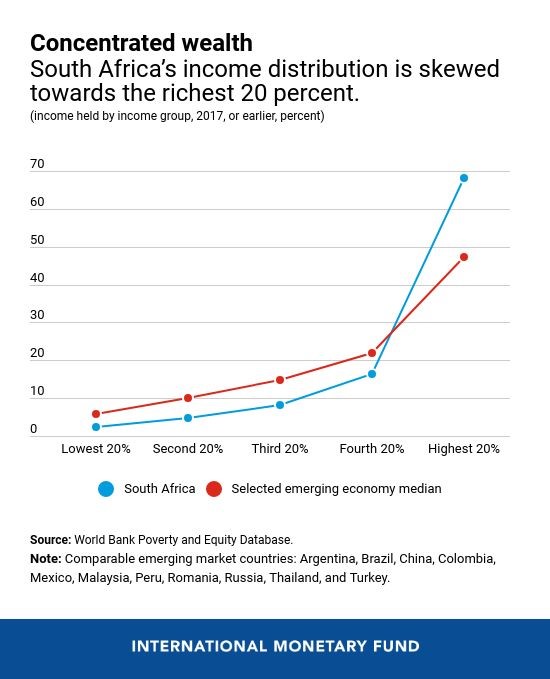
- The top 20 percent of the population holds over 68 percent of income.
- The poorest 40 percent possess only 7 percent of income.
- Inequality manifests in unequal access to opportunities—education, health, and jobs—and regional disparities.
- South Africa’s Gini—an index that measures inequality—has increased further in the early 2000s and has remained high ever since.
- Its peers have made inroads in reducing inequality.
Drivers of persistent inequality
- High unemployment has perpetuated inequality.
- South Africa's unemployment rate is significantly higher than other emerging markets.
- Nearly 60 percent of the country’s youth (aged 15-24) are unemployed.
- The policy of apartheid left already elevated inequality at the start of the 1990s by excluding a large swath of the population from economic opportunities.
- Low growth has contributed to the persistence of unequal outcomes.
Government responses to inequality
- Progressive fiscal redistribution has been used as a tool to tackle inequality.
- Efforts have focused on:
- Higher social spending.
- Targeted government transfers.
- Affirmative action to diversify wealth ownership.
- Promoting entrepreneurship among the previously marginalized.
- Rising debt is reducing the scope to further use fiscal policy for redistribution.
Policy recommendations and way forward
- Existing measures will need to be complemented by reforms that:
- Promote private investment.
- Create jobs.
- Foster inclusive growth.
- These reforms are presented as necessary for South Africa to bridge its great income divide.
The Editors, February 7, 2020.