Global Debt Reaches a Record $226 Trillion
IMF Blog, December 15, 2021
Source details
- Canonical URL
- Global Debt Reaches a Record $226 Trillion
Other formats
Bibliographic details
- Authors: Vitor Gaspar, Paulo Medas, Roberto Perrelli
- Published: December 15, 2021
Overview and key statistics
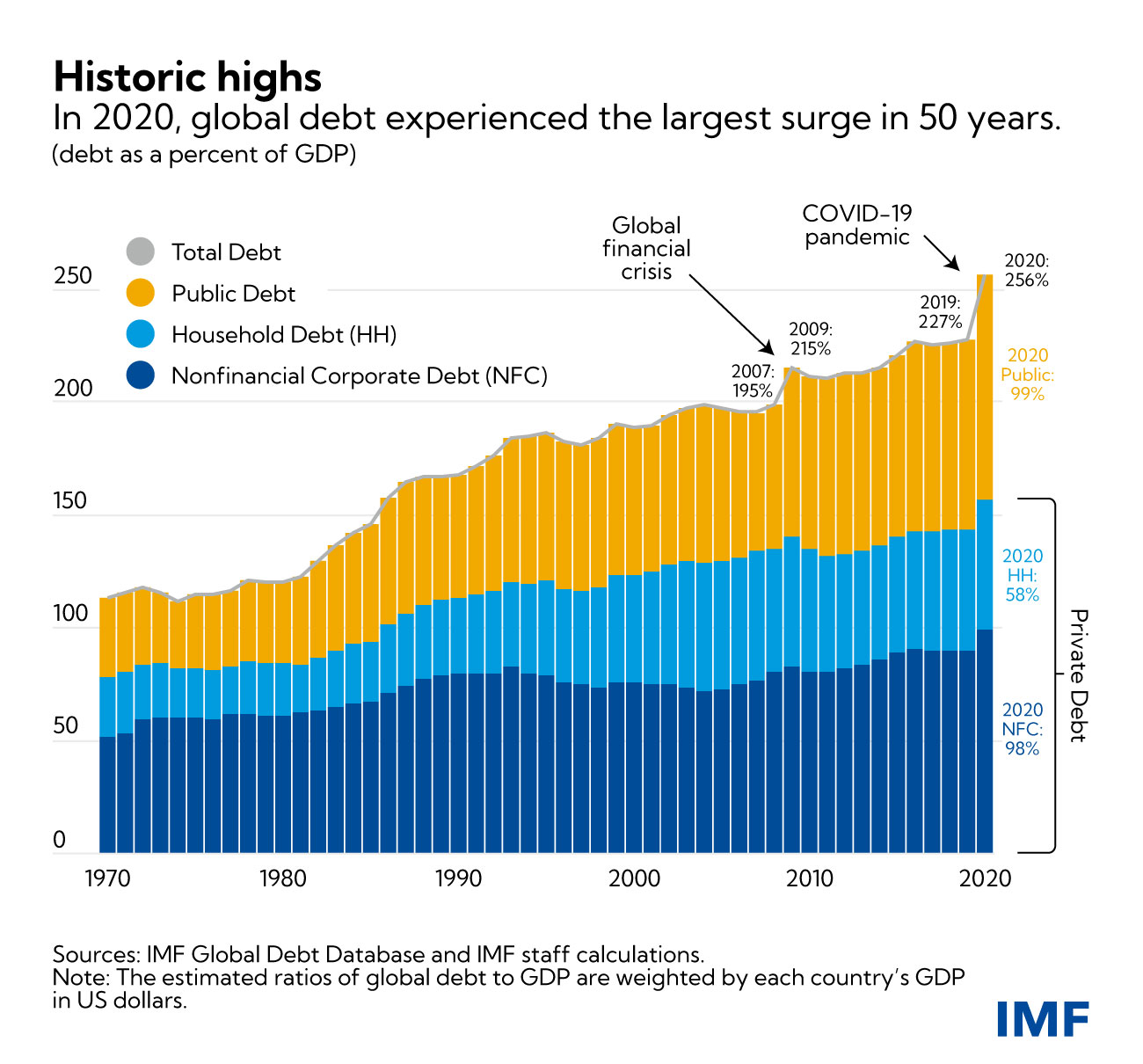
- Global debt rose to $226 trillion in 2020.
- Global debt rose by 28 percentage points to 256 percent of GDP, in 2020, according to the latest update of the IMF’s Global Debt Database.
- The global public debt ratio jumped to a record 99 percent of GDP.
- Public debt now accounts for almost 40 percent of total global debt, the highest share since the mid-1960s.
- The $226 trillion level reflects the largest one-year debt surge since World War II.
- The $28 trillion debt surge in 2020 was driven slightly more by government borrowing than by private sector borrowing.
Debt dynamics by country group
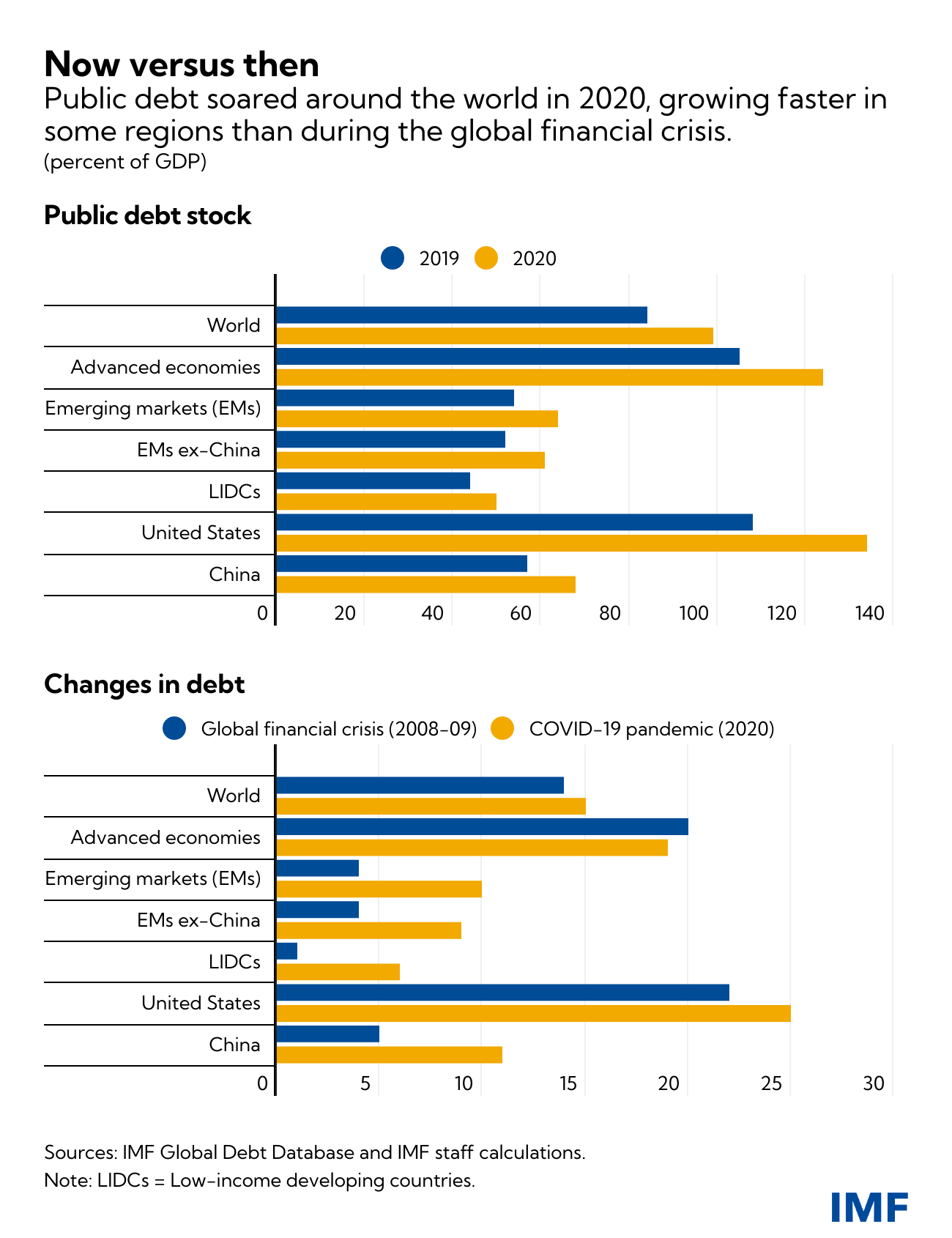
- Advanced economies and China accounted for more than 90 percent of the $28 trillion debt surge in 2020.
- In advanced economies:
- Public debt rose from around 70 percent of GDP, in 2007, to 124 percent of GDP, in 2020.
- Private debt rose from 164 to 178 percent of GDP, in the same period.
- In 2020 specifically, public debt rose 19 percentage points of GDP.
- In 2020 specifically, private debt jumped by 14 percentage points of GDP.
- China alone accounted for 26 percent of the global debt surge.
- Emerging markets (excluding China) and low-income countries accounted for small shares of the rise in global debt, around $1–$1.2 trillion each, mainly due to higher public debt.
- Public debt in emerging markets reached record highs.
- Public debt in low-income countries rose to levels not seen since the early 2000s.
Risks, transmission, and macroeconomic implications
- The debt surge amplifies vulnerabilities, especially as financing conditions tighten.
- The accumulation of public debt since 2007 is largely attributable to the global financial crisis and the COVID-19 pandemic.
- Monetary policy actions in advanced economies (including large purchases of government debt) helped lower interest rates and facilitate borrowing during the pandemic.
- As central banks shift focus to rising inflation and inflation expectations:
- An increase in inflation, and nominal GDP, helps reduce debt ratios in some cases, but is unlikely to sustain a significant decline in debt.
- As central banks raise interest rates to prevent persistently high inflation, borrowing costs rise.
- Central banks are planning to reduce their large purchases of government debt and other assets in advanced economies—how this reduction is carried out will have implications for the economic recovery and fiscal policy.
- Fiscal support becomes less effective when interest rates respond: higher spending (or lower taxes) will have less impact on economic activity and employment and could fuel inflation pressures.
- Risks magnify if global interest rates rise faster than expected and growth falters; simultaneous deleveraging by public and private sectors would impair growth prospects.
- Countries with high gross financing needs (rollover risks) or exposure to exchange rate volatility face greater urgency to adjust to preserve market confidence.
Policy challenges and recommendations
- The large increase in debt was justified to protect lives, preserve jobs, and avoid widespread bankruptcies.
- Policymakers must strike the right balance in the face of high debt and rising inflation.
- Key policy priorities:
- Achieve the right mix of fiscal and monetary policies in an environment of high debt and rising inflation.
- Pursue fiscal flexibility, nimble adjustment to changing circumstances, and commitment to credible and sustainable medium-term fiscal plans.
- Use targeted fiscal support to protect the vulnerable (see the October 2021 Fiscal Monitor).
- Some countries may need to adjust faster to preserve market confidence and prevent more disruptive fiscal distress.
- Strong, effective international cooperation and support to developing countries is essential given the global financing divide.
Vitor Gaspar, Paulo Medas, Roberto Perrelli; December 15, 2021. Source: IMF Blog post "Global Debt Reaches a Record $226 Trillion".
References
- IMF’s Global Debt Database
- https://www.imf.org/wp-content/uploads/2021/12/FINAL-eng-global-debt-blog-dec-8-chart-127.jpg
- https://www.imf.org/wp-content/uploads/2021/12/eng-global-debt-blog-dec-8-chart-2-370-1.png
- rising inflation and inflation expectations
- Fiscal Monitor
- When It Comes to Public Finances, Credibility Is Key
- Fiscal Policy for an Uncertain World
- Coming Together
- The Pre-Pandemic Debt Landscape—and Why It Matters