Three Policy Priorities for a Robust Recovery
IMF Blog, February 16, 2022
Source details
- Canonical URL
- Three Policy Priorities for a Robust Recovery
Other formats
Bibliographic details
- Authors: Kristalina Georgieva
- Published: February 16, 2022
Overview
- Author: Kristalina Georgieva
- Date: February 16, 2022
- Central message: Countries must "work together to end the pandemic, navigate monetary tightening and shift focus to fiscal sustainability"—drawing on the Indonesian concepts gotong royong ("working together to achieve a common goal") and Bhinneka Tunggal Ika ("Unity in Diversity").
Global outlook and key risks
- IMF global forecast for 2022: 4.4 percent.
- Recent drivers of downside risk: Omicron variant, persistent supply chain disruptions, higher-than-expected inflation readings, financial market volatility, and increased geopolitical tensions.
- Cumulative global output losses from the pandemic projected through 2024: nearly $13.8 trillion.
Priority 1 — Broader efforts to fight "economic long-Covid"
Findings
- Durable and inclusive recovery is impossible while the pandemic continues.
- Uncertainty about virus path post-Omicron, durability of vaccine or infection protection, and risk of new variants.
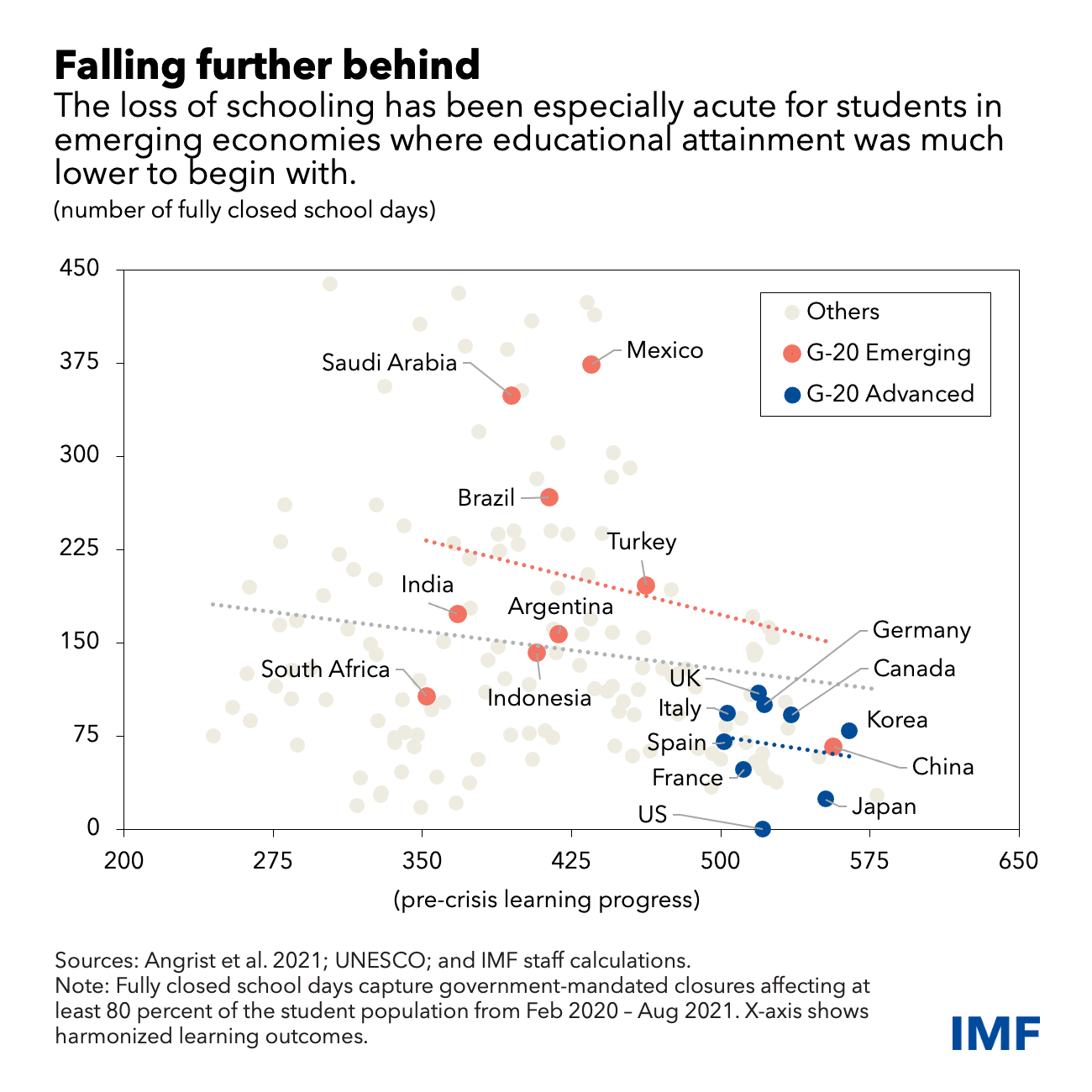
- Learning losses cost to students worldwide estimated at up to $17 trillion over their lives (lower productivity and employment disruptions).
- School closures especially acute in emerging economies, risking increased divergence among countries.
Policy recommendations
- Move from a singular focus on vaccines to equitable access to a comprehensive COVID-19 toolkit: vaccines, tests, and treatments.
- Ongoing investments in medical research, disease surveillance, and health systems that reach the "last mile".
- Upfront financing of $23.4 billion to close the ACT-Accelerator funding gap as an important down payment.
- Enhanced coordination between G20 finance and health ministries.
- Scale up social spending, reskilling programs, remedial training for teachers, and tutoring for students.
Priority 2 — Navigate the monetary tightening cycle
Findings
- Inflation pressures building in many countries; differentiation across economies and high uncertainty remain.
- Labor markets tight and inflation expectations rising in some countries (examples cited: United States and the United Kingdom).
- Other countries (including the euro area) can afford a slower withdrawal of accommodation if inflation rise is largely energy-driven.
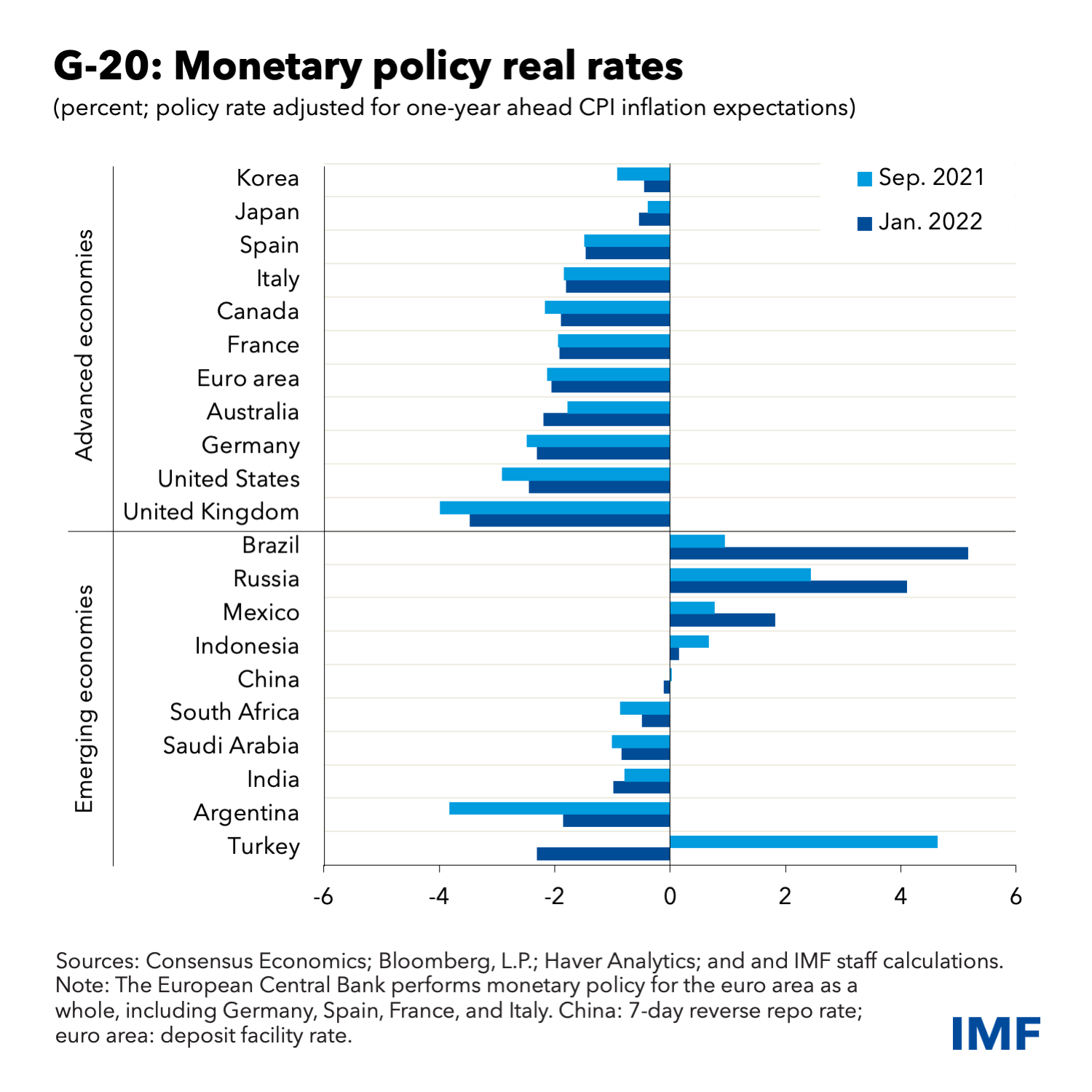
- So far, global financial conditions have remained relatively favorable, partly due to negative real interest rates in most G20 countries.
Policy recommendations and preparedness
- Calibrate monetary withdrawal to country circumstances; be ready to act faster if data warrants.
- Clear communication of policy shifts to safeguard financial stability domestically and internationally.
- Borrowers should extend debt maturities where feasible now and contain further buildup of foreign currency debts.
- Flexible exchange rates are important for absorbing shocks in most cases, but not the only tool.
- In high volatility events, consider foreign exchange interventions (example: Indonesia in 2020) and capital flow management measures (examples: Iceland in 2008 and Cyprus in 2013).
- Use macroprudential measures to guard against risks in the non-bank financial sector or surging property markets.
- Combine these tools with macroeconomic adjustments when needed.
Priority 3 — Shift focus to fiscal sustainability
Findings
- Extraordinary fiscal measures prevented a deeper depression but pushed up debt levels.
- 2020 saw the largest one-year debt surge since the second world war; global debt—both public and private—rose to $226 trillion.
- Many developing countries have limited fiscal firepower, weaker recoveries, and deeper scars from economic long-Covid.
- IMF estimate: green supply policies, including a 10-year public investment program, could raise annual global output by about 2 percent compared to the baseline on average over 2021-30.
- About 60 percent of low-income countries are in or at high risk of debt distress—double 2015 levels.
Policy recommendations
- Carefully calibrate fiscal policies as countries emerge from the pandemic: continue support for health systems and the most vulnerable while reducing deficits and debt levels as appropriate.
- Faster fiscal scaling back warranted where recovery is further ahead to facilitate monetary policy shifts and contain inflationary pressures.
- For highly indebted and low-income countries: more domestic revenue mobilization, more grants and concessional financing, and immediate help to deal with debt.
- Reinvigorate the G-20 Common Framework for debt treatment:
- Start with offering a standstill on debt service payments during negotiation under the framework.
- Implement quicker and more efficient processes with clarity on steps—from formation of creditor committees to agreement on debt resolution.
- Make the framework available to a wider range of highly indebted countries.
The IMF’s role and financing tools
Findings and actions
- IMF provides macroeconomic frameworks and debt sustainability analyses; encourages greater debt transparency (greater disclosure of what a member owes and to whom when seeking IMF financing).
- Works with members through the IMF-World Bank Multi-Pronged Approach to debt vulnerability.
- Historic allocation of Special Drawing Rights: $650 billion.
Examples of SDR use (as cited)
- Nepal: vaccine imports.
- North Macedonia: health spending and pandemic lifelines.
- Senegal: boost vaccine production capacity.
Recommendations for maximizing SDR impact
- Channel new SDRs through the Poverty Reduction and Growth Trust for concessional financing to low-income countries.
- Channel SDRs through the new Resilience and Sustainability Trust (RST).
- RST offers cheaper rates and longer maturities and could fund climate, pandemic preparedness, and digitalization policies that improve macroeconomic stability for decades.
- The G20 has given strong backing to the RST; aim to have it fully operational this year.
Final IMF policy stance
- The IMF will support countries with calibrated policy advice, capacity development, and financial assistance where needed.
- Emphasizes agility in policymaking and international cooperation to achieve a durable, inclusive recovery that "works for all."
Source: IMF blog post "Three Policy Priorities for a Robust Recovery" by Kristalina Georgieva, February 16, 2022.
Content in this bundle
- Policy Paper
- G20: Reaching Net Zero Emissions
References
- we cut our global forecast
- new report to the G20
- comprehensive COVID-19 toolkit
- School closures have been especially acute
- https://www.imf.org/wp-content/uploads/2022/02/G20-Blog-Chart-1.png
- potential capital flow reversals
- https://www.imf.org/wp-content/uploads/2022/02/G20-Blog-chart-2-.png
- rising to $226 trillion
- G-20 Common Framework for debt treatment
- Poverty Reduction and Growth Trust
- Resilience and Sustainability Trust