Crypto is More in Line with Asian Equities, Highlighting Need for Regulation
IMF Blog, August 21, 2022
Source details
- Canonical URL
- Crypto is More in Line with Asian Equities, Highlighting Need for Regulation
Other formats
Bibliographic details
- Authors: Nada Choueiri, Anne-Marie Gulde-Wolf, Tara Iyer
- Published: August 21, 2022
Overview
- Authors: Nada Choueiri, Anne-Marie Gulde-Wolf, Tara Iyer
- Publication date: August 21, 2022
- Geographic focus: Asia
- Central observation: Crypto trading volume and co-movement with equity markets have surged in the region, raising financial stability and regulatory concerns.
Key statistics and market developments
- The total market value of the world’s crypto assets surged 20-fold in just a year and a half to $3 trillion in December.
- The market then plunged to less than $1 trillion in June as central bank interest rate increases ended easy access to cheap borrowing.
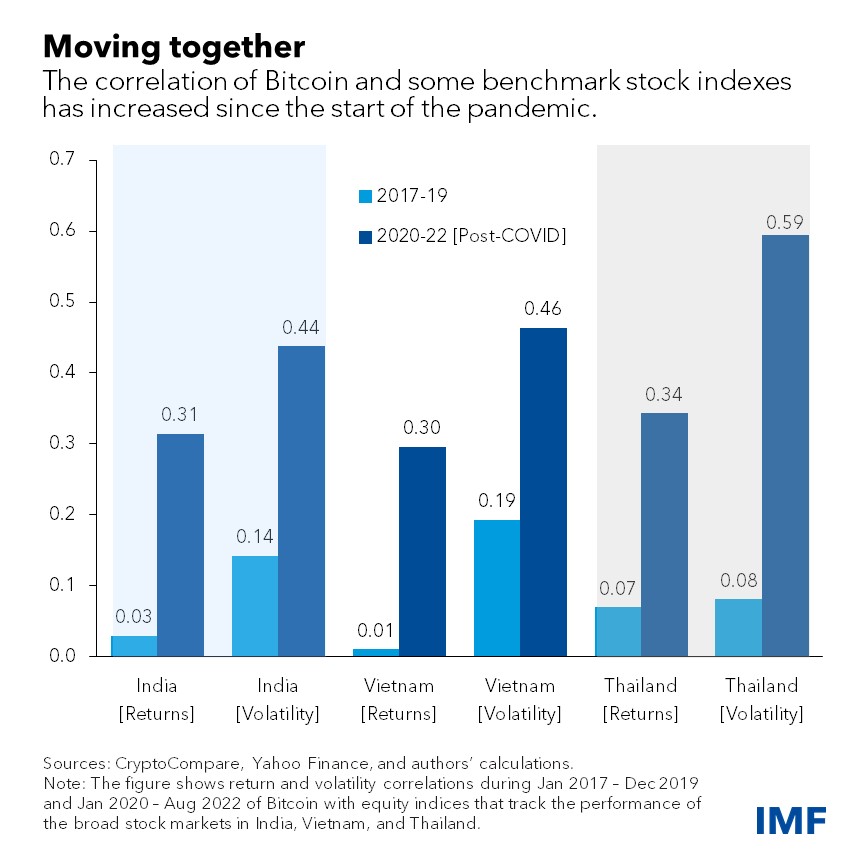
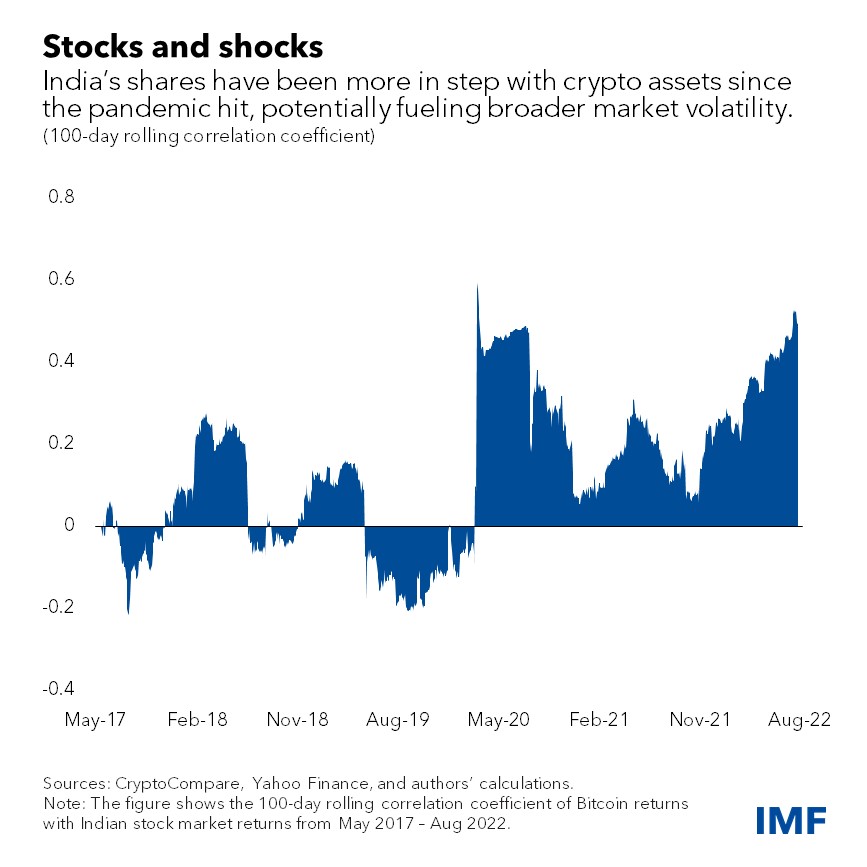
- Return correlations of Bitcoin and Indian stock markets have increased by 10-fold over the pandemic.
- Volatility correlations between Bitcoin and Asian equity markets have increased by 3-fold since the pre-pandemic period.
Drivers of increased interconnectedness
- Growing acceptance of crypto-related platforms and investment vehicles in the stock market and at the over-the-counter market.
- Growing crypto adoption by retail and institutional investors in Asia, many of whom hold positions in both equity and crypto markets.
- Pandemic-era dynamics: millions stayed home and received government aid; low interest rates and easy financing conditions supported a surge in crypto trading.
Risks and transmission channels
- Contagion mechanisms:
- Individual or institutional investors holding both crypto and traditional financial assets or liabilities could transmit shocks across markets.
- Large losses on crypto may drive portfolio rebalancing that could cause financial-market volatility.
- Severe losses could lead to default on traditional liabilities.
- Although the financial sector appeared insulated during the recent sharp movements, it may not be in future boom-bust cycles.
Evidence and methodology
- Analysis references the spillover methodology developed in the January Global Financial Stability Note.
- Findings using this methodology show a sharp rise in crypto-equity volatility spillovers in India, Vietnam, and Thailand, indicating growing interconnectedness and the potential for shock transmission between asset classes.
Policy recommendations and regulatory priorities
- Authorities in Asia have increased focus on crypto regulation; regulatory frameworks are underway in several countries including India, Vietnam and Thailand.
- Regulatory frameworks should be tailored to the main uses of crypto assets within each country.
- Frameworks should:
- Establish clear guidelines on regulated financial institutions.
- Seek to inform and protect retail investors.
- Effective crypto regulation should be closely coordinated across jurisdictions.
Data and monitoring needs
- Significant effort is needed to address data gaps that prevent domestic and international regulators from fully understanding ownership and use of crypto and its intersection with the traditional financial sector.
Source: Crypto is More in Line with Asian Equities, Highlighting Need for Regulation — Nada Choueiri, Anne-Marie Gulde-Wolf, Tara Iyer, August 21, 2022.
References
- an environmentally-conscious payment system
- financial inclusion
- risks
- https://www.imf.org/wp-content/uploads/2022/08/APD-MCM-Ch1.jpg
- Contagion could spread
- https://www.imf.org/wp-content/uploads/2022/08/APD-MCM-Ch2-1.jpg
- Global Financial Stability Note
- https://www.imf.org/wp-content/uploads/2022/08/APD-MCM-Ch3-v2.jpg
- Regulatory frameworks