IMF Executive Board Discusses Building Resilience in Developing Countries Vulnerable to Large Natural Disasters
IMF News, June 26, 2019
Source details
- Canonical URL
- IMF Executive Board Discusses Building Resilience in Developing Countries Vulnerable to Large Natural Disasters
Other formats
Bibliographic details
- Published: June 26, 2019
Background and context
- Press Release No. 19/241; published June 26, 2019.
- Media relations contact: PRESS OFFICER: Maria Candia; Phone: +1 202 623-7100; Email: MEDIA@IMF.org.
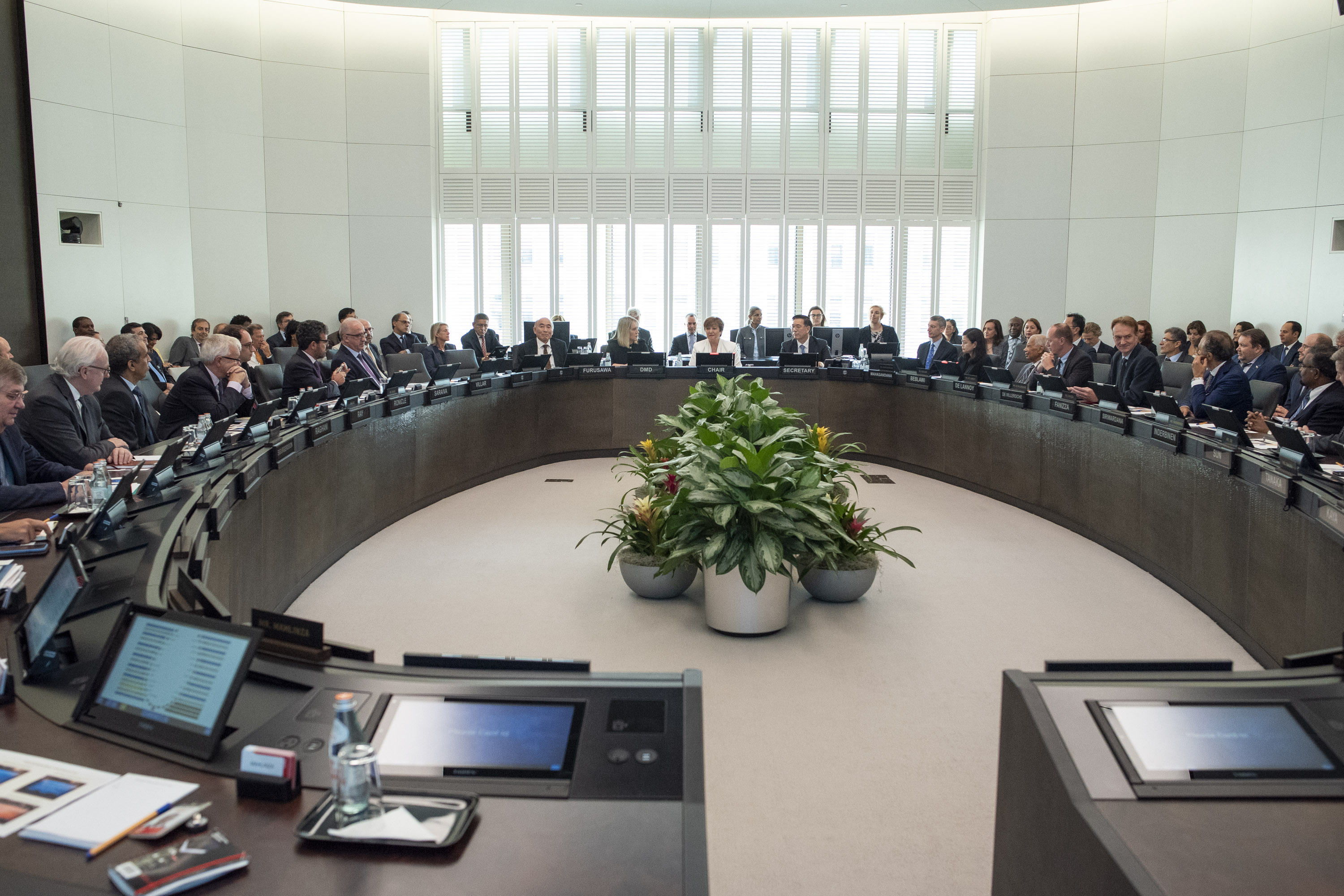
- On May 1, 2019, the Executive Board discussed an IMF staff paper on building resilience to large natural disasters and options for managing associated risks in vulnerable developing countries.
- Recent large disasters cited:
- Cyclone Idai (March 2019) — caused significant loss of life and widespread economic disruption in Mozambique and neighboring countries.
- Hurricane Maria (September 2017) — caused damage to property and infrastructure estimated at some 200 percent of GDP in Dominica.
- Observations:
- Frequency and intensity of natural disasters are projected to increase over time with climate change, increasing economic and social impacts.
- Many disaster-vulnerable countries, particularly small states, underinvest in resilience due to capacity constraints, large upfront costs, and limited fiscal space.
- International financial institutions and development partners provide support, but domestic institutional capacity often limits countries’ ability to leverage available resources.
Staff recommendations and proposed framework
- IMF staff paper recommends development of comprehensive disaster resilience strategies (DRS) in consultation with development partners and other stakeholders.
- Core elements of a DRS:
- Grounded in a clear diagnostic of disaster vulnerabilities.
- Rest on three pillars: building structural resilience, financial resilience, and post-disaster/social resilience.
- Support ex-ante planning, coordinate partner actions before and after disasters, and help catalyze donor support.
- Role of institutions:
- IMF: leverage expertise in designing macroeconomic policies and frameworks; support resilience building in operational work and capacity development.
- World Bank and other development banks: assist in identifying and assessing disaster vulnerabilities and prioritizing investment needs.
Executive Board assessment — key findings
- Directors agreed natural disasters can have significant and long‑lasting effects on economic well‑being, particularly in small, fragile, and low‑income states.
- Directors noted weather‑related shocks’ frequency and intensity are expected to increase with climate change.
- Benefits of resilience policies:
- Targeted infrastructure investments and effective use of financial instruments can mitigate social and economic impacts.
- Incorporating disaster risk into macroeconomic management:
- Directors agreed this is important where risks of large‑scale natural disasters are significant.
- Fund can help assess trade‑offs between development needs, rising debt vulnerabilities, and benefits of ex ante resilience building.
- Most Directors favored extending the Fund’s approach to include slower‑onset disasters.
- Three‑pillar approach:
- Welcomed as a useful framework informed by the Sendai Framework for Disaster Risk Reduction and World Bank work on disaster risk management and insurance strategies.
- Capacity constraints:
- Many small, fragile, and low‑income countries face significant capacity constraints that impair effective use of external support.
- Fund and World Bank are well placed to assist in overcoming capacity gaps.
- Government ownership is crucial.
- National disaster resilience strategy (DRS):
- Directors saw merit in countries developing a national DRS with international support.
- IMF could lead on macroeconomic policy frameworks reflecting disaster costs and returns from resilient investment and identifying fiscal actions.
- World Bank and development banks could lead on vulnerability assessment and investment prioritization.
- Need for close IMF–World Bank collaboration; recognition of Bank’s core expertise in key areas.
- A DRS would provide a roadmap for policy design and sequencing, facilitate donor coordination, and could catalyze higher levels of financial support from bilateral donors, climate funds, and other sources.
- Development of DRS would benefit from peer learning and experience‑sharing.
- Financial resilience instruments:
- Directors emphasized greater use of risk‑transfer instruments in government measures while noting challenges in developing insurance markets with reasonable premium levels relative to expected annual payouts.
- Welcomed donor support for insurance market development and risk pooling.
- Broad support for further Fund–World Bank work on state‑contingent debt instruments’ role in resilience building.
- Fund roles and tools:
- Fund has a valuable role in surveillance and capacity building to support resilience.
- A coherent resilience strategy should fit within a medium‑term macroeconomic policy framework consistent with maintaining debt sustainability, including under adverse shocks.
- Staff could analyze economic impacts of disasters and trade‑offs between public investment and debt accumulation.
- Directors saw the Fund’s lending toolkit as sufficiently flexible to provide support for disaster‑vulnerable countries facing a BoP need, but most saw scope to increase access limits and to use the toolkit in non‑traditional ways to support resilience‑building.
- Encouraged giving special attention to disaster‑prone countries in the upcoming FSAP Review and Comprehensive Surveillance Review.
- Diagnostics and assessments:
- DRS should be based on a robust diagnostic of risks and vulnerabilities, with a pragmatic approach in coordination with the World Bank.
- Directors asked for a full assessment of the Climate Change Policy Assessments being piloted in a handful of small countries, in collaboration with the World Bank.
- Division of labor and coordination:
- Building resilience extends to areas where the Fund lacks in‑house expertise; effective support requires close collaboration with other institutions.
- Directors called for a clear division of labor based on respective mandates among the Fund, multilateral development banks, and other agencies.
Implications and next steps highlighted by Directors
- Promote country ownership of DRS and facilitate coordination of donor support.
- Strengthen IMF–World Bank collaboration on diagnostics, capacity building, and policy sequencing.
- Analyze and expand appropriate financial instruments, including risk‑transfer mechanisms and state‑contingent debt instruments.
- Assess and pilot Climate Change Policy Assessments as potential diagnostics for national authorities.
- Consider adjustments to Fund lending access limits and non‑traditional uses of the lending toolkit to support resilience-building.
IMF Executive Board Discusses Building Resilience in Developing Countries Vulnerable to Large Natural Disasters (Press Release No. 19/241), June 26, 2019.