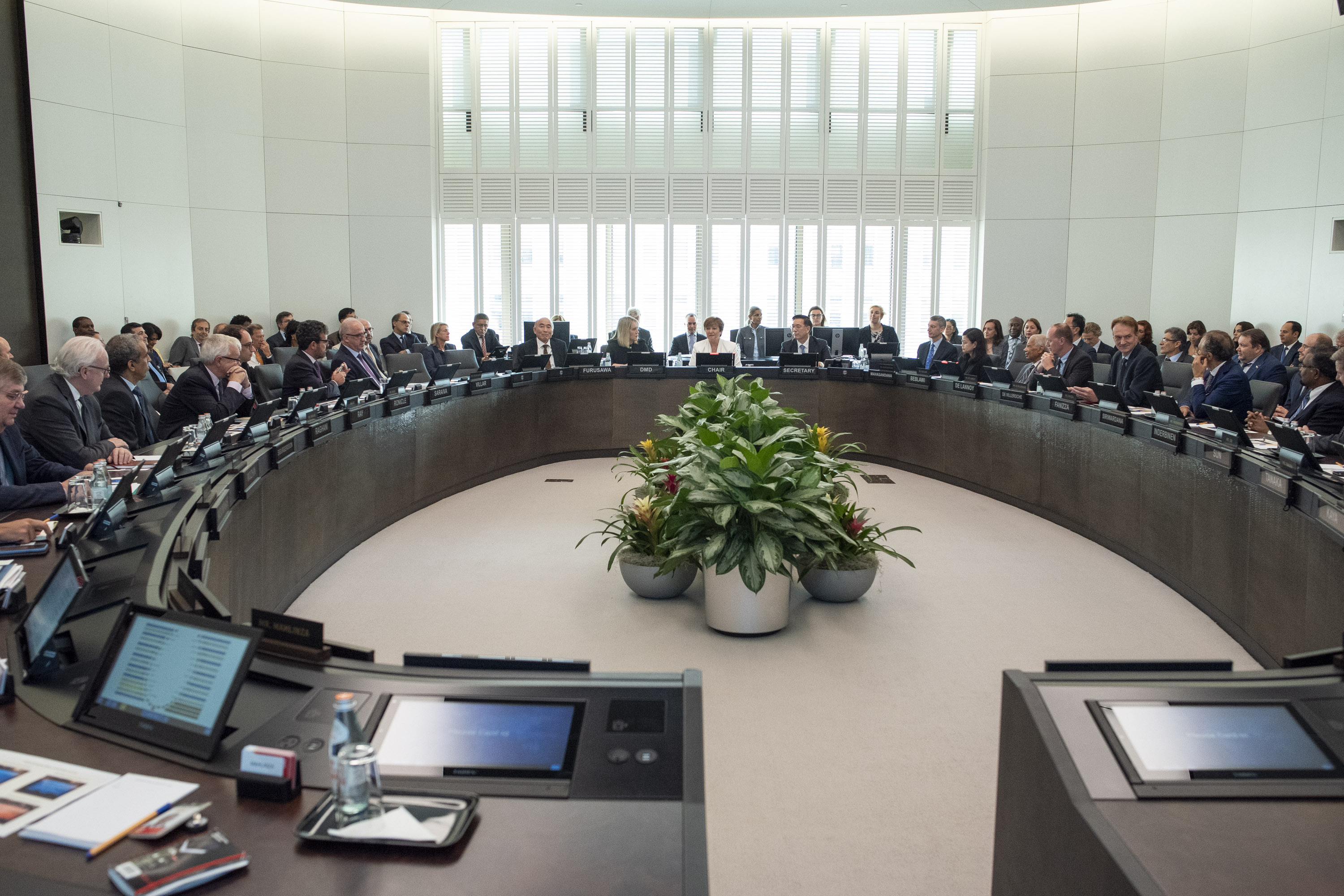
IMF Executive Board Concludes 2019 Article IV Consultation with Iraq
IMF News, July 26, 2019
Source details
- Canonical URL
- IMF Executive Board Concludes 2019 Article IV Consultation with Iraq
Other formats
Bibliographic details
- Published: July 26, 2019
Near-term economic developments and outlook
- Improved security and higher oil prices have reduced near-term vulnerabilities.
- Large fiscal and current account surpluses—around 8 and 6 percent of GDP, respectively—were recorded in 2018.
- Gross international reserves reached $65 billion by end-2018.
- Non-oil GDP rose by only 0.8 percent year-on-year in 2018 amid weak execution of reconstruction and public investment.
- Overall GDP contracted by around 0.6 percent in 2018 as oil production was cut to comply with the OPEC+ agreement.
- The 2019 budget implies a sizable fiscal loosening:
- Current spending is expected to increase by 27 percent year-on-year, in part due to a higher public sector wage bill.
- Revenues will be dampened by the abolition of non-oil taxes.
- The budget is projected to shift to a deficit of 4 percent of GDP in 2019, and reserves are projected to decline.
- Staff projections and medium-term outlook:
- The fiscal and external positions are expected to continue to deteriorate over the medium term absent policy changes—with reserves falling below adequate levels and fiscal buffers eroded.
- Although the level of public debt will remain sustainable, gross fiscal financing needs will increase.
- Non-oil GDP growth is projected to reach 5½ in 2019 but subside over the medium term.
Risks to the outlook
- Major risk: a fall in oil prices in a context of highly volatile oil prices, which would lower exports and budgetary revenues, leading to an even sharper decline in reserves or higher public debt.
- Additional risks: geopolitical tensions; potential for social unrest amid weak public services and lack of progress in combatting corruption.
Executive Board assessment and policy recommendations
- Directors agreed with the thrust of the staff appraisal and encouraged the authorities to use the improved security situation and higher oil prices to implement policies and structural reforms to:
- Ensure macroeconomic and financial stability.
- Tackle long-standing social problems.
- Promote sustainable and inclusive growth.
- Fiscal framework and policy:
- Building a robust fiscal framework is essential to maintain fiscal and macroeconomic stability and strengthen buffers.
- Adopt a risk‑ and rules-based approach to fiscal policy as part of broader reforms to manage oil revenue more effectively and reduce procyclicality.
- Shift to a more growth-friendly composition of expenditure.
- Support scaling up reconstruction and development expenditure gradually in line with improving absorptive capacity.
- Strengthen public financial management to ensure public spending is appropriately monitored and to reduce vulnerabilities to corruption.
- Directors welcomed the newly adopted General Financial Management Law and encouraged its full implementation.
- Fiscal adjustment priorities:
- Gradual fiscal adjustment, including containing current primary spending and boosting non-oil revenues, is essential for maintaining fiscal and debt sustainability.
- Spending measures should give priority to containing the growth in wage bill and lowering subsidies to the electricity sector.
- Protect the poorest and most vulnerable from the adjustment process.
- Financial sector and inclusion:
- An overhaul of the banking sector is necessary to maintain financial stability.
- Restructure large state-owned banks, enhance supervision, and implement other reforms to increase financial intermediation.
- Increase financial inclusion, especially for the SME sector, to absorb entrants to the labor market.
- Governance, anti-corruption, and public investment management:
- Build public institutions and enhance governance; Fund capacity development can support these efforts.
- Welcome progress in developing an anti-corruption framework; call for further legal modifications and stronger coordination between government agencies.
- Continue to strengthen the framework for Anti-money laundering and combatting the financing of terrorism (AML/CFT).
- Strengthen Public Investment Management framework to ensure spending is well directed and donor funds targeting reconstruction are used efficiently.
- Engagement:
- Directors looked forward to continued close engagement between the authorities and the Fund in the context of post program monitoring.
Key statistics (Iraq: Selected Economic and Financial Indicators, 2015–24)
- Real GDP (percentage change): 2015: 2.5, 2016: 15.2, 2017: -2.5, 2018: -0.6, 2019: 4.6, 2020: 5.3, 2021: 2.6, 2022: 2.3, 2023: 2.1, 2024: 2.1
- Non-oil real GDP (percentage change): 2015: -14.4, 2016: 1.3, 2017: 0.8, 2018: 5.4, 2019: 5.0, 2020: 4.1, 2021: 3.4, 2022: 2.7, 2023: (not listed), 2024: (not listed)
- GDP deflator (percentage change): 2015: -26.1, 2016: -13.4, 2017: 14.6, 2018: 15.4, 2019: -4.5, 2020: 2.8, 2021: 3.1, 2022: 3.3
- GDP per capita (US$): 2015: 5,047, 2016: 4,843, 2017: 5,263, 2018: 5,882, 2019: 5,728, 2020: 6,017, 2021: 6,172, 2022: 6,326, 2023: 6,486, 2024: 6,666
- GDP (in ID trillion): 2015: 207.2, 2016: 206.7, 2017: 231.0, 2018: 265.0, 2019: 264.8, 2020: 285.4, 2021: 300.4, 2022: 315.9, 2023: 332.3, 2024: 350.4
- Non-oil GDP (in ID trillion): 2015: 137.3, 2016: 138.3, 2017: 140.8, 2018: 145.6, 2019: 158.1, 2020: 173.2, 2021: 188.1, 2022: 202.8, 2023: 217.1, 2024: 232.6
- GDP (in US$ billion): 2015: 177.7, 2016: 175.2, 2017: 195.5, 2018: 224.2, 2019: 224.1, 2020: 241.5, 2021: 254.1, 2022: 267.3, 2023: 281.1, 2024: 296.5
- Oil production (mbpd): 2015: 3.72, 2016: 4.63, 2017: 4.47, 2018: 4.41, 2019: 4.59, 2020: 4.84, 2021: 4.93, 2022: 5.01, 2023: 5.10, 2024: 5.18
- Oil exports (mbpd): 2015: 3.35, 2016: 3.79, 2017: 3.80, 2018: 3.86, 2019: 4.03, 2020: 4.25, 2021: 4.33, 2022: 4.40, 2023: 4.55
- Iraq oil export prices (US$ pb) 1/: 2015: 45.9, 2016: 35.6, 2017: 48.7, 2018: 65.2, 2019: 56.0, 2020: 55.8, 2021: 54.9, 2022: 54.4, 2023: 54.8
- Consumer price inflation (percentage change; end of period): 2018: 2.0
- Consumer price inflation (percentage change; average): 2015: 1.4, 2016: 0.5, 2017: 0.1, 2018: 0.4
- Gross domestic investment (percent of GDP): 2015: 24.9, 2016: 20.8, 2017: 16.7, 2018: 12.9, 2019: 18.8, 2020: 16.0, 2021: 15.6, 2022: (not fully listed)
- Of which: public (percent of GDP): 2015: 11.5, 2016: 8.3, 2017: 10.6, 2018: 8.4, 2019: 7.5, 2020: 7.0, 2021: 6.8, 2022: 6.6
- Gross domestic consumption (percent of GDP): 2015: 81.2, 2016: 87.0, 2017: 80.8, 2018: 79.1, 2019: 84.5, 2020: 85.4, 2021: 86.8, 2022: 87.9, 2023: 88.6, 2024: 89.6
- Gross national savings (percent of GDP): 2015: 22.6, 2016: 21.8, 2017: 21.2, 2018: 26.5, 2019: 26.3, 2020: 26.4, 2021: 26.2
- Saving - Investment balance (percent of GDP): 2015: -6.5, 2016: -8.3, 2017: 6.9, 2018: -5.2, 2019: -4.2, 2020: -4.3, 2021: -4.6, 2022: -5.3, 2023: -6.0
- Government revenue and grants (percent of GDP): 2015: 30.6, 2016: 26.8, 2017: 33.0, 2018: 39.8, 2019: 40.5, 2020: 39.6, 2021: 37.9, 2022: 36.5, 2023: 35.5, 2024: 34.6
- Government oil revenue (percent of GDP): 2015: 27.8, 2016: 22.9, 2017: 28.9, 2018: 36.7, 2019: 37.2, 2020: 36.3, 2021: 34.5, 2022: 33.1, 2023: 32.0, 2024: 31.0
- Government non-oil revenue (percent of GDP): 2015: 4.0, 2016: 4.2, 2017: 3.5
- Expenditure (percent of GDP), of which: 2015: 43.4, 2016: 40.7, 2017: 44.6, 2018: 43.1, 2019: 41.2
- Current expenditure (percent of GDP): 2015: 29.3, 2016: 26.7, 2017: 33.9, 2018: 34.7, 2019: 33.6, 2020: 33.5, 2021: 33.7
- Capital expenditure (percent of GDP): (not fully listed)
- Overall fiscal balance (including grants, percent of GDP): 2015: -12.8, 2016: -13.9, 2017: -1.6, 2018: 7.9, 2019: -4.1, 2020: -3.5, 2021: -3.3, 2022: -4.0, 2023: -5.0, 2024: -5.9
- Non-oil primary fiscal balance, accrual basis (percent of non-oil GDP): 2015: -46.5, 2016: -43.3, 2017: -39.4, 2018: -42.4, 2019: -56.9, 2020: -52.1, 2021: -49.2, 2022: -47.1, 2023: -46.2, 2024: -45.3
- Adjusted Non-oil primary fiscal balance, accrual basis (excl. KRG, percent of non-oil GDP) 2/: 2015: -44.7, 2016: -40.5, 2017: -50.1, 2018: -46.0, 2019: -43.6, 2020: -41.8, 2021: -41.0, 2022: -40.2
- Adjusted non-oil primary expenditure (excl. KRG, percent of non-oil GDP) 3/: 2015: 48.9, 2016: 49.2, 2017: 46.3, 2018: 46.2, 2019: 55.6, 2020: 51.5, 2021: 49.1, 2022: 47.2, 2023: 45.5
- Adjusted non-oil primary expenditure (excl. KRG, annual real growth, percent) 3/: 2015: -24.7, 2016: 0.9, 2017: 29.9, 2018: 1.6
- Total government debt (in percent of GDP) 4/: 2015: 56.2, 2016: 64.2, 2017: 58.9, 2018: 49.3, 2019: 51.4, 2020: 50.5, 2021: 50.6, 2022: 53.6, 2023: 56.4
- Total government debt (in US$ billion) 4/: 2015: 99.9, 2016: 112.5, 2017: 115.2, 2018: 110.4, 2019: 115.3, 2020: 121.9, 2021: 128.5, 2022: 137.5, 2023: 150.7, 2024: 167.3
- External government debt (in percent of GDP): 2015: 37.1, 2016: 32.2, 2017: 31.5, 2018: 30.5, 2019: 28.4
- External government debt (in US$ billion): 2015: 66.1, 2016: 65.0, 2017: 69.5, 2018: 68.7, 2019: 72.2, 2020: 76.2, 2021: 77.6, 2022: 75.8, 2023: 75.3, 2024: 73.8
- Growth in reserve money (percent): 2015: -12.0, 2016: 9.2, 2017: -4.4, 2018: 6.7, 2019: 4.7, 2020: 4.9, 2021: 5.1
- Growth in broad money (percent): 2015: -9.1, 2016: 7.1, 2017: 6.2, 2018: 6.0, 2019: 5.9
- Exports of goods (percent of GDP): 2015: 31.8, 2016: 28.6, 2017: 34.8, 2018: 37.0, 2019: 36.2, 2020: 34.4, 2021: 31.2
- Imports of goods (percent of GDP): 2015: -31.9, 2016: -30.3, 2017: -27.1, 2018: -27.8, 2019: -33.5, 2020: -32.0, 2021: -31.2, 2022: -31.1, 2023: -30.8, 2024: -30.7
- Overall external balance (percent of GDP): 2015: -6.7, 2016: -3.7, 2017: 6.3, 2018: -1.1, 2019: -3.8, 2020: -4.7
- Gross reserves (in US$ billion): 2015: 54.1, 2016: 49.4, 2017: 64.7, 2018: 57.2, 2019: 53.5, 2020: 48.5, 2021: 38.8, 2022: 28.2, 2023: 14.3
- Total GIR (in months of imports of goods and services): 2015: 9.3, 2016: 7.8, 2017: 7.3, 2018: 8.0, 2019: 5.5, 2020: 2.9
- Exchange rate (dinar per US$; period average): 2015: 1,166, 2016: 1,180, 2017: 1,182
- Real effective exchange rate (percent change, end of period) 5/: 2015: -5.1
Source: IMF Communications Department, July 26, 2019.