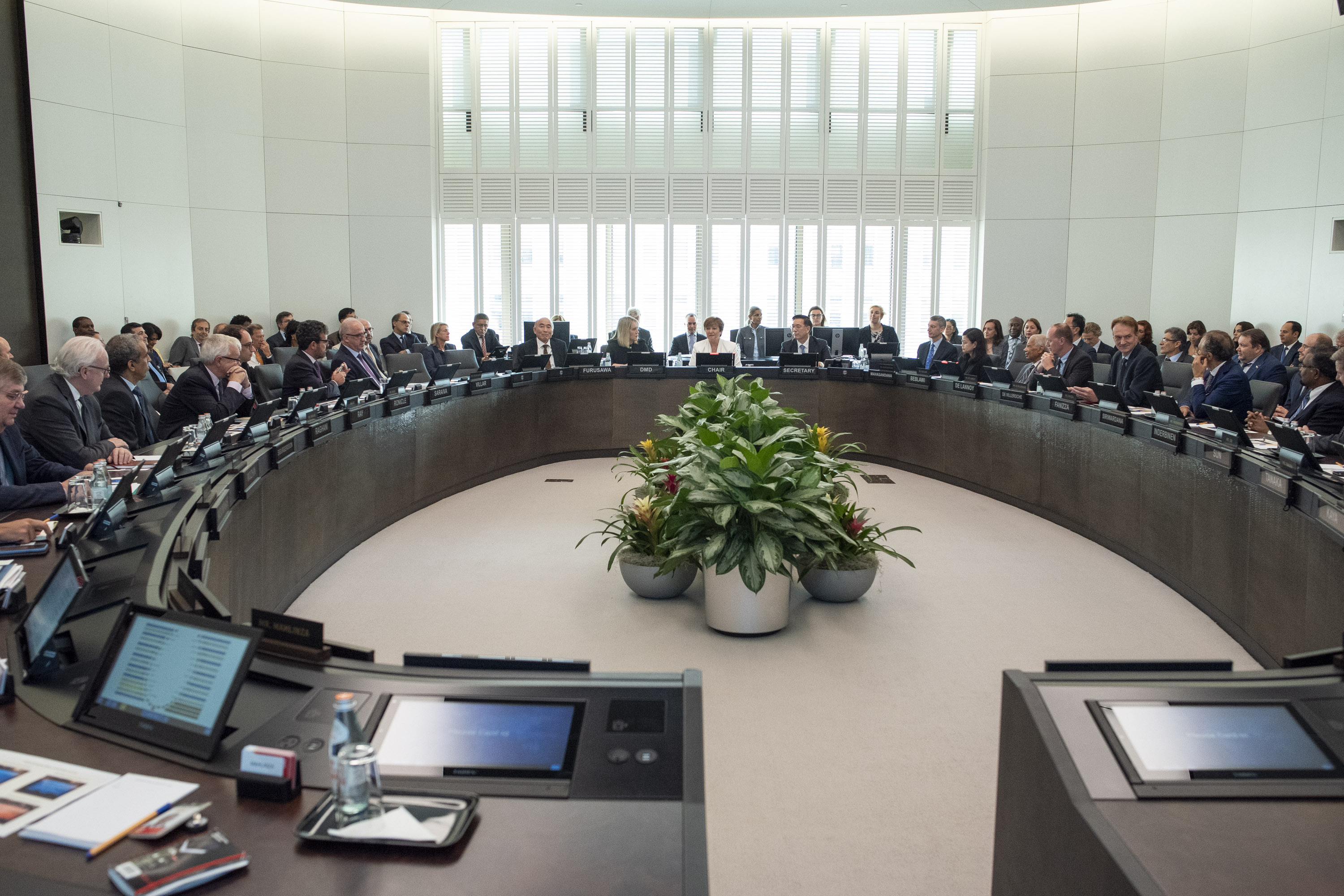
IMF Executive Board Approves 12-month US$5.2 Billion Stand-By Arrangement for Egypt
IMF News, June 26, 2020
Source details
- Canonical URL
- IMF Executive Board Approves 12-month US$5.2 Billion Stand-By Arrangement for Egypt
Other formats
Bibliographic details
- Published: June 26, 2020
Program scope and financing
- Duration: 12-month Stand-by Arrangement (SBA).
- Total access: about US$5.2 billion.
- Equivalent in SDRs: SDR 3.76 billion (about US$5.2 billion or 184.8 percent of quota).
- Immediate disbursement: about US$2 billion (Executive Board approval allows for an immediate purchase of the equivalent of SDR 1.4 billion (about US$2 billion)).
- Disbursement sequencing: the remainder will be phased over two reviews.
- Purpose: to address balance of payments financing needs arising from the COVID-19 pandemic and to finance the budget deficit.
Macroeconomic context and objectives
- Recent track record: completed a home‑grown economic reform program supported by the IMF’s Extended Fund Facility in 2016-2019; Egypt was one of the fastest growing emerging markets prior to the COVID-19 outbreak.
- Pandemic impact: significant domestic and global disruptions from the pandemic have worsened the economic outlook and reshuffled policy priorities.
- Program aims:
- Help Egypt cope with challenges posed by the COVID-19 pandemic by providing Fund resources to meet Egypt’s balance of payments needs and to finance the budget deficit.
- Preserve the achievements made over the past four years.
- Support health and social spending to protect vulnerable groups.
- Advance a set of key structural reforms to put Egypt on a strong footing for sustained recovery with higher and more inclusive growth and job creation over the medium term.
Policy priorities supported by the SBA
- Fiscal and social policy:
- Protect necessary social and health spending while avoiding an excessive build-up of public debt.
- Support health care needs, the economy, and the most affected individuals and sectors.
- Monetary and financial policy:
- Anchor inflation expectation and safeguard financial stability while maintaining a flexible exchange rate.
- The Central Bank of Egypt aims to continue to provide a stable anchor for inflation expectation and financial stability while rebuilding reserve buffers and allowing orderly exchange rate adjustments.
- Structural reforms:
- Continue strengthening the frameworks for public finances.
- Improve governance and transparency.
- Reduce barriers to competition to ensure a path towards sustainable and inclusive private sector-led growth.
Implementation, support, and risks
- Complementary support: together with the support of Egypt’s development partners and recent RFI, disbursements from the SBA will help address large financing needs.
- Authorities’ response to crisis: the government has responded decisively with a comprehensive package that supports health care needs, the economy, and the most affected individuals and sectors. The Central Bank of Egypt has taken several actions to support economic activity and borrowers.
- Key risks identified:
- Global risk: uncertainty about the severity and length of the downturn remains exceptionally high.
- Domestic risk: the authorities will need to continue their strong track record of steadfast policy implementation.
- Social risk: maintaining social cohesion during this crisis period will be paramount for the success of the program.
- Communication and transparency: enhanced communication and transparency around the policies and their implementation will be crucial to ensure broad support for the government’s reform efforts on behalf of the Egyptian people.
Statement highlights by IMF management
- From Ms. Antoinette Sayeh, Deputy Managing Director and Acting Chair:
- Egypt saw strong growth, falling unemployment, moderate inflation, buildup of strong reserve buffers, and significant reduction in public debt over the past few years.
- The COVID-19 pandemic temporarily refocused government priorities away from planned deeper structural reforms.
- The new Stand-By Arrangement, together with recent RFI, supports efforts to mitigate the economic and social impact of the crisis while maintaining macroeconomic stability and safeguarding past achievements.
- Policies supported by the SBA will focus on immediate crisis needs (critical spending on health, social programs to protect the most vulnerable, and assistance to directly affected sectors) while safeguarding medium-term fiscal sustainability, anchoring inflation expectations, and preserving exchange rate flexibility.
- As recovery takes hold, fiscal policy will need to work toward resuming the downward trajectory of public debt.
IMF Press Release No. 20/248, June 26, 2020