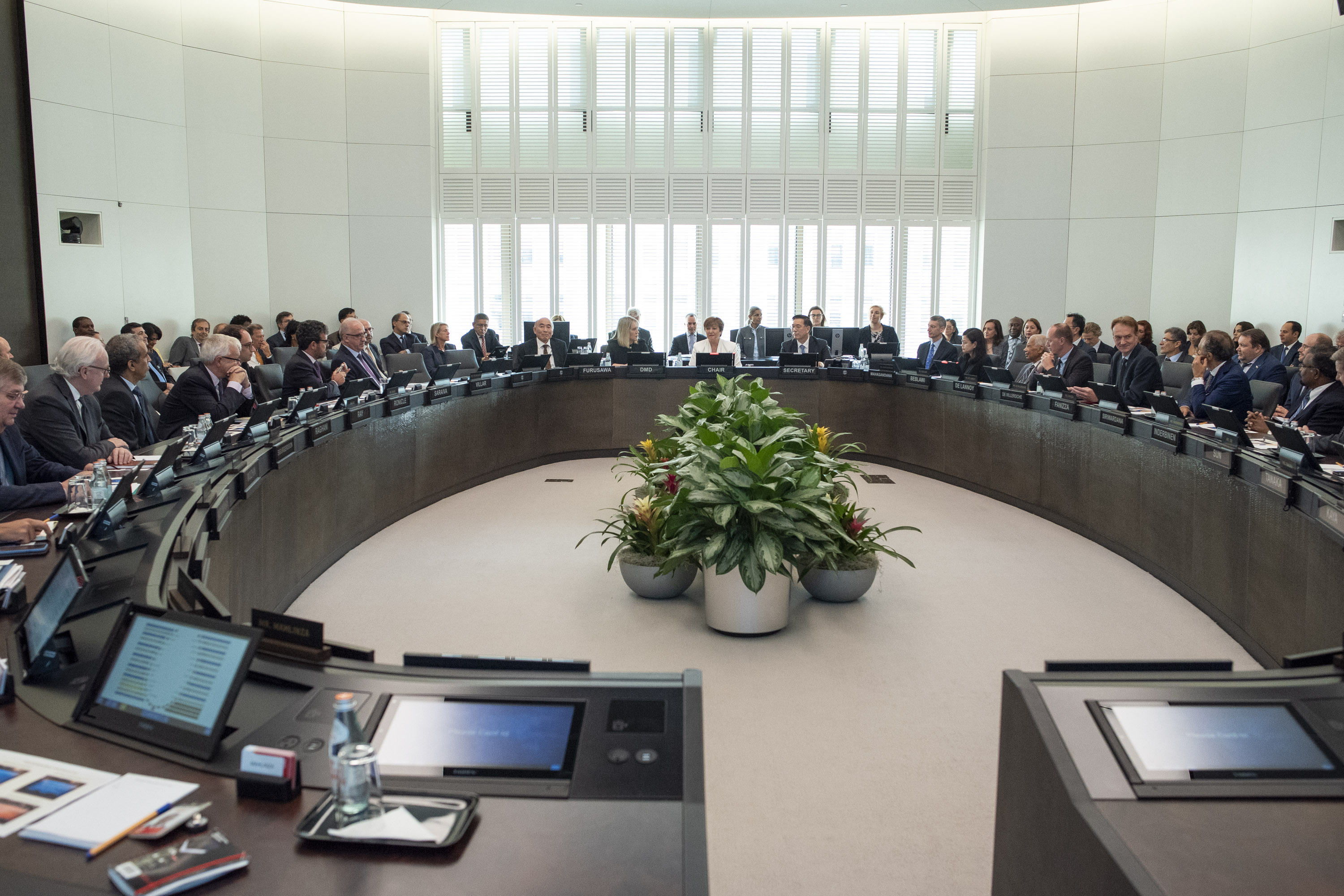
IMF Executive Board Concludes 2020 Article IV Consultation with France
IMF News, January 19, 2021
Source details
- Canonical URL
- IMF Executive Board Concludes 2020 Article IV Consultation with France
Other formats
Bibliographic details
- Published: January 19, 2021
Overview and context
- On January 13, 2021, the Executive Board of the International Monetary Fund (IMF) concluded the Article IV consultation with France.
- France entered 2020 with a largely closed output gap and falling unemployment but faced long-standing challenges: high public and private debt, sluggish productivity growth, and inequality of opportunities.
- The Covid-19 pandemic triggered a severe health and economic crisis; France was among the most-affected countries globally.
- To contain the virus, the government implemented containment measures including national lockdowns in Spring and Fall 2020.
- GDP contracted by about 19 percent (y-on-y) in the first half of 2020; overall growth is expected to have contracted by around 9 percent for the year.
- Inflation trended down due to the fall in oil prices and decelerating core inflation.
- The financial sector experienced a short period of turbulence in Q1 2020 but has weathered the crisis well, supported by prudential and monetary measures.
Policy response and recovery plan
- Fiscal and financial measures implemented:
- Expansion of the short-time work scheme.
- Grants for small firms and self-employed.
- Public guarantees for bank loans to firms.
- Recovery measures focus on:
- Green and digital transformation of the economy.
- Employment support.
- Boosting firms’ competitiveness.
- Growth in 2021 is forecast at 5½ percent; medium-term output will remain below the pre-crisis trend due to impaired balance sheets and higher unemployment.
- Risks to the forecast are large and dominated by virus dynamics.
Executive Board Assessment — key findings
- Directors agreed with the thrust of the staff appraisal and commended the swift and flexible policy response that supported households and firms and limited the economic burden.
- Directors noted the growth outlook is highly uncertain, with risks tilted somewhat to the downside predominantly from virus-related dynamics.
- Directors commended the recovery plan (Plan de Relance), particularly its job-rich green investment policies.
- Fiscal policy guidance:
- Maintain appropriate policy support in the near-term, guided by health conditions.
- As recovery gains traction, make support more targeted to those most affected to facilitate economic restructuring and contain fiscal costs.
- Develop a credible consolidation plan now to be implemented only once the recovery is solidly underway to put debt on a firm downward path over the medium term.
- Corporate sector and financial stability:
- Address risks from corporate insolvency; note the spike in corporate debt driven by state-guaranteed loans and the sizeable corporate equity gap.
- Welcome new equity support initiatives and encourage augmenting or adapting them as needed.
- Recommend enhancing debt restructuring mechanisms as a complementary measure.
- Banking sector entered the crisis with comfortable buffers and facilitated credit provision, but bank capital should be closely monitored given potential future corporate defaults and already limited bank profitability.
- Regulatory flexibility (release of counter-cyclical capital buffer, measures to help banks extend loan moratoria) is welcome but should be temporary and time bound.
- Broadly maintain macroprudential measures for household and corporate sectors to mitigate buildup of risks.
- Labor market and inclusion:
- Crisis disproportionately affected lower-skilled workers and the young.
- Call for policies that boost employment for vulnerable groups and facilitate new work relationships in dynamic sectors.
- Encourage continued reform agenda to reduce structural unemployment and increase labor force participation, particularly of youths, over the medium term.
- Climate and green policy:
- As recovery strengthens, continue implementing green policies consistent with Paris Climate Agreement commitments and European initiatives, including strengthening carbon pricing.
Selected economic indicators and projections (2018-21)
- Real economy (change in percent)
- Real GDP: 1.8 (2018); 1.5 (2019); -9.0 (2020); 5.5 (2021)
- Domestic demand: 1.4 (2018); 1.7 (2019); -7.4 (2020)
- Foreign balance (contr. to GDP growth): 0.4 (2018); -0.2 (2019); -1.6 (2020); -0.1 (2021)
- CPI (year average): 2.1 (2018); 1.3 (2019); 0.5 (2020); 0.7 (2021)
- GDP deflator: 1.0 (2018); 1.2 (2019); 2.3 (2020); 0.3 (2021)
- Public finance (percent of GDP)
- General government balance: -2.3 (2018); -3.0 (2019); -10.6 (2020); -7.7 (2021)
- Revenue: 53.4 (2018); 52.6 (2019); 52.7 (2020)
- Expenditure: 55.7 (2018); 55.6 (2019); 63.2 (2020); 60.3 (2021)
- Primary balance: -0.7 (2018); -9.3 (2019); -6.5 (2020)
- Structural balance (percent of pot. GDP): -1.7 (2018); -2.0 (2019); -3.8 (2020); -4.7 (2021)
- General government gross debt: 98.1 (2018); 115.3 (2019); 117.6 (2020)
- Labor market (percent change)
- Employment: 0.6 (2018); -1.3 (2019); -1.0 (2020)
- Labor force: 0.2 (2018); 0.0 (2019); 0.9 (2020)
- Unemployment rate (percent): 9.0 (2018); 8.5 (2019); 8.7 (2020); 10.4 (2021)
- Credit and interest rates (percent)
- Growth of credit to the private non-financial sector: 5.3 (2018); 8.0 (2019); 3.4 (2020)
- Money market rate (Euro area): -0.4 (2018); ...
- Government bond yield, 10-year: 0.8 (2018); 0.1 (2019)
- Balance of payments (percent of GDP)
- Current account: -0.6 (2018); -2.1 (2019)
- Trade balance of goods and services: -1.8 (2018)
- Exports of goods and services: 33.0 (2018); 32.8 (2019); 28.0 (2020); 27.2 (2021)
- Imports of goods and services: -34.0 (2018); -33.9 (2019); -29.8 (2020); -28.9 (2021)
- FDI (net): 2.4 (2018)
- Official reserves (US$ billion): 66.1 (2018); 69.7 (2019)
- Exchange rates
- Euro per U.S. dollar, period average: 0.85 (2018); 0.89 (2019)
- NEER, ULC-styled (2005=100, +=appreciation): 98.2 (2018); 97.1 (2019)
- REER, ULC-based (2005=100, +=appreciation): 92.6 (2018); 90.4 (2019)
- Potential output and output gap
- Potential output (change in percent): -4.3 (2018); 4.0 (2019)
- Memo: per working age person: 1.1 (2018); -4.2 (2019); 4.1 (2020)
- Output gap: -0.5 (2018); -4.9 (2019); -3.6 (2020)
IMF Press Release No. 21/14 — IMF Executive Board Concludes 2020 Article IV Consultation with France (January 19, 2021).
References
- https://www.imf.org/-/media/images/imf/bios/imfboard.jpg
- The Executive Board
- IMF COVID-19 Hub
- Policy Tracker
- Financial Assistance
- Questions & Answers
- France and the IMF
- IMF Policy Advice -- A Factsheet
- Press Releases
- PRESS CENTER
- http://www.imf.org/external/np/sec/misc/qualifiers.htm
- https://www.imf.org/en/home