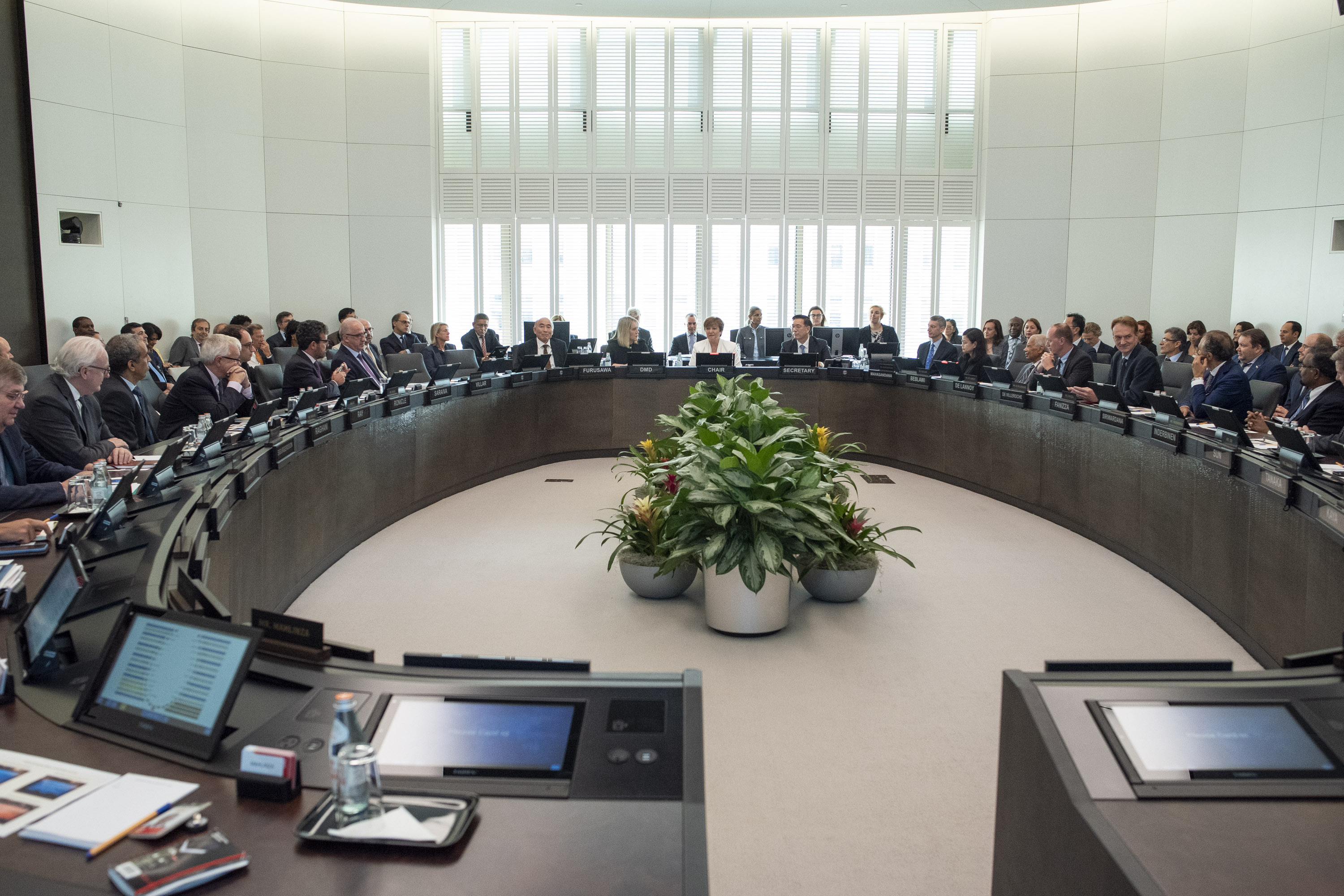
IMF Executive Board Concludes 2021 Article IV Consultation with Denmark
IMF News, June 15, 2021
Source details
- Canonical URL
- IMF Executive Board Concludes 2021 Article IV Consultation with Denmark
Other formats
Bibliographic details
- Published: June 15, 2021
Overview
- On June 14, 2021, the IMF Executive Board concluded the Article IV consultation with Denmark and endorsed the staff appraisal without a meeting.
- Denmark entered the pandemic on a strong economic footing and used large policy space to navigate the crisis.
- Real GDP declined in 2020, driven mainly by weak private consumption and net exports; the contraction was one of the smallest in Europe.
- Swift and sizable fiscal measures cushioned the impact on activity; fiscal policy continues to support the recovery and public debt is sustainable.
- Unprecedented policy measures supported the labor market; unemployment increased only slightly.
- The current account surplus declined mainly due to lower services’ exports but remains high.
- Macrofinancial vulnerabilities largely stem from accelerating housing price growth amid high and increasing household leverage.
Near-term Outlook and Projections
- Recovery assumptions: continued vaccine rollout and increased availability by the second half of 2021; lifting of restrictions.
- Output growth projections:
- 2021: 2.6 percent
- 2022: 3.3 percent
- Drivers: recovery of private consumption and net exports; investment momentum expected to strengthen in 2022 due to initiatives incentivizing green investment and digitalization.
- Labor market: continued improvement supporting wages.
- Output gap: negative output gap estimated to close by 2022.
- Potential growth: expected to pick up in the medium term, limiting scarring from the pandemic.
Executive Board Assessment
- Activity: Declined in 2020 but milder than peers due to policy support.
- External position: Stronger than level consistent with medium-term fundamentals and desirable policies.
- Risks: Near-term outlook dominated by pandemic developments; high and increasing household debt amid accelerating housing valuations is a key vulnerability.
- Policy priorities: Support the recovery, safeguard vulnerable groups, enhance macrofinancial resilience, and facilitate green and digital transitions.
Fiscal Policy and Public Finances
- Denmark’s public finances described as sound with substantial fiscal space to support recovery and transformations.
- Recommended fiscal stance:
- Prioritize COVID crisis support, facilitate reallocation, and support reforms for economic transformation.
- If the recovery falters, deploy fiscal space as needed.
- Once recovery is fully entrenched, plan to return to the medium-term objective of a neutral stance.
- Recommendation to raise public investment as much as efficiently possible while complying with the Budget Law and the medium-term objective.
- Call for prompt definition of the tax framework for green investment, including the level and base of carbon taxation to reduce uncertainty and incentivize private investments.
Financial Stability and Housing
- Banking system: profitable, liquid, and highly capitalized though operating in a challenging environment.
- Support measures for households and corporates mitigated liquidity and credit risks; impairments likely to increase once support is unwound.
- As recovery solidifies, deploy targeted prudential tools to maintain financial stability.
- AML/CFT: Staff welcome improvements leading to a third consecutive FATF upgrade; robust implementation of reforms should continue.
- Housing and household leverage recommendations:
- Tighten prudential tools and deploy coordinated tax and housing supply policies.
- Shift focus toward income-based measures as LTV caps are less binding amid high house price growth.
- Tighten DTI restrictions for all loans irrespective of LTV ratios; DTI caps could be differentiated based on borrowers’ riskiness.
- Consider tighter limits on income-based measures for interest-only and floating-rate mortgages.
- Reduce mortgage interest deductibility consistent with the overall tax framework.
- Consider policies to promote housing supply.
Labor Market and Structural Policies
- As recovery gains traction, shift from exceptional support to measures embedded in flexicurity.
- Enhance flexicurity components that facilitate matching and reallocation of labor from contracting to expanding sectors through upskilling and education, especially for the young, unskilled, and foreign-born.
- Sunset exceptional support once recovery is entrenched.
- Continue implementation of the pension reform that links retirement age to life-expectancy to support long-term labor supply.
- Consider measures to increase labor supply and alleviate inactivity traps, including a comprehensive tax reform using targeted in-work benefits.
- Improve provision of after-hours public childcare.
- Simplify certification of foreign degrees to attract skilled foreign labor.
Productivity, Investment, and Tax Reform
- Recovery offers opportunity to address pre-pandemic legacies and boost productivity growth and investments.
- Recommendations to boost productivity and investment:
- Raise public investment within fiscal rules.
- Foster environment for high productivity sectors, encourage broad-based innovation, and improve access to equity finance.
- Reduce the cap on the use of carry-forward losses to foster start-ups and high technology firms.
- Consider implementing an ACE to reduce the debt bias and the cost of capital.
Key Statistics and Selected Economic Indicators (2018–26)
- Real GDP (change in percent): 2018: 2.2; 2019: 2.9; 2020: -2.7; 2021: 2.6; 2022: 3.3; 2023: 1.9; 2024: 1.8
- Final domestic demand (change in percent): 2018: 2.5; 2019: 1.7; 2020: -0.5; 2021: 2.7; 2022: 2.3; 2023: 2.1
- Private consumption (change in percent): 2018: 1.4; 2019: -1.9; 2020: 2.8; 2021: 3.6
- Public consumption (change in percent): 2018: 0.3; 2019: 1.2; 2020: -0.1; 2021: 3.2; 2022: 0.1; 2023: 0.9
- Gross fixed investment (change in percent): 2018: 4.8; 2019: 3.5; 2020: 3.7; 2021: 3.0
- Net exports: 2018: -2.1; 2019: 0.2
- Gross national saving (percent of GDP): 2018: 30.2; 2019: 31.6; 2020: 31.0; 2021: 30.8
- Gross domestic investment (percent of GDP): 2018: 23.1; 2019: 22.7; 2020: 23.2; 2021: 23.0; 2022: 23.6; 2023: 23.7; 2024: 23.8; 2025: 23.9
- Output gap (percent of potential output): 2018: -1.7; 2019: -1.0; 2020: 0.0
- Labor force (change in percent): 2018: 1.5; 2019: -0.2; 2020: 0.4
- Employment (change in percent): 2018: 1.6; 2019: -0.8; 2020: 0.6
- Harmonized unemployment rate (percent): 2018: 5.1; 2019: 5.0; 2020: 5.6; 2021: 5.4; 2022: 5.2
- GDP deflator (change in percent): 2018: 0.7
- CPI (year average): 2018: 1.1; 2019: 2.0
- Total revenues (percent of GDP): 2018: 51.2; 2019: 53.0; 2020: 52.8; 2021: 50.9; 2022: 50.2; 2023: 50.1; 2024: 49.7
- Total expenditures (percent of GDP): 2018: 50.5; 2019: 49.2; 2020: 54.0; 2021: 54.3; 2022: 51.1; 2023: 50.7; 2024: 50.3
- Overall balance (percent of GDP): 2018: 3.8; 2019: -1.1; 2020: -3.3; 2021: -0.9; 2022: -0.7; 2023: -0.6
- Primary balance (percent of GDP): 2018: -1.5; 2019: -3.6; 2020: -1.3
- Cyclically-adjusted balance (percent of potential GDP): 2018: -2.6
- Structural balance (percent of potential GDP): 2018: -0.3; 2019: 0.5
- Gross debt (percent of GDP): 2018: 33.8; 2019: 33.0; 2020: 42.2; 2021: 40.7; 2022: 41.2; 2023: 41.6; 2024: 41.8; 2025: 41.9
- Domestic credit growth (end of year): 2018: 4.3
- M3 growth (end of year): 2018: -2.9
- Short-term interbank interest rate (3 month): 2018: -0.4
- Exports of goods & services (percent of GDP): 2018: 56.3; 2019: 58.3; 2020: 55.7; 2021: 56.4; 2022: 56.5; 2023: 56.6
- Imports of goods & services (percent of GDP): 2018: 50.4; 2019: 51.0; 2020: 47.9; 2021: 49.1; 2022: 50.0
- Trade balance, goods and services (percent of GDP): 2018: 5.9; 2019: 7.4; 2020: 6.5; 2021: 6.7; 2022: 6.4; 2023: 6.3; 2024: 6.1
- Current account (percent of GDP): 2018: 7.0; 2019: 8.9; 2020: 7.8; 2021: 7.7; 2022: 7.3; 2023: 7.2
- Nominal GDP (Bln DKK): 2018: 2254; 2019: 2335; 2020: 2324; 2021: 2431; 2022: 2546; 2023: 2647; 2024: 2755; 2025: 2867; 2026: 2983
- GDP (Bln USD): 2018: 357; 2019: 350
- GDP per capita (USD): 2018: 61731; 2019: 60300
IMF Communications Department. Press Release No. 21/174. June 15, 2021. Executive Board concluded Article IV consultation with Denmark; Executive Directors endorsed staff appraisal under lapse-of-time procedure.