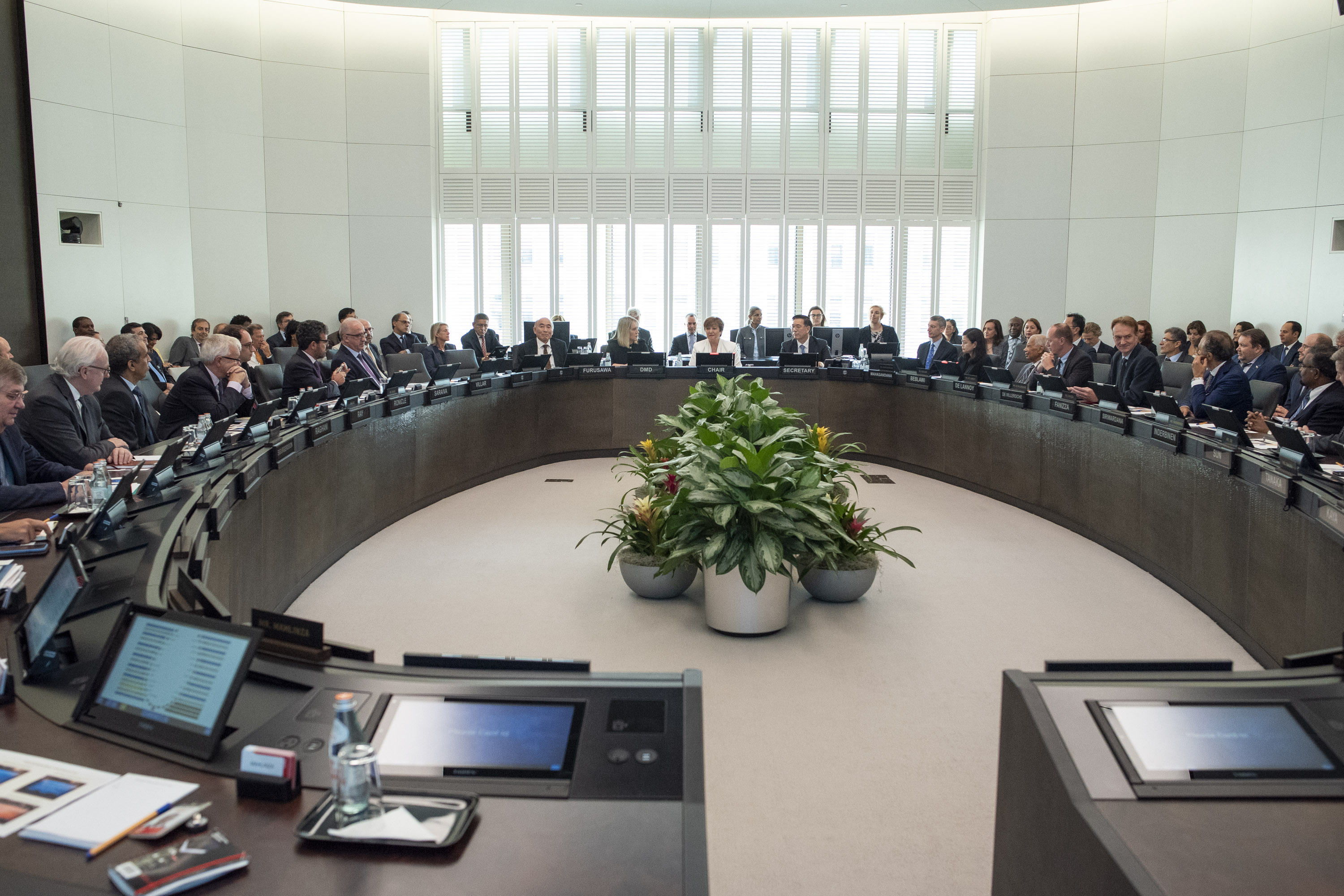
IMF Executive Board Concludes 2024 Article IV Consultation with Libya
IMF News, July 11, 2024
Source details
- Canonical URL
- IMF Executive Board Concludes 2024 Article IV Consultation with Libya
Other formats
Bibliographic details
- Published: July 11, 2024
Overview
- The Executive Board of the International Monetary Fund concluded the Article IV consultation with Libya on Monday, July 1, 2024.
- Libya remains a fragile state trapped in political uncertainty; episodes of active conflict have become less frequent.
- Several shocks occurred, including tropical storm Daniel in September 2023, causing devastating floods and catastrophic damage; the disaster had only a small impact on economic growth because Libya’s GDP is mainly based on energy exports.
2023 Economic developments
- Real GDP is estimated to have expanded by 10 percent in 2023, largely owing to a rebound from oil production stoppages of 2022.
- The current account surplus declined in line with the fall in oil prices, but reserves remained at a comfortable level.
- Government revenues declined despite the boost in oil production; fiscal expenditures surged driven by expansion in the wage bill and energy subsidies.
- Reported inflation remained low despite depreciation of the parallel market exchange rate, due to prevalence of administered prices and limited geographic coverage of available price indices.
Policy measures and authorities’ response
- The Central Bank of Libya (CBL) tightened restrictions on the issuance of letters of credit and lowered limits on individuals’ foreign exchange purchases.
- A temporary 27 percent tax was imposed on all foreign exchange purchases.
- The CBL is expected to maintain the current stock of international reserves.
- The country will continue to have no public debt as conventionally understood.
Outlook and risks
- The outlook is dominated by hydrocarbon production dynamics.
- Baseline projection: declining fiscal and external balances over the coming years, in line with a projected decline in global oil prices.
- Balance of risks is tilted to the downside; uncertainty remains high due to continuing political stalemate and possible geopolitical spillovers.
- Directors noted that addressing exchange rate pressures would require improved fiscal expenditure controls and proper fiscal budgeting to avoid procyclical spending and reduce risk of a potential loss of reserves.
Executive Board Assessment and recommendations
- Directors agreed with the thrust of the staff appraisal and welcomed the generally positive outlook, while stressing significant economic and political challenges from fragility, political uncertainty, and hydrocarbon dependence.
- Key recommendations:
- Strengthen fiscal and monetary policy coordination.
- Implement reforms to promote stronger, more inclusive private sector-led growth.
- Implement critical capacity development (CD) with improved coordination with international partners.
- Strengthen the fiscal framework and address procyclical spending bias to support macroeconomic resilience and improve resource wealth management.
- Increase fiscal transparency, improve tax administration and compliance, strengthen budget preparation, and enhance the public financial management framework.
- Strengthen the management of state-owned enterprises to reduce fiscal risk.
- Secure a durable political settlement to underpin progress on reunification of the central bank and maintain integrity of the payments system.
- Implement regulatory and governance reforms in the banking sector, including to strengthen the AML/CFT framework.
- Enhance data provision and statistical capacity, supported by Fund CD; establish a coordinating body to facilitate CD provision and implementation.
Key economic and financial indicators (selected)
- Real GDP (annual percent change): 2021: 28.3; 2022: -8.3; 2023: 10.2; 2024: 7.8; 2025: 6.9; 2026: 4.2; 2027: 2.0; 2028: 2.1; 2029: 2.3
- Nonhydrocarbon (annual percent change): 2021: 5.9; 2022: 7.9; 2023: -0.6; 2024: 3.8; 2025: 5.6; 2026: 5.3; 2027: 5.8; 2028: 6.0
- Hydrocarbon (annual percent change): 2021: 45.0; 2022: -17.0; 2023: 17.8; 2024: 7.7; 2025: 3.6; 2026: 0.0
- Nominal GDP in billions of Libyan dinars: 2021: 159.0; 2022: 208.2; 2023: 212.0; 2024: 221.9; 2025: 232.3; 2026: 240.3; 2027: 244.5; 2028: 250.6; 2029: 258.6
- Nominal GDP in billions of U.S. dollars: 2021: 35.2; 2022: 43.3; 2023: 44.0; 2024: 46.0; 2025: 48.3; 2026: 50.2; 2027: 51.3; 2028: 52.8; 2029: 54.4
- Per capita GDP in thousands of U.S. dollars: 2021: 5.2; 2022: 6.4; 2023: 6.7; 2024: 7.1; 2025: 7.2; 2026: 7.3; 2027: 7.5
- GDP deflator (annual percent change): 2021: 90.4; 2022: 42.7; 2023: -11.4; 2024: 1.4; 2025: -2.1; 2026: -0.7; 2027: -0.3; 2028: 0.9
- CPI inflation (period average): 2021: 2.9; 2022: 4.5; 2023: 2.4; 2024: 2.6
- Central government revenues (percent of GDP): 2021: 79.5; 2022: 85.8; 2023: 73.5; 2024: 64.6; 2025: 63.3; 2026: 60.8; 2027: 57.3; 2028: 53.7; 2029: 50.3
- Of which: Hydrocarbon revenues (percent of GDP): 2021: 78.1; 2022: 83.9; 2023: 71.5; 2024: 62.9; 2025: 61.6; 2026: 59.0; 2027: 55.5; 2028: 51.8
- Expenditure and net lending (percent of GDP): 2021: 64.7; 2022: 62.2; 2023: 65.3; 2024: 63.1; 2025: 62.1; 2026: 60.3; 2027: 57.2
- Capital expenditures (percent of GDP): 2021: 10.9; 2022: 8.4; 2023: 8.7; 2024: 5.4; 2025: 5.7; 2026: 4.7; 2027: 3.2
- Overall balance (percent of GDP): 2021: 14.8; 2022: 23.6; 2023: 8.2; 2024: 1.5; 2025: 1.3; 2026: 0.5; 2027: 0.1
- Nonhydrocarbon balance (percent of GDP): 2021: -63.3; 2022: -60.3; 2023: -61.4; 2024: -60.4; 2025: -58.5; 2026: -55.4; 2027: -51.8; 2028: -48.3
- Base Money (annual percent change): 2021: 2.8; 2022: -16.9; 2023: 47.9; 2024: 24.1; 2025: 8.3; 2026: 9.0; 2027: 9.3; 2028: 10.0; 2029: 10.3
- Currency in circulation (annual percent change): 2021: -20.0; 2022: -1.4; 2023: 37.6; 2024: 2.2; 2025: 5.0
- Money and quasi-money (annual percent change): 2021: -20.3; 2022: 12.0; 2023: 3.5; 2024: 4.0
- Net credit to the government (Libyan Dinar, billion): 2021: -94.1; 2022: -114.9; 2023: -110.9; 2024: -114.8; 2025: -117.8; 2026: -119.0; 2027: -118.6; 2028: -118.4
- Exports (percent of GDP): 2021: 32.3; 2022: 37.5; 2023: 31.4; 2024: 31.6; 2025: 32.1; 2026: 31.8; 2027: 30.6; 2028: 29.7; 2029: 28.8
- Imports (percent of GDP): 2021: 17.0; 2022: 17.2; 2023: 17.6; 2024: 19.1; 2025: 19.5; 2026: 19.3; 2027: 18.1; 2028: 17.4
- Current account balance (percent of GDP): 2021: 12.4; 2022: 6.8; 2023: 7.0; 2024: 6.3; 2025: 6.2
- Capital Account (including E&O) (percent of GDP): 2021: -7.0; 2022: -7.2; 2023: -2.8; 2024: -6.1; 2025: -6.4; 2026: -6.0; 2027: -6.2; 2028: -5.7
- Gross official reserves (in billions of U.S. dollars): 2021: 69.4; 2022: 74.1; 2023: 78.3; 2024: 79.0; 2025: 79.8
- Reserves in months of next year's imports: 2021: 32.2; 2022: 33.6; 2023: 34.6; 2024: 34.0; 2025: 33.9; 2026: 34.5; 2027: 36.9; 2028: 38.5; 2029: 39.0
- Gross official reserves in percentage of Broad Money: 2021: 317.0; 2022: 318.2; 2023: 261.3; 2024: 254.3; 2025: 245.0; 2026: 234.6; 2027: 223.5; 2028: 212.4; 2029: 202.2
- Total foreign assets (percent of GDP): 2021: 79.7; 2022: 84.2; 2023: 88.5; 2024: 89.3; 2025: 89.9; 2026: 90.2
- Official exchange rate (LD/US$, period average): 2021: 4.8
- Parallel market exchange rate (LD/US$, period average): 2021: 5.1
- Parallel market exchange rate (LD/US$, end of period): 6.1
- Crude oil production (mbd): 2021: 1.2; 2022: 1.0
- Of which: Exports (mbd): 0.8
- Crude oil price (US$/bbl, WEO adjusted for Libya): 2021: 64.4; 2022: 89.6; 2023: 75.0; 2024: 72.3; 2025: 68.6; 2026: 65.9; 2027: 58.4
Source: IMF Communications Department — Press Release No. 24/267; Executive Board conclusions on the 2024 Article IV consultation with Libya.