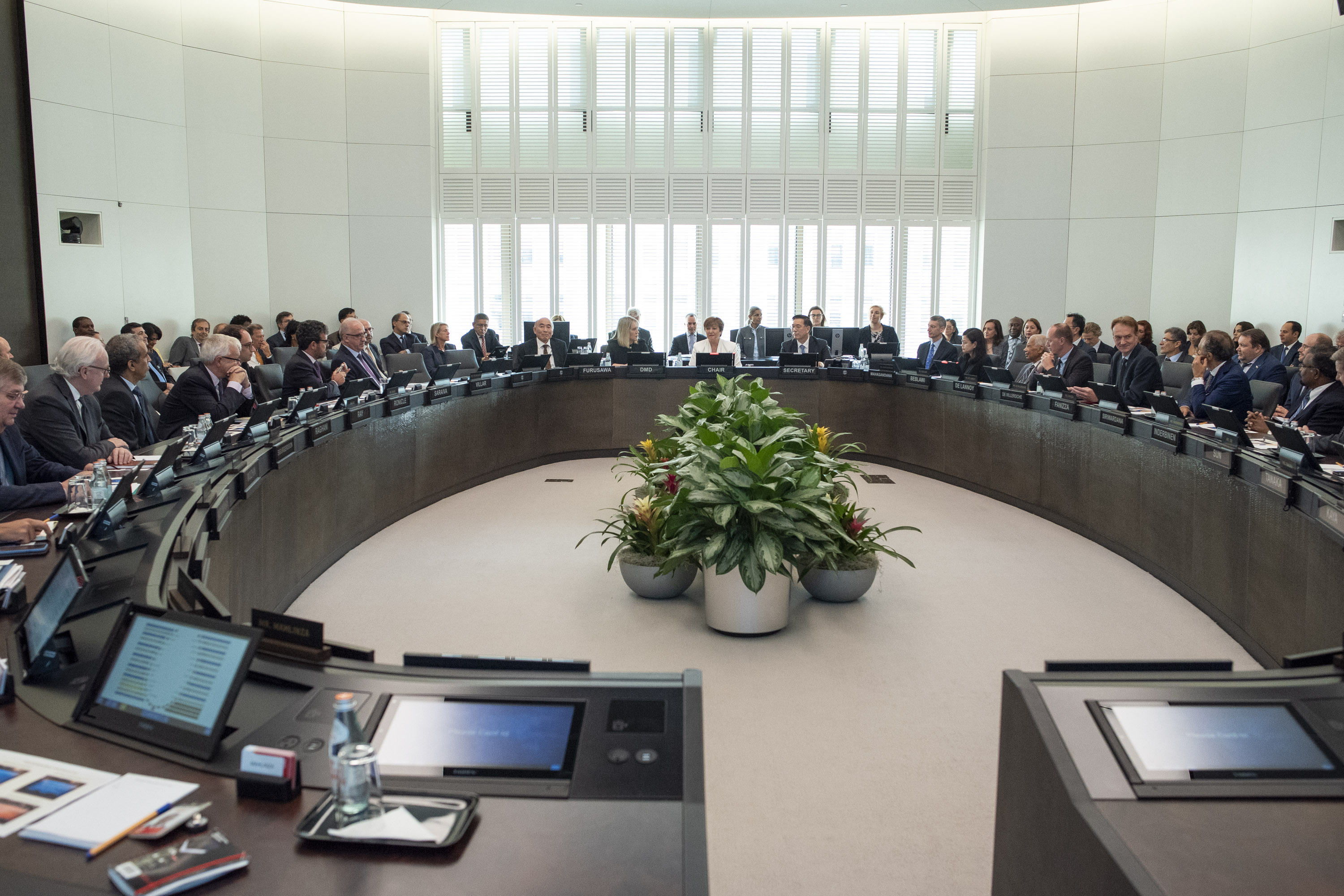
IMF Executive Board Concludes the 2024 Article IV Consultation with Qatar
IMF News, February 11, 2025
Source details
- Canonical URL
- IMF Executive Board Concludes the 2024 Article IV Consultation with Qatar
Other formats
Bibliographic details
- Published: February 11, 2025
Growth, inflation, and medium-term outlook
- Real GDP growth:
- Projected to improve gradually to 2 percent in 2024–25.
- Medium-term growth expected to accelerate to 4¾ percent on average, driven by significant LNG production expansion and initial gains from implementing the Third National Development Strategy (NDS3).
- Drivers of near-term and medium-term growth:
- Public investment, spillovers from the ongoing LNG expansion project, and strong tourism.
- Inflation:
- Headline inflation will likely ease to 1 percent in 2024 and converge to around 2 percent over the medium term.
External sector and public finances
- 2023 outcomes and 2024 developments:
- With lower hydrocarbon prices, the current account surplus narrowed to 17 percent of GDP in 2023.
- Fiscal surplus narrowed to 5½ percent of GDP in 2023.
- The twin surpluses moderated further in 2024.
- Medium-term outlook:
- As LNG production expands massively, both the current and fiscal accounts will likely remain in surpluses, albeit declining as a share of GDP, as hydrocarbon prices are projected to fall.
Financial sector health and developments
- Banking sector indicators (Q3 2024):
- Capital adequacy ratio: close to 20 percent.
- Return on equity: 14½ percent.
- Sector-wide NPL ratio: slightly below 4 percent.
- Provisioning coverage ratio: above 80 percent.
- Funding and liquidity:
- Following QCB measures to reduce banks’ net short-term foreign liabilities, non-resident deposits declined significantly.
- Banks have lengthened average maturity and diversified further sources of foreign funding.
Structural reforms and NDS3 implementation
- NDS3 objectives:
- Build a more diversified, knowledge-based and private sector-driven economy.
- Reform progress and priorities:
- Strengthened reform momentum to attract and retain high-skilled expatriate workers, foster innovation, promote public-private partnerships, and improve business efficiency.
- Qatar is well positioned to leverage digitalization and AI for productivity gains.
- The nation’s climate agenda is advancing.
Risks to the outlook
- Downside risks:
- Global headwinds: a sharper-than-expected global growth slowdown; increased volatility in global financial conditions and commodity prices; further worsening geopolitical tensions.
- Regional conflict: limited impact so far but adds downside risk through lower tourism and capital inflows, and more volatile hydrocarbon prices.
- Domestic: potential further weaknesses in the real estate sector, though strong tourism and 2023 policy measures could mitigate this risk.
- Medium/long-term: significant expansion in global natural gas supply could put downward pressure on prices.
- Upside risks:
- Sustained high hydrocarbon prices.
- Accelerated NDS3 reforms.
- Policy execution risk:
- If ambitious NDS3 initiatives lead to resource misallocation, public finance and growth prospects would be affected.
Executive Board assessment and policy recommendations
- General assessment:
- Directors agreed with the thrust of the staff appraisal, welcomed Qatar’s continued resilience, and favorable medium-term outlook driven by LNG production increases and NDS3 reforms.
- Maintaining prudent macroeconomic policies and accelerating reform efforts would further solidify macroeconomic stability and resilience while boosting prosperity.
- Fiscal policy recommendations:
- Commended authorities’ commitment to continued fiscal prudence.
- Recommended adopting a medium-term fiscal anchor to help ensure intergenerational equity.
- Reiterated the need to accelerate revenue diversification, particularly by introducing the value-added tax.
- Highlighted the importance of improving spending efficiency and composition, particularly by enhancing public investment management.
- Welcomed efforts to strengthen fiscal institutions and adopt a full-fledged medium-term fiscal framework with enhanced fiscal risk management.
- Financial sector recommendations:
- Supported efforts to maintain financial stability and deepen domestic financial markets; encouraged consideration of a Financial Sector Assessment Program update.
- Welcomed newly introduced risk-based supervision; recommended formalizing the financial safety net and continuing to adjust macroprudential policies to mitigate potential macro-financial risks.
- Encouraged sustaining progress in fighting financial crimes.
- Exchange rate and monetary policy:
- Directors agreed the exchange rate peg continues to serve Qatar well.
- Concurred that, as conditions allow, strengthening the operational framework would further enhance monetary policy transmission.
- Structural and labor market recommendations:
- Supported strategy to build a more diversified, private sector-led, and knowledge-based economy.
- Recommended fostering innovation and business efficiency; enhancing human capital by attracting and retaining more high-skilled expatriate workers; improving Qatari nationals’ employment in the private sector; and further increasing female labor force participation.
- Agreed that aligning domestic energy prices with export prices would benefit public finances and support climate goals.
- Encouraged closing remaining data gaps with IMF capacity development assistance.
Selected macroeconomic indicators and key figures (2021–25)
- Quota: 735.1 million SDRs, November 2024
- Per capita income: U.S.$69,541, 2023
- Life expectancy at birth: 81.6 years, 2022
- Population: 3.1 million, 2023
- Real GDP (2018 prices), percent change:
- 2021: 1.6
- 2022: 4.2
- 2023: 1.2
- 2024: 1.7
- 2025: 2.4
- Hydrocarbon (percent change): 2022: -0.3; 2023: 1.4; 2024: 3.0
- Nonhydrocarbon (percent change):
- 2021: 2.8
- 2022: 5.7
- 2023: 1.1
- 2024: 1.9
- 2025: 2.1
- CPI inflation (average):
- 2021: 2.3
- 2022: 5.0
- 2023: 1.0
- Public finances (percent of GDP):
- Revenue: 2021: 29.6; 2022: 34.7; 2023: 32.8; 2024: 26.2; 2025: 28.7
- Expenditure: 2021: 29.4; 2022: 24.3; 2023: 27.3; 2024: 25.9
- Current: 2021: 18.3; 2022: 15.6; 2023: 17.5; 2024: 17.2
- Capital: 2021: 11.1; 2022: 8.8; 2023: 9.7; 2024: 8.7
- Central government fiscal balance: 2021: 0.2; 2022: 10.4; 2023: 5.6; 2024: 0.3; 2025: 2.5
- Money and credit:
- Broad money: 2021: 17.4; 2022: 4.1
- Credit to private sector: 2021: 9.5; 2022: 7.4; 2023: 4.9; 2024: 5.5; 2025: 6.1
- External sector (percent of GDP unless otherwise noted):
- Exports: 2021: 58.7; 2022: 68.6; 2023: 60.4; 2024: 60.1; 2025: 60.1
- Imports: 2021: 34.1; 2022: 31.6; 2023: 33.9; 2024: 33.4; 2025: 35.1
- Current account balance: 2021: 14.6; 2022: 26.8; 2023: 17.1; 2024: 16.6; 2025: 15.5
- Current account balance, in billions of U.S. dollars: 2021: 26.3; 2022: 63.1; 2023: 36.5; 2024: 37.0; 2025: 35.2
- External debt: 2021: 161.4; 2022: 115.5; 2023: 123.2; 2024: 118.1; 2025: 116.8
- Central Bank's reserves: 2021: 23.5; 2022: 20.1; 2023: 24.2; 2024: 24.5; 2025: 25.4
- Central Bank's reserves, in months of next year’s imports: 2021: 6.6; 2022: 7.7; 2023: 8.1; 2024: 8.0; 2025: 7.9
- Exchange rate (per U.S. dollar): January 6, 2025: 3.6
- Real effective exchange rate (percent change): 2021: -2.6; 2022: 6.5; 2023: -0.5; 2024: …
Source: IMF Executive Board Concludes the 2024 Article IV Consultation with Qatar, February 11, 2025.