Chart of the Week: Bye Bye Baby—How Crises Affect Fertility Rates
IMF Blog, November 13, 2018
Source details
- Canonical URL
- Chart of the Week: Bye Bye Baby—How Crises Affect Fertility Rates
Other formats
Bibliographic details
- Authors: The Editors
- Published: November 13, 2018
Key findings on fertility trends
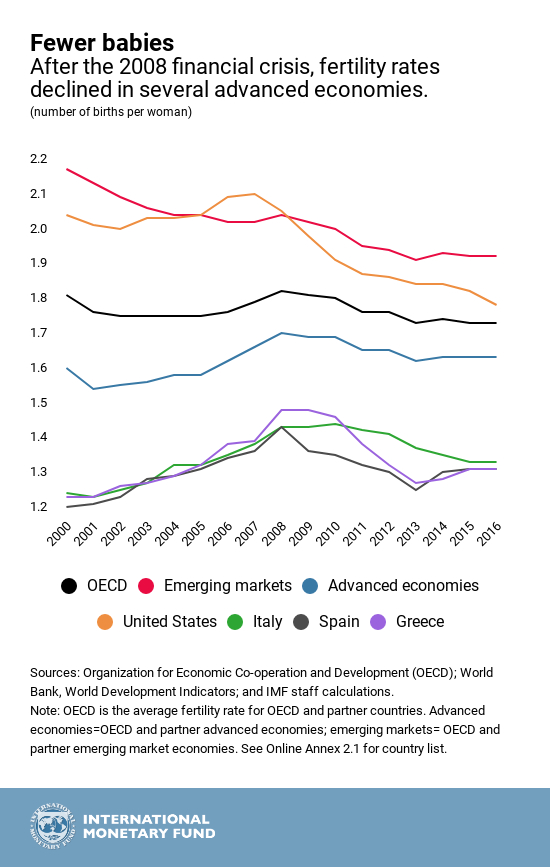
- In the decade before the global financial crisis, the fertility rate rose in several advanced economies; it declined afterward.
- United States: fertility rate fell from a peak of 2.12 in 2007 to 1.8 in 2016.
- European examples (countries that suffered a double-dip recession): fertility rate decreased from 1.5 to about 1.3 over the same time period.
Evidence and channels linking crises to fertility
- Evidence from Organisation for Economic Co-operation and Development countries shows that employment losses were the most important channel through which the crisis affected fertility rates.
- Other studies identify additional factors influencing family-size decisions:
- higher women’s participation in the workforce,
- a desire for smaller families,
- cuts to welfare systems.
Macroeconomic implications
- Persistently low birth rates over the past decade will slow the growth rate of the labor force of the future in these countries.
- Slower labor force growth will weaken potential output growth.
- If immigration were to decline, fewer babies will exacerbate the already aging and shrinking populations of many countries.
Policy recommendations for advanced economies
- Policymakers will need to tackle the trend and find ways to encourage women to have children. Examples include:
- increasing access to affordable and high-quality childcare,
- implementing family-friendly labor laws,
- adopting tax policies that do not penalize secondary earners.
The Editors — November 13, 2018