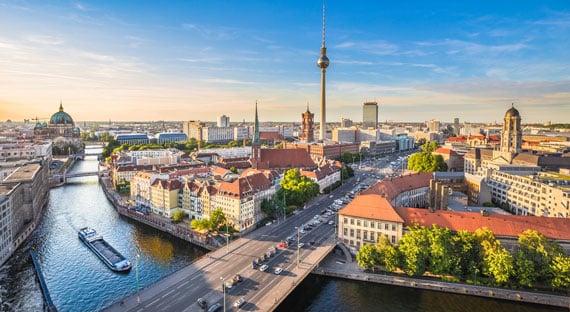
Berlin, Germany, is one of the fastest growing startup ecosystems in the world. The country’s economy registered strong growth of 2.5 percent last year (photo: BlueJay/Getty Images by iStock)
Germany’s Economic Outlook in Six Charts
July 5, 2018
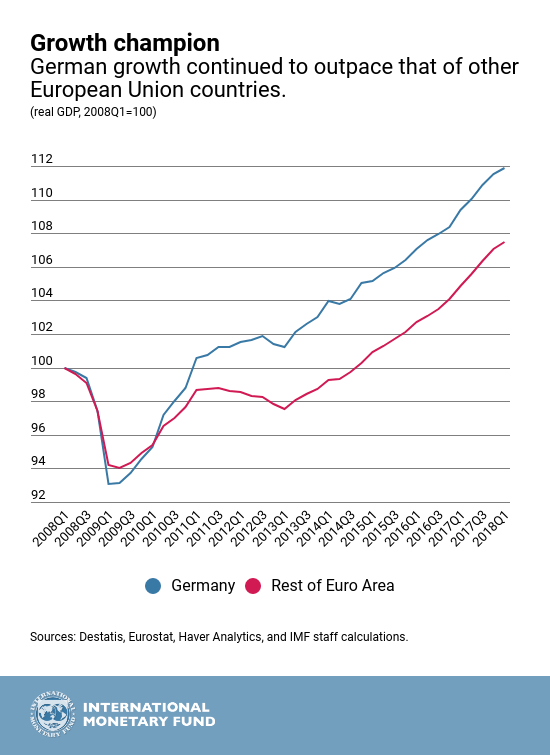
Germany’s economic performance has been impressive, with growth rising to 2.5 percent in 2017. The current upswing presents a golden opportunity for bolder action to address the country’s medium-term challenges and shape a brighter future, said the IMF in its latest annual assessment of the economy.
Here are six things you need to know about this report.
1. Germany’s economic momentum is expected to persist in 2018 . Business investment is expected to be dynamic. With strong job growth and unemployment falling to new post-reunification lows, rising wages should provide a boost to private consumption. Higher wage growth and stronger imports would also help bring down Germany’s large current account surplus, which stood at 8¼ percent of GDP in 2017.
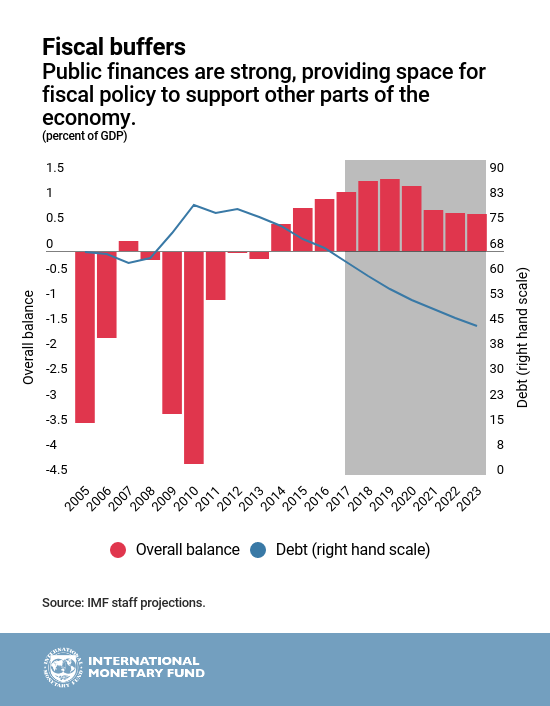
2. Public finances have improved significantly. The budget surplus rose to 1.2 percent in 2017 – the highest level since reunification. Fiscal surpluses are projected to remain high over the medium term, pushing debt down to 42 percent of GDP by 2023.

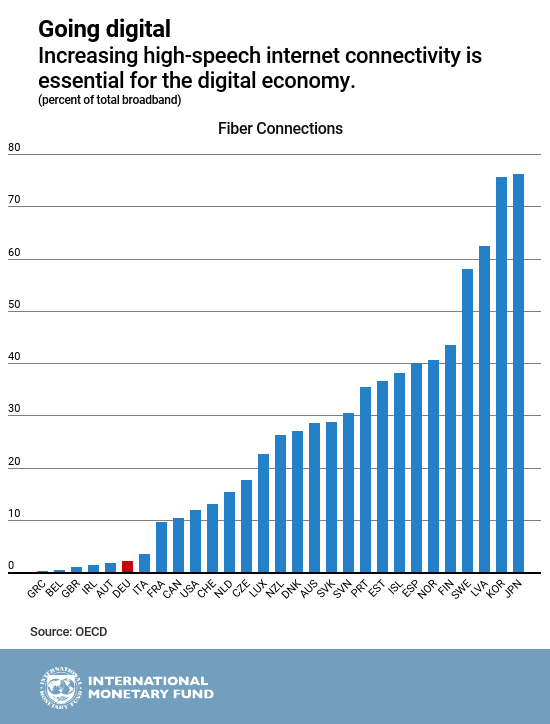
3. The strong fiscal position can be used to increase investment in physical, digital, and human capital. Public investment in infrastructure, especially at the municipal levels, can help crowd in private investment and support external rebalancing. New government plans to increase investment in digital infrastructure, especially high-speed nationwide internet connections, are essential to keep Germany’s edge as an innovation leader. And with the high probability of an average German job of being lost to automation, investment in life-long learning is key to boosting productivity and long-run growth.
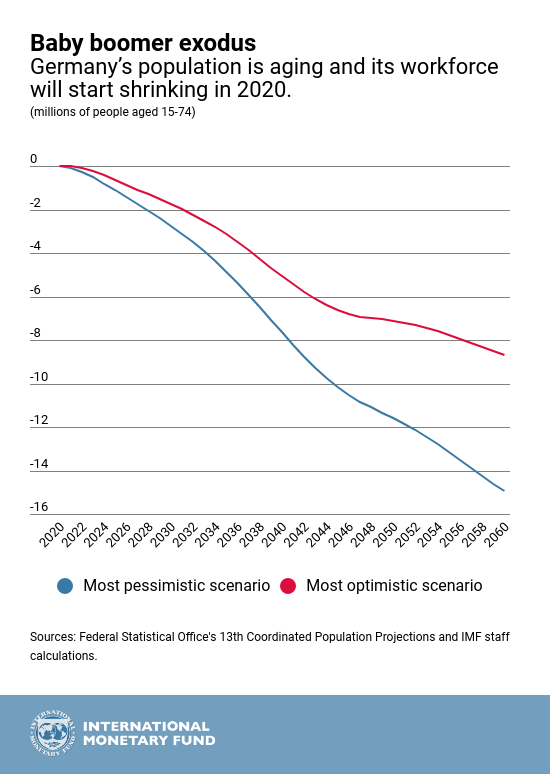
4. Public finances can also be used to boost labor force participation. Germany’s workforce will begin shrinking in 2020. Policies to tap into the potential of women, older workers, and migrants can help offset this decline. Expanding childcare and after-school programs would provide greater opportunities for women to pursue full-time employment. Pension and labor market reforms that make it more attractive to stay in the workforce longer can also reduce the need to save and lift growth.
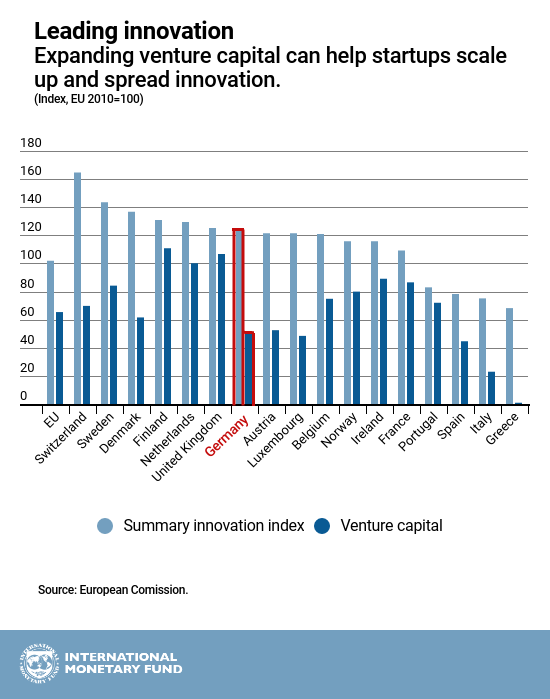
5. Fostering entrepreneurship can raise productivity growth and investment . Germany is an innovation leader, but with a relative weakness in venture capital. The government should encourage the provision of scale-up capital to support startups at the growth stage. New business creation and expansion is essential for technological diffusion and productivity growth.

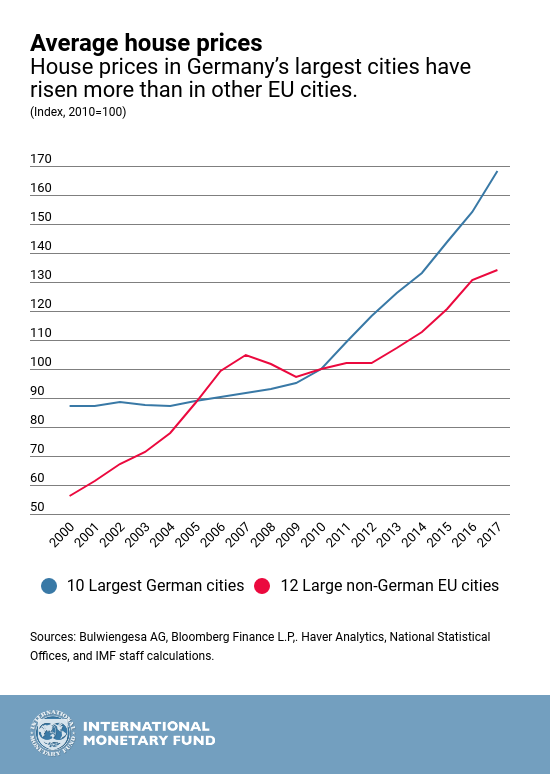
6. Strong policies are needed to curb financial excesses in the housing market. Rising wages, large immigration flows, and low interest rates are driving up the demand for housing. House prices in Germany’s major cities such as Munich, Hamburg and Frankfurt, have risen much faster than in other European Union cities. Lowering the burden on new construction can ease supply constraints, and strengthening the prudential toolkit can help preserve financial stability.