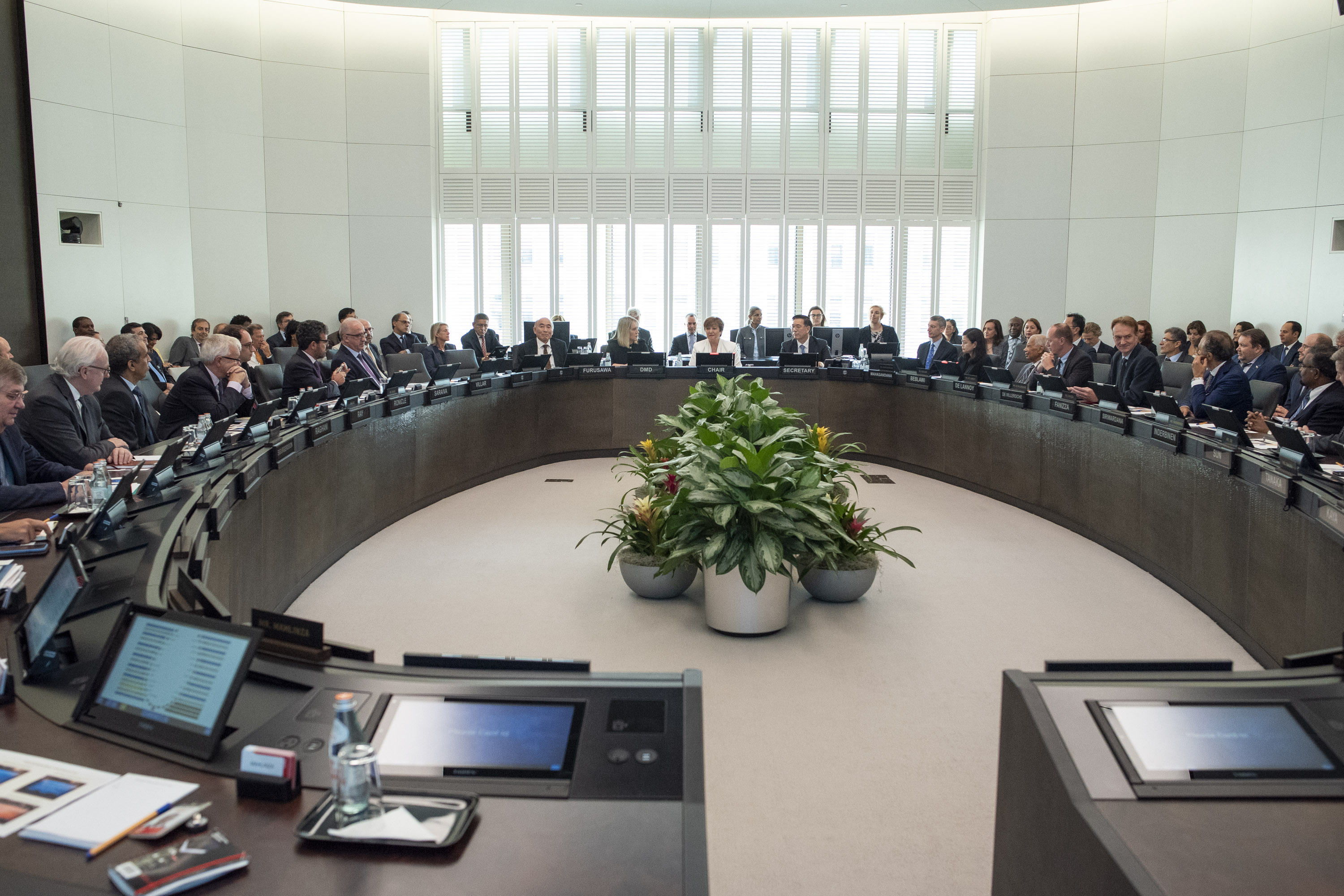
IMF Executive Board Concludes 2018 Article IV Consultation with the Federal Democratic Republic of Ethiopia
IMF News, December 4, 2018
Source details
- Canonical URL
- IMF Executive Board Concludes 2018 Article IV Consultation with the Federal Democratic Republic of Ethiopia
Other formats
Bibliographic details
- Published: December 4, 2018
Overview
- Executive Board concluded the Article IV consultation on November 30, 2018.
- In 2017/18, real GDP grew by 7.7 percent, driven by favorable harvests and rapid growth in air transport and manufacturing exports.
- Political uncertainty, foreign exchange shortages, and adverse terms-of-trade trends hampered activity.
- Authorities reduced the external current account deficit to 6.4 percent of GDP in 2017/18 through restrictions on public sector imports and borrowing and a tight monetary policy stance.
- Fiscal deficit (cash basis) was estimated at 3.7 percent of GDP in 2017/18 due to prudent budget execution, with disappointing tax revenue offset by expenditure savings and ring-fencing of pro-poor programs.
- Inflation was 12 percent in September 2018 (period-average consumer inflation 13.0 percent in 2017/18; end-period consumer prices 14.7 percent in 2017/18).
- National Bank of Ethiopia (NBE) reduced growth of base money from 32 percent in July 2017 to 19 percent in June 2018; broad money and credit growth remained strong.
Growth and Projections
- Growth forecast for 2018/19: 8.5 percent, supported by improved confidence and external financial inflows (including FDI) easing external financing constraints and foreign exchange shortages.
- Authorities announced a budget for fiscal year ending June 2019 built on prudent expenditure control and committed to refrain from non-concessional financing for new projects and to shift ongoing projects to concessional financing when possible.
- NBE adopted further monetary tightening expected to help inflation converge to the authorities’ single-digit target.
- Authorities announced intention to open key economic sectors to domestic and foreign private investment and competition via privatization, public-private partnerships and concession agreements.
Executive Board Assessment and Key Policy Recommendations
- Directors agreed with staff appraisal: Ethiopia achieved high and inclusive growth for more than a decade with commendable poverty reduction and living standards improvement.
- Public sector–led development strategy is reaching limits, exacerbating external imbalances and raising public debt vulnerabilities.
- Directors welcomed tightened macroeconomic policies and the authorities’ ambitious reform program (Growth and Transformation Plan II) aimed at catalyzing private investment and sustainable growth.
- Fiscal policy:
- Need for fiscal consolidation and higher revenue through tax policy and administrative measures.
- Further prioritization of public projects, reductions in borrowing requirements of state owned enterprises (SOEs), and phasing out of implicit subsidies.
- Rationalization of tax exemptions and excise reform recommended.
- Further improvements in public financial management and SOE governance and transparency warranted.
- Strengthen public debt sustainability; welcome reprofiling efforts of non-concessional debt and intention to contract new debt on concessional terms.
- Commended plans to protect social and pro-poor spending.
- Monetary and exchange rate policy:
- Tighter monetary stance for 2018/19 is warranted to bring inflation to target.
- Support monetary stance with restrictive public-sector credit policies, including gradually phasing out central bank financing of the budget.
- Exchange rate flexibility recommended to strengthen competitiveness, reduce foreign exchange shortages and support reserve accumulation.
- Eliminate remaining exchange restrictions on current transactions.
- Financial sector reforms:
- Develop a market for government securities with market-determined interest rates.
- Until market develops, NBE bills should be used solely to manage liquidity and delinked from funding of the Development Bank of Ethiopia, which needs a comprehensive financial assessment.
- Channeling tax payments through banks to deepen financial intermediation and reduce corruption opportunities.
- Gradual opening of the financial sector to foreign investors to improve services and transfer technology.
- Continued efforts to strengthen the AML/CFT framework.
- Structural reforms:
- Implementation critical to promote competitive markets and improve investment climate to catalyze private investment.
- Privatizations, PPPs with adequate safeguards, and removal of obstacles to private investment could support renewed growth and attract foreign resources and know how.
- Address data gaps and delays to improve quality of statistics.
- Welcomed Ethiopia’s decision to join the African Continental Free Trade Agreement and progress toward WTO membership.
- Welcomed joint analysis with UN Women showing reducing gender disparities would yield large economic benefits over time.
Fiscal and Debt Outlook (selected figures and ratios)
- Revenue: 12.8 percent of GDP (2016/17); 13.1 percent of GDP (2017/18).
- Tax revenue: 11.6 percent of GDP (2016/17); 11.1 percent of GDP (2017/18); projected 11.2 percent (2018/19); 11.3 percent (2019/20); 11.9 percent (2021/22).
- Nontax revenue: 2.6 percent of GDP (2016/17); 1.8 percent of GDP (2017/18); 1.7 percent (2018/19).
- External grants: 1.4 percent of GDP (2016/17); 0.5 percent of GDP (2017/18); 0.4 percent (2018/19).
- Expenditure and net lending: 18.2 percent of GDP (2016/17); 17.4 percent (2017/18); 17.5 percent (2018/19).
- Fiscal balance, excluding grants (cash basis): -4.0 percent of GDP (2016/17); -4.6 percent (2017/18); -4.5 percent (2018/19); -3.6 percent (2019/20).
- Fiscal balance, including grants (cash basis): -3.3 percent of GDP (2016/17); -3.0 percent (2017/18); -2.9 percent (2018/19).
- Total financing (including residuals): 3.3 percent of GDP (2016/17); 3.7 percent (2017/18); 3.1 percent (2018/19).
- Public debt (non-financial public-sector debt): 57.2 percent of GDP (2016/17); 61.0 percent (2017/18); 57.5 percent (2018/19); 56.5 percent (2019/20); projected 55.7 percent (2020/21); 55.5 percent (2021/22); 54.6 percent (2022/23).
- Domestic debt: 27.8 percent of GDP (2016/17); 28.1 percent (2017/18); 28.9 percent (2018/19); 29.8 percent (2019/20); 31.3 percent (2020/21); 32.1 percent (2021/22).
- External debt (including to the IMF): 29.4 percent of GDP (2016/17); 32.3 percent (2017/18); 27.6 percent (2018/19); 25.9 percent (2019/20); 24.2 percent (2020/21); 22.5 percent (2021/22).
External Sector, Reserves, and Balance of Payments
- External current account balance, including official transfers: -8.1 percent of GDP (2016/17); -6.4 percent of GDP (2017/18); -6.2 percent (2018/19); -5.8 percent (2019/20); -5.2 percent (2020/21); -4.2 percent (2021/22); -3.8 percent (2022/23).
- Exports of goods and services (U.S. dollars, f.o.b.) growth: 2.9 percent (2016/17); 13.2 percent (2017/18); projections 12.7 percent (2018/19); 12.6 percent (2019/20); 13.6 percent (2020/21); 14.3 percent (2021/22).
- Imports of goods and services (U.S. dollars, c.i.f.) growth: -4.8 percent (2016/17); 0.2 percent (2017/18); projections 5.9 percent (2018/19); 7.5 percent (2019/20); 6.0 percent (2020/21).
- Export volume (goods): -1.1 percent (2016/17); 11.0 percent (2017/18); projected 9.8 percent (2018/19); 8.3 percent (2019/20); 14.0 percent (2020/21).
- Import volume (goods): -5.4 percent (2016/17); -9.2 percent (2017/18); projected 9.5 percent (2018/19); 4.4 percent (2019/20); 6.6 percent (2020/21); 4.6 percent (2021/22); 5.0 percent (2022/23).
- Nominal effective exchange rate (end of period): -3.7 percent (2016/17); -16.1 percent (2017/18).
- Real effective exchange rate (end of period): 2.1 percent (2016/17); -7.1 percent (2017/18).
- Overall balance of payments (in millions of U.S. dollars): 658 (2016/17); 202 (2017/18); projected 550 (2018/19); 474 (2019/20); 829 (2020/21); 1,158 (2021/22); 1,642 (2022/23).
- Gross official reserves (in millions of U.S. dollars): 3,197 (2016/17); 2,847 (2017/18); projected 3,397 (2018/19); 3,872 (2019/20); 4,700 (2020/21); 5,858 (2021/22); 7,500 (2022/23).
- Reserves in months of imports of goods and nonfactor services of following year: 2.0 (2016/17); 2.5 (2017/18).
Money, Credit, and Savings-Investment Balances
- Change in net foreign assets: 66.8 (2016/17); 3.5 (2017/18); projected -18.9 (2018/19); 62.2 (2019/20); 64.8 (2020/21); 66.9 (2021/22); 49.8 (2022/23).
- Change in net domestic assets (including other items net): 26.7 (2016/17); 31.0 (2017/18); projected 24.6 (2018/19); 20.5 (2019/20); 19.3 (2020/21); 19.2 (2021/22); 20.2 (2022/23).
- Broad money growth: 28.8 percent (2016/17); 29.2 percent (2017/18); projected 22.3 percent (2018/19); 22.0 percent (2019/20); 21.4 percent (2020/21); 22.2 percent (2021/22); 22.8 percent (2022/23).
- Base money growth: 22.7 percent (2016/17); 19.1 percent (2017/18); projected 13.3 percent (2018/19); 13.5 percent (2019/20).
- Velocity (GDP/broad money): 3.15 (2016/17); 2.89 (2017/18); projections 2.84 (2018/19); 2.72 (2019/20); 2.61 (2020/21); 2.47 (2021/22); 2.34 (2022/23).
- Gross domestic savings: 24.1 percent of GDP (2016/17); 23.4 percent (2017/18); projected 23.8 percent (2018/19); 26.6 percent (2019/20); 28.2 percent (2020/21).
- Gross domestic investment: 39.0 percent of GDP (2016/17); 38.2 percent (2017/18); projected 37.3 percent (2018/19); 37.5 percent (2019/20); 37.4 percent (2020/21); 39.2 percent (2021/22); 39.8 percent (2022/23).
- Public investment: 14.6 percent of GDP (2016/17); 13.9 percent (2017/18); projected 12.2 percent (2018/19); 9.9 percent (2019/20); 9.7 percent (2020/21).
- Private investment: 24.4 percent of GDP (2016/17); 24.3 percent (2017/18); projected 25.1 percent (2018/19); 25.3 percent (2019/20); 27.5 percent (2020/21); 29.5 percent (2021/22); 30.0 percent (2022/23).
- Resource gap: -14.9 percent of GDP (2016/17); -15.1 percent (2017/18); projected -14.1 percent (2018/19); -13.5 percent (2019/20); -12.6 percent (2020/21); -11.6 percent (2021/22).
Other Notes and Expectations
- Directors encouraged elimination of remaining exchange restrictions on current transactions.
- Development Bank of Ethiopia requires a comprehensive financial assessment.
- Next Article IV consultation expected on the standard 12-month cycle.
IMF Communications Department, Press Release No. 18/452 (December 4, 2018).