IMF Management Complete the First Review under the Staff-Monitored Program with Somalia
IMF News, February 26, 2019
Source details
- Canonical URL
- IMF Management Complete the First Review under the Staff-Monitored Program with Somalia
Other formats
Bibliographic details
- Published: February 26, 2019
Program review and implementation
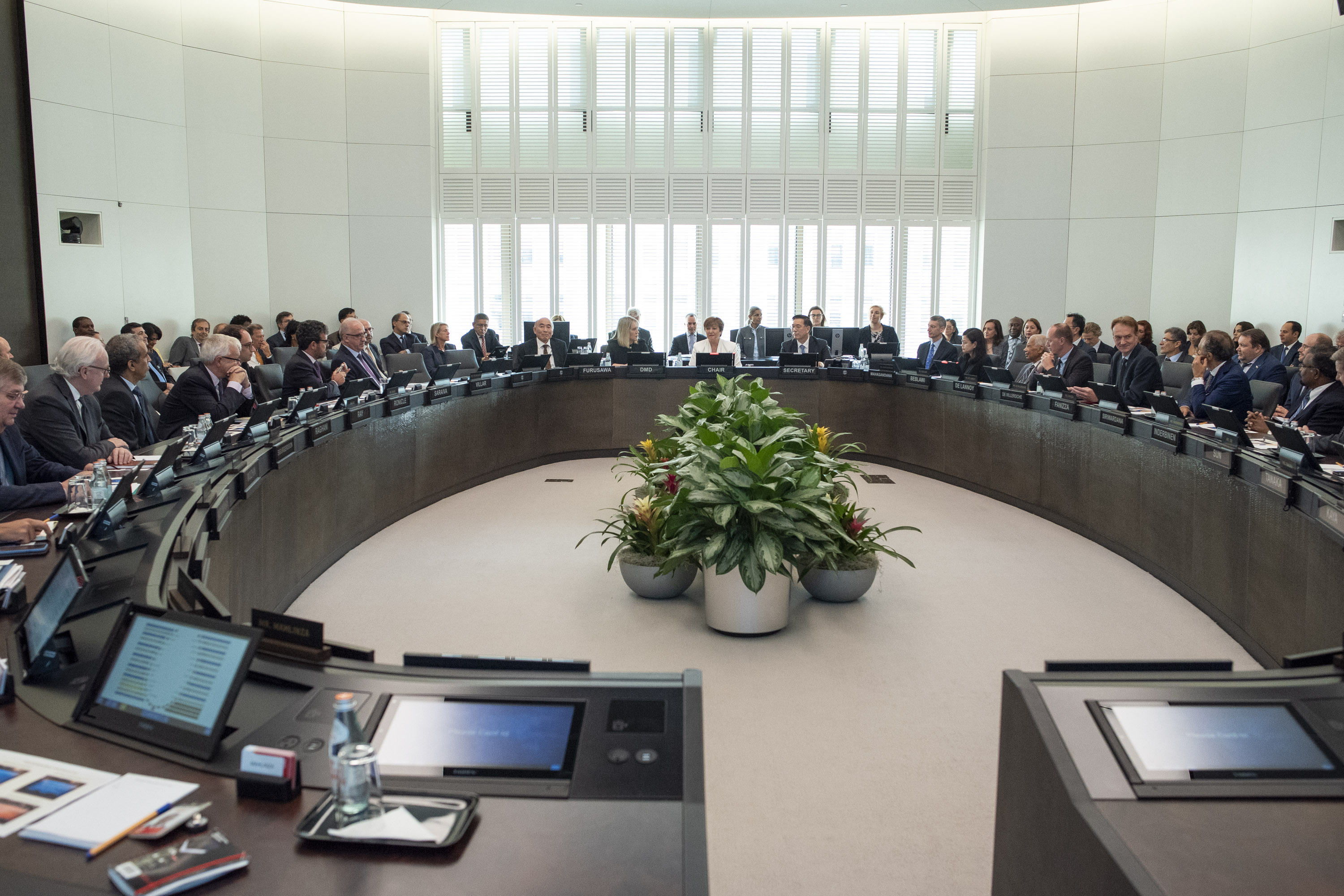
- On February 5, 2019, IMF Management completed the first review under the third 12-month Staff‑Monitored Program (SMP III) with Somalia, covering May 2018–April 2019.
- The current SMP, together with the previous two SMPs (covering May 2016 to April 2018), is designed to guide Somali authorities in rebuilding key economic institutions and undertaking critical policy reforms to re-establish macroeconomic stability and establish a track record on sound policy and reform implementation.
- IMF staff commends the authorities for implementing key reforms and for satisfactory performance under the SMP.
- Staff encourages the Somali authorities to sustain their reform momentum to help pave the way towards eventual arrears clearance and debt relief under the Heavily Indebted Poor Countries (HIPC) Initiative.
- Media contact provided: PRESS OFFICER: Wafa Amr; Phone: +1 202 623-7100; Email: MEDIA@IMF.org
Macroeconomic outlook and risks
- Somalia’s economy is recovering, but further efforts are needed to secure economic resilience and reduce poverty.
- Since 2017:
- growth has rebounded,
- inflation has slowed,
- the trade deficit has narrowed.
- For 2018, projections:
- real GDP growth is projected at 3.1 percent,
- end-year inflation at 3.5 percent.
- The exchange rate has remained stable.
- Development and humanitarian partners are working with the authorities on enhancing the country’s resilience.
- Risks to the outlook and program remain.
Fiscal performance, revenue mobilization, and grants
- Efforts to improve domestic revenue mobilization have strengthened revenue performance by broadening the tax base and developing tax policy and administrative capacity.
- Data through November 2018 show:
- domestic revenue reached $161 million (31 percent higher than the same period in 2017),
- overall cash fiscal position was in surplus by $8 million.
- New budget support grants from the EU and the World Bank are increasing grant revenues and providing further support for reforms and social transfers.
- Staff commends the authorities for their concerted efforts to improve domestic revenue mobilization.
- Reforms to improve the fiscal framework are ongoing; authorities continue to exhibit greater fiscal discipline and are implementing regular monthly fiscal operations reporting.
Financial sector development, central bank governance, and AML/CFT
- Authorities have stepped up efforts to develop the financial sector; staff encourages continued progress on implementing the Financial Sector Roadmap.
- Staff urges:
- rapid implementation of planned changes to the organizational and governance structure of the Central Bank of Somalia,
- bringing the mobile money sector under the supervisory and regulatory umbrella as soon as possible,
- improved compliance with anti‑money laundering and combatting the financing of terrorism (AML/CFT) regulations and addressing identified gaps in the framework.
Currency reform preparatory steps
- Authorities need to complete additional preparatory steps before launching the first phase of currency reform, including:
- securing the needed funds and operational support,
- operationalizing the accountability framework,
- completing the detailed project timeline and communications strategy.
HIPC Initiative and arrears clearance
- Successful completion of the first two 12‑month SMPs (May 2016 to April 2018), and satisfactory performance under SMP III, reflects the authorities’ policy and reform commitment.
- Continued commitment will help pave the way towards securing necessary support, including from donors, for eventual debt relief and arrears clearance under the HIPC Initiative.
- Staff urges the authorities to begin the process of securing the necessary financial assurances to cover the costs of both HIPC debt relief and clearing arrears to the international financial institutions.
Somalia: Selected Economic and Financial Indicators, 2015–20 (selected figures preserved exactly as in source)
- IMF Quota = SDR 44.20 million; Population: 13 million, 2015 estimate
- Main Export: Livestock
- National income and prices
- Nominal GDP in millions of U.S. dollars:
- 2015: 6,669
- 2016: 6,840
- 2017: 7,128
- 2018: 7,484
- 2019: 7,907
- 2020: 8,345
- Real GDP, annual percentage change:
- 2015: 3.9
- 2016: 4.9
- 2017: 2.3
- 2018: 3.1
- 2019: 3.5
- 2020: (blank)
- Per capita GDP in U.S. dollars:
- 2015: 511
- 2016: 510
- 2017: 516
- 2018: 527
- 2019: 541
- 2020: 555
- Consumer prices (e.o.p., percent change):
- 2015: 0.6
- 2016: 0.7
- 2017: 5.3
- 2018: 3.0
- 2019: 2.8
- 2020: (blank)
- Central government finances (Percent of GDP) 1/
- Revenue and grants:
- 2015: 2.1
- 2016: 2.5
- 2017: 3.7
- 2018: 4.3
- 2019: 4.4
- 2020: (blank)
- of which: Grants:
- 2015: 0.4
- 2016: 0.9
- 2017: 1.5
- 2018: 1.8
- 2019: 1.7
- 2020: (blank)
- Expenditure, of which:
- 2015: 2.0
- 2016: 3.4
- 2017: 4.1
- 2018: (blank)
- 2019: (blank)
- 2020: (blank)
- Compensation of employees 2/:
- 2015: 0.8
- 2016: 1.9
- 2017: (blank)
- 2018: (blank)
- 2019: (blank)
- 2020: (blank)
- Purchase of non-financial assets:
- 2015: 0.0
- 2016: 0.1
- 2017: 0.3
- 2018: (blank)
- 2019: (blank)
- 2020: (blank)
- Overall balance:
- 2015: 1.0
- 2016: 1.1
- 2017: (blank)
- 2018: (blank)
- 2019: (blank)
- 2020: (blank)
- Stock of domestic arrears (Millions of U.S. Dollars):
- 2015: (blank)
- 2016: (blank)
- 2017: (blank)
- 2018: (blank)
- 2019: (blank)
- 2020: (blank)
- Central bank summary balances (Millions of U.S. Dollars)
- Foreign assets (gross):
- 2015: 68.6
- 2016: 60.9
- 2017: 89.2
- 2018: …
- Net foreign assets, excl. IMF 3/:
- 2015: 21.6
- 2016: 24.0
- 2017: (blank)
- CBS liabilities to govt 4/:
- 2015: 7.2
- 2016: 5.4
- 2017: 29.3
- Balance of payments (Percent of GDP)
- Current account balance:
- 2015: -4.4
- 2016: -5.9
- 2017: -5.6
- 2018: -5.3
- 2019: -5.2
- 2020: (blank)
- Trade balance:
- 2015: -45.0
- 2016: -45.9
- 2017: -55.3
- 2018: -50.9
- 2019: -49.2
- 2020: -47.8
- Exports of goods and services:
- 2015: 15.6
- 2016: 15.5
- 2017: 13.3
- 2018: 16.1
- 2019: 16.6
- 2020: 16.4
- Imports of goods and services:
- 2015: 60.5
- 2016: 61.3
- 2017: 67.1
- 2018: 65.7
- 2019: 64.1
- 2020: (blank)
- Remittances:
- 2015: 19.9
- 2016: 20.0
- 2017: 21.4
- 2018: 19.1
- 2019: 19.3
- 2020: 19.5
- Other indicators in table:
- 21.2
- 20.4
- 28.7
- 26.6
- 25.0
- 23.6
- Foreign Direct Investment:
- 2015: 4.5
- 2016: 4.8
- 2017: 5.2
- 2018: 5.5
- 2019: 5.7
- 2020: 5.6
- External debt:
- 2015: 68.2
- 2016: 66.0
- 2017: 65.5
- Market exchange rate (SOS/USD, e.o.p.):
- 2015: 22,285
- 2016: 24,005
- 2017: 23,605
- Notes and definitions included in source:
- 1/ Budget data for the Federal Government of Somalia. Fiscal operations are recorded on a cash basis. GDP data cover the entire territory of Somalia.
- 2/ Increase in compensation of employees in 2017 reflects the bringing onto budget military spending related to the loss of an off-budget grant.
- 3/ Program definition. Excludes position in the SDR Department and obligations to the IMF.
- 4/ Includes grants and other Treasury deposits.
- [1] An SMP is an agreement between country authorities and Fund staff to monitor the implementation of the authorities’ economic program. SMPs do not entail endorsement by the IMF Executive Board. The SMP is supported by quantitative performance measures, indicative targets and structural measures.
IMF Press Release No. 19/60 — February 26, 2019