IMF Executive Board Concludes 2019 Article IV Consultation with Honduras
IMF News, July 16, 2019
Source details
- Canonical URL
- IMF Executive Board Concludes 2019 Article IV Consultation with Honduras
Other formats
Bibliographic details
- Published: July 16, 2019
Summary of conclusions and program objectives
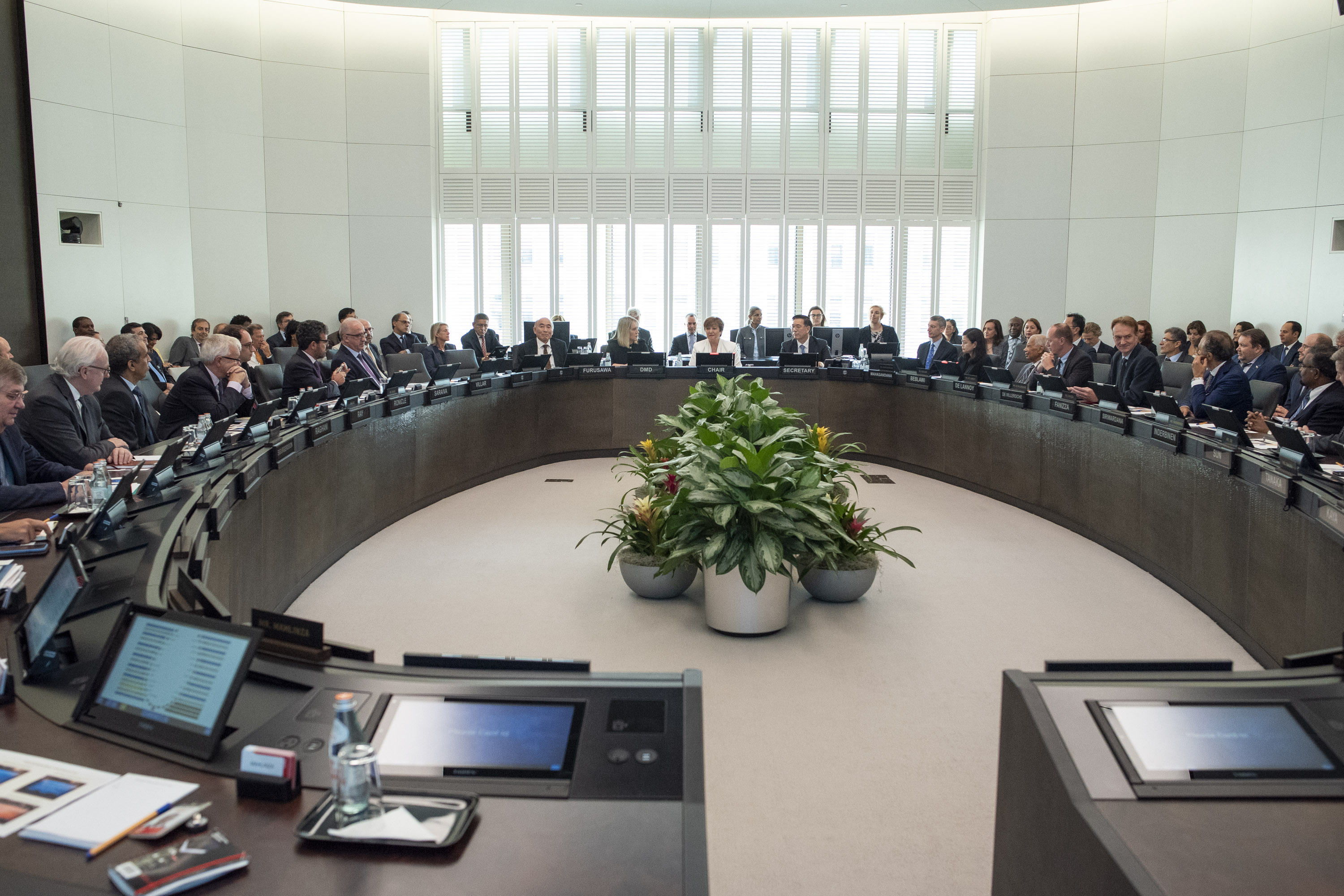
- On July 1, 2019, the Executive Board of the International Monetary Fund (IMF) concluded the Article IV consultation with Honduras.
- At the same time, the Board approved two-year arrangements under the Stand-By Arrangement (SBA) and Standby Credit Facility (SCF) for Honduras; a press release on this was issued separately.
- The authorities’ economic program aims to:
- Maintain macroeconomic stability.
- Enact economic and institutional reforms to foster inclusive growth.
- Center on three priorities: (i) secure the fiscal position by putting ENEE on a sustainable path while maintaining policy space for investment and social spending; (ii) strengthen monetary policy and financial institutions to buffer shocks; and (iii) implement reforms to improve the business environment and governance, including stepping up efforts in the fight against corruption.
Macroeconomic conditions and outlook
- 2018 performance and near-term projections:
- GDP growth slowed to 3¾ percent in 2018.
- Growth projected to slow to slightly less than 3½ percent in 2019.
- Inflation is stable around the center of the central bank´s 4±1 percent target band.
- Current account widened to 4¼ percent of GDP in 2018.
- Current account deficit expected to remain stable at around 4 percent of GDP.
- Outlook subject to downside risks from lower global growth, terms of trade shocks, tighter global financial conditions, and uncertainties associated with trade tensions and US immigration policies.
- Expected impacts of reforms:
- Reforms in the electricity sector, improved governance, and strengthening of the macroeconomic policy framework would secure debt sustainability, support a recovery in investment, and foster GDP growth through positive confidence effects.
- Higher growth, public investment, and social spending would help reduce informality and narrow the gender gap.
- Inflation and inflation expectations are expected to converge towards the midpoint of the central bank target range.
Fiscal and public sector developments
- 2018 fiscal outcomes:
- Nonfinancial public sector (NFPS) posted a deficit of 0.9 percent of GDP, in line with the target in the Fiscal Responsibility Law (FRL), despite a higher-than-expected deficit in the electricity company (ENEE).
- Directors’ fiscal recommendations:
- Continue fiscal prudence institutionalized by the Fiscal Responsibility Law while protecting investment and social spending.
- Continue revenue mobilization efforts, including revision of tax exemptions, and strengthen tax administration and compliance.
- Control expenditure over the medium term and improve transparency and governance, including for trust funds, and sound public financial management.
- Note positive completion of the Fiscal Transparency Evaluation and authorities’ commitment to implement its recommendations.
- Electricity sector:
- Directors welcomed recent reforms including a tariff adjustment with subsidies to protect the very poor.
- Encouraged further efforts to improve the sector’s institutional framework and put ENEE finances on a sustainable path to create space for infrastructure and social spending.
Monetary policy and financial sector
- Monetary and exchange rate:
- Directors commended measures to modernize the monetary policy framework and make the exchange rate regime more flexible, notably by reducing foreign exchange surrender requirements.
- Encouraged a gradual transition to exchange rate flexibility and strengthening central bank operational autonomy and governance, with a view to gradually transition toward inflation‑targeting.
- Welcomed the authorities’ plan to submit a new Central Bank Charter to Congress by year‑end.
- Financial system soundness:
- Financial system described as stable, liquid, and well capitalized, with NPLs at historic lows.
- Directors encouraged careful monitoring given foreign exchange credit growth and continued action on the financial situation of the non‑systemic agricultural development bank, BANADESA.
- Directors appreciated commitment to strengthening the AML/CFT framework in line with GAFILAT recommendations and called for more effective compliance.
Structural reforms, governance, and social issues
- Directors’ assessment:
- Commended ambitious reform efforts that delivered macroeconomic stability, fiscal deficit reductions, strengthened institutional and policy frameworks, and improved investor confidence.
- Noted persistent challenges: high poverty and inequality, corruption, weak rule of law, and widespread violence.
- Welcomed authorities’ focus on structural reforms to improve governance and the business climate by reducing scope for corruption and strengthening rule of law.
- Encouraged programs to improve gender equality and female labor force participation rates and urged strengthening these efforts.
Selected economic indicators (annual percent change or as indicated)
- National income and prices:
- GDP at constant prices: 2014: 3.1; 2015: 3.8; 2016: 4.9; 2017: 3.7; 2018: 3.4; 2019 (Proj.): 3.5; 2020 (Proj.): …
- GDP deflator: 2014: 6.8; 2015: 6.9; 2016: 4.3; 2017: 1.8; 2018: 3.2; 2019 (Prel./Proj.): …
- Consumer prices (eop): 2014: 5.8; 2015: 2.4; 2016: 3.3; 2017: 4.7; 2018: 4.2; 2019: 4.4
- Exchange rate (eop, depreciation -): Lempiras per U.S. dollar 1/: 2014: 21.6; 2015: 22.4; 2016: 23.5; 2017: 23.6; 2018: 24.3; 2019: 24.5
- Money and credit:
- Private sector credit: 2014: 10.8; 2015: 10.0; 2016: 12.9; 2017: 9.4; 2018: 13.4; 2019 (Prel./Proj.): 11.6; 2020 (Proj.): 9.0
- Broad money: 2014: 13.3; 2015: 15.6; 2016: 12.8; 2017: 8.3; 2018: 11.0
- Lending rate (eop, in percent) 3/4/: 2014: 15.9; 2015: 14.0; 2016: 14.3; 2017: 14.6; 2018: 14.1; 2019 (data as of March 2019): …
- Deposit rate (eop, in percent) 4/: 2014: 10.4; 2015: 8.8; 2016: 8.2; 2017: 8.4; 2018: 8.0
- Nonfinancial public sector (percent of GDP):
- Primary balance: 2014: -3.4; 2015: 0.1; 2016: 0.3; 2017: 0.0; 2018: 0.6; 2019 (Proj.): 0.7
- Overall balance: 2014: -3.9; 2015: -0.5; 2016: -0.8; 2017: …; 2018: …
- Gross debt: 2014: 39.3; 2015: 39.0; 2016: 39.9; 2017: 41.8; 2018: 42.1; 2019 (Proj.): 42.0
- Saving and investment (percent of GDP):
- Gross fixed capital formation: 2014: 23.0; 2015: 26.4; 2016: 23.4; 2017: 25.7; 2018: 26.9
- Gross national savings: 2014: 16.0; 2015: 21.7; 2016: 20.8; 2017: 22.6; 2018: 21.5
- External sector:
- Gross international reserves (millions of dollars): 2014: 3,698; 2015: 4,187; 2016: 4,488; 2017: 5,088; 2018: 5,147; 2019: 5,288; 2020 (Proj.): 5,456
- Gross international reserves (in months of imports) 5/: 2014: 5.1; 2015: 5.0; 2016: 5.3
- Change in gross international reserves (increase -): 2014: -459; 2015: -303; 2016: -66; 2017: -884; 2018: -50; 2019 (Prel.): -141; 2020 (Proj.): -168
- Current account balance (percent of GDP): 2014: -6.9; 2015: -4.7; 2016: -2.6; 2017: -1.8; 2018: -4.2; 2019 (Proj.): -4.3
- Exports f.o.b.: 2014: 4.0; 2015: -3.2; 2016: 8.6; 2017: -0.4
- Imports f.o.b.: 2014: 1.2; 2015: 0.8; 2016: -5.5; 2017: 7.2; 2018: 7.7; 2019 (Prel./Proj.): 2.8; 2020 (Proj.): 3.9
Notes (as presented):
- Sources: Central Bank of Honduras, Ministry of Finance, and IMF staff estimates and projections.
- 1/ 2019 data as of May 31, 2019.
- 2/ 2019 data as of April 2019.
- 3/ Weighted average interest rates on loans to financial system in national currency excluding credit cards.
- 4/ 2019 data as of March 2019.
- 5/ Refers to the following year's imports of non-maquila and nonfactor services.
Press Release No. 19/285 — July 16, 2019