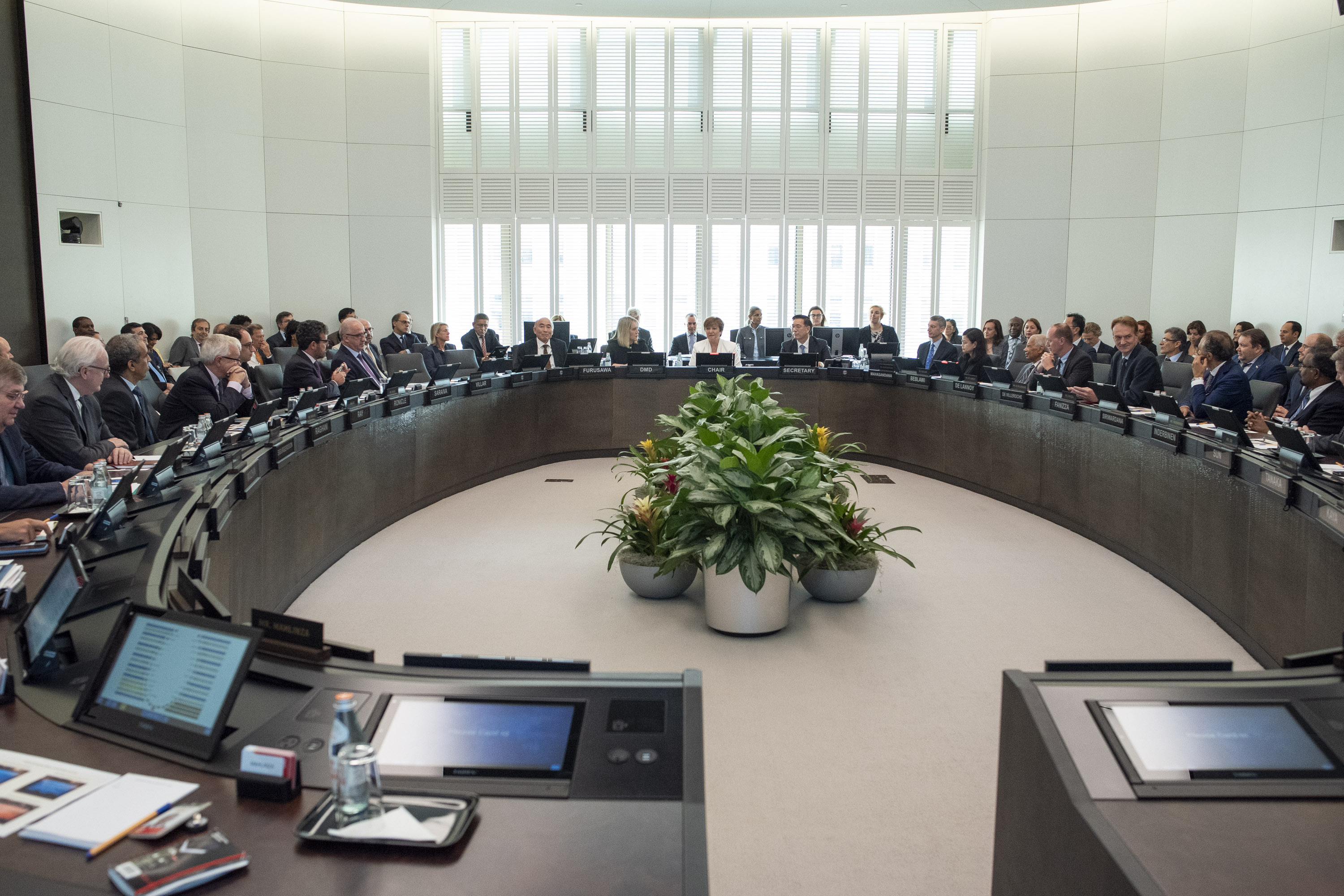
IMF Executive Board Concludes 2019 Article IV Consultation with the Republic of Congo
IMF News, January 27, 2020
Source details
- Canonical URL
- IMF Executive Board Concludes 2019 Article IV Consultation with the Republic of Congo
Other formats
Bibliographic details
- Published: January 27, 2020
Overview and recent developments
- Date of conclusion: January 17, 2020.
- Economic situation: "remains difficult but there are some signs of stability."
- Growth:
- Non-oil growth "could turn positive for the first time since 2015" driven by recovery in the agricultural, forestry and transportation sectors.
- Overall growth in 2019: "staying close to 2 percent."
- Oil sector: "The expansion in oil production in 2019 will be less pronounced than initially anticipated."
- Fiscal and debt management:
- Authorities "have continued to follow prudent fiscal and debt management policies."
- Overall public debt expected to decline in 2019 after peaking at "117 percent of GDP in 2017."
- External public debt "remains in distress"; authorities negotiating a debt restructuring with external commercial creditors.
- Prices and external accounts:
- Inflation "around 2 percent."
- Current account "likely to register a strong surplus" due to rising oil exports and new mining exports.
- "Stricter enforcement of FX regulations" contributing to stronger accumulation of net foreign assets at BEAC.
Executive Board Assessment — main messages
- Macro context: Republic of Congo faces "very difficult economic conditions" with "high debt levels, low growth, and limited business confidence."
- Positive developments welcomed by Directors:
- "Modest inflation levels."
- "Downward trend in public debt."
- "Rising net foreign assets."
- Policy priorities emphasized:
- Continued fiscal consolidation, debt restructuring, and reforms to strengthen governance and diversify the economy.
- Strengthen medium‑term fiscal framework; 2020 budget "pursues further fiscal consolidation."
- Non‑oil revenue mobilization: curb tax exemptions, collect tax arrears, implement tax administration reforms.
- Strengthen PFM systems and allocate adequate resources to critical social programs (health, education, programs for women).
- Coordinated donor community support for adjustment efforts.
- Public debt management:
- Continue prioritizing public debt management in the recovery plan.
- Accelerate negotiations with external commercial creditors to reach a debt reduction agreement.
- Implement strategy to clear domestic arrears with the private sector.
- Contain rising non‑performing loans; provide enough liquidity to the private sector to meet tax obligations and increase business confidence.
- Avoid new accumulation of official external arrears and clear existing stock in line with earlier commitments.
- Call for enhanced debt transparency, including for SOEs.
- Governance and anti‑corruption:
- Encouraged by reforms to improve governance and reduce corruption.
- Welcomed publication of audited financial statements of the National Oil Company and the 2020 draft budget.
- Further efforts needed to strengthen and operationalize the anti‑corruption framework; ensure new Anti‑Corruption Authority and Commission on Transparency become fully operational.
- Diversification and business environment:
- Diversification strategy "will be key to sustain higher and more inclusive growth."
- Emphasized reforms to increase access to electricity, reduce administrative requirements to start new businesses, and improve access to credit.
Economic outlook and risks
- Medium term: Non-oil growth expected to recover as government implements arrears clearance strategy and reforms supporting diversification.
- Short-term risks (tilted to the downside):
- Possible declines in oil prices.
- Potential difficulty of sustaining high fiscal surpluses over time.
- Capacity constraints for effective implementation of ambitious structural reform agenda.
- Mitigating upside: Medium-term upside risks to oil production if recent oil discoveries are confirmed.
Key statistics and projections (selected figures from Table 1)
- GDP at constant prices (annual percent change): 2017: -1.8; 2018: 1.6; 2019: 2.2; 2020: 4.6; 2021: 1.9; 2022: 0.0; 2023: 1.3; 2024: 2.3.
- Oil GDP growth (annual percent change): 2017: 15.3; 2018: 23.9; 2019: 5.5; 2020: 9.5; 2021: -1.6; 2022: -8.8; 2023: -6.1; 2024: -3.4.
- Non-oil GDP growth (annual percent change): 2017: -6.2; 2018: -5.5; 2019: 0.8; 2020: 2.5; 2021: 3.6; 2022: 4.0; 2023: 4.1; 2024: 4.2.
- Consumer prices (period average): 2017: 0.4; 2018: 1.2; 2019: 1.8; 2020: 2.8; 2021: 3.0.
- Current account balance (percent of GDP): 2017: -3.5; 2018: 7.2; 2019: 8.0; 2020: 5.8; 2021: -2.9.
- Net foreign assets: 2017: -54.2; 2018: 12.3; 2019: 100.8; 2020: 32.2; 2021: 41.7; 2022: 9.3; 2023: 11.8; 2024: 6.8.
- External public debt (percent of GDP): 2017: 80.0; 2018: 61.3; 2019: 55.2; 2020: 52.7; 2021: 52.8; 2022: 51.5; 2023: 48; 2024: 46.
- Broad money (annual percent change): 2017: -10.4; 2018: -4.0; 2019: 15.8; 2020: 1.5; 2021: 8.5; 2022: 1.4; 2023: 2.9.
- Credit to the private sector (annual percent change): 2017: -5.4; 2018: 2.4; 2019: 7.0; 2020: 7.8.
- Gross national saving (percent of GDP): 2017: 26.2; 2018: 24.3; 2019: 27.8; 2020: 27.4; 2021: 25.3; 2022: 24.6; 2023: 27.6.
- Total public debt (percent of GDP): 2017: 117.5; 2018: 87.1; 2019: 77.5; 2020: 70.5; 2021: 66.9; 2022: 62.5; 2023: 56.8; 2024: 54.2.
- Total revenue (percent of non-oil GDP, unless otherwise indicated): 2017: 53.6; 2018: 74.2; 2019: 79.0; 2020: 75.4; 2021: 71.6; 2022: 67.8; 2023: 65.5.
- Oil revenue (percent of non-oil GDP): 2017: 25.2; 2018: 50.6; 2019: 51.3; 2020: 45.8; 2021: 41.2; 2022: 36.1; 2023: 29.6.
- Non-oil revenue (including grants, percent of non-oil GDP): 2017: 28.4; 2018: 23.6; 2019: 28.6; 2020: 33.2; 2021: 34.2; 2022: 35.4; 2023: 35.6; 2024: 35.9.
- Overall balance (deficit -, payment order basis, % GDP): 2017: 8.8; 2018: 8.4; 2019: 8.2; 2020: 7.6; 2021: 7.4.
- Basic primary fiscal balance (- = deficit)1: 2017: -1.9; 2018: 26.6; 2019: 24.5; 2020: 21.5; 2021: 19.7.
- Primary balance (percent of GDP): 2017: -5.2; 2018: 10.6; 2019: 9.9; 2020: 9.4; 2021: 8.6.
- Financing gap (CFAF billion)3: 2017: 260; 2018: 449; 2019: 269; 2020: 68; 2021: -98.
- Nominal GDP (Billions of CFA francs): 2017: 5,188; 2018: 6,476; 2019: 6,545; 2020: 6,767; 2021: 6,666; 2022: 6,469; 2023: 6,484; 2024: 6,652.
- Nominal oil GDP (Billions of CFA francs): 2017: 2,493; 2018: 3,932; 2019: 3,936; 2020: 4,046; 2021: 3,771; 2022: 3,373; 2023: 3,161; 2024: 3,081.
- Nominal non-oil GDP (Billions of CFA francs): 2017: 2,695; 2018: 2,544; 2019: 2,609; 2020: 2,721; 2021: 2,894; 2022: 3,096; 2023: 3,323; 2024: 3,570.
- Nominal GDP in US$ (millions): 2017: 8,932; 2018: 11,664; 2019: 11,206; 2020: 11,559; 2021: 11,496; 2022: 11,240; 2023: 11,314; 2024: 11,624.
- World oil price (U.S. dollars per barrel): 2017: 53; 2018: 62; 2019: 58; 2020: 55; 2021: 56.
- Oil production (Millions of barrels): 2017: 98; 2018: 121; 2019: 128; 2020: 140; 2021: 137; 2022: 125; 2023: 118; 2024: 114.
Policy recommendations (summarized actions urged by Directors)
- Pursue continued fiscal consolidation and strengthen the medium‑term fiscal framework.
- Mobilize non‑oil revenue: curb tax exemptions, collect tax arrears, implement tax administration reforms.
- Strengthen PFM systems and protect resources for critical social programs (health, education, programs for women).
- Accelerate external commercial creditor negotiations to reach a debt reduction agreement; implement domestic arrears clearance strategy.
- Contain non‑performing loans and ensure adequate private sector liquidity to support business activity and tax compliance.
- Avoid new official external arrears and clear existing stock per prior commitments.
- Enhance debt transparency, including for SOEs.
- Strengthen anti‑corruption framework and operationalize anti‑corruption institutions.
- Advance structural reforms to diversify the economy, improve access to electricity, reduce administrative barriers for business creation, and improve access to credit.
IMF Executive Board concluding statement on the 2019 Article IV consultation with the Republic of Congo.