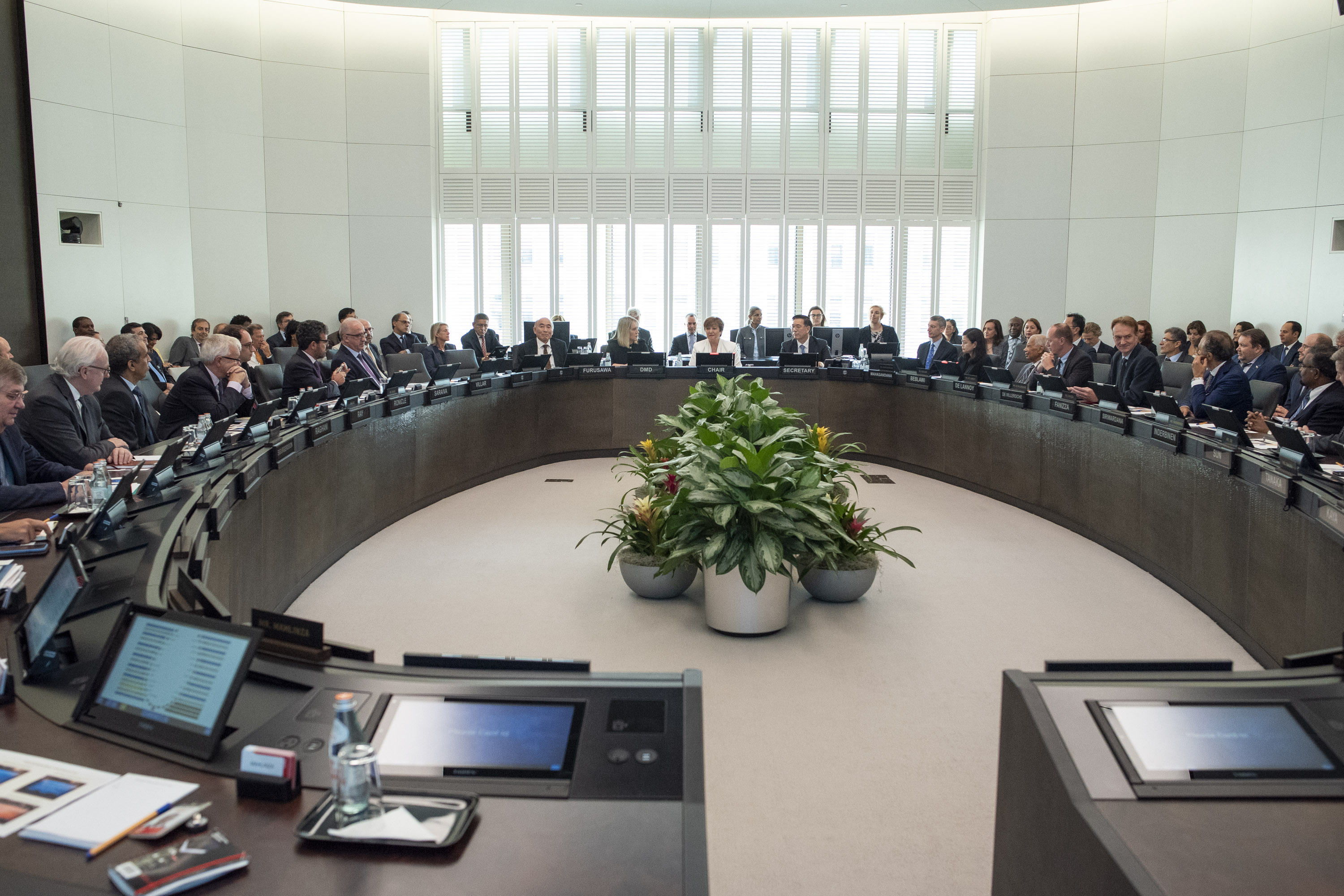
IMF Executive Board Concludes 2019 Article IV Consultation with the Republic of Kazakhstan
IMF News, January 29, 2020
Source details
- Canonical URL
- IMF Executive Board Concludes 2019 Article IV Consultation with the Republic of Kazakhstan
Other formats
Bibliographic details
- Published: January 29, 2020
Economic performance and outlook
- Growth estimated at 4.5 percent in 2019 (preliminary).
- Strong domestic demand driven by major oil and gas investments and government and household consumption supported by wage increases and consumer lending.
- Headline inflation picked up but remained within the National Bank of Kazakhstan’s target band of 4–6 percent and stabilized in recent months.
- Lower oil prices and higher imports weakened the external position; the current account balance deteriorated.
- Exchange rate depreciated in the second half of 2018, but has been relatively stable thereafter in the absence of large shocks.
- Over the next few years:
- Growth expected to slow largely reflecting flat oil production.
- Non-oil growth expected to remain robust.
- Risks are on the downside, reflecting trade tensions and commodity price volatility.
Monetary and financial sector assessment
- Inflation targeting and tenge flexibility have helped absorb shocks.
- National Bank of Kazakhstan (NBK) actions:
- Raised the policy rate by 25 basis points in September.
- Kept the policy rate at 9.25 percent in December.
- Banking sector:
- Liquidity remains ample.
- Credit growth concentrated in the retail sector.
- Continued cleanup through additional state financial support and a recently-concluded asset quality review.
- Executive Directors’ views and recommendations:
- Monetary policy focus should remain on inflation.
- Encourage NBK to strengthen monetary and exchange rate framework via greater independence, better coordination with the government, reducing dollarization, and improved monetary policy transmission.
- Increase transparency of policy and operations and strengthen communications to boost credibility.
- Support for the asset-quality review to better understand banks’ financial situations and identify corrective measures.
- Any additional state support should go only to large and viable banks, subject to robust safeguards and in line with international best practices.
- Banks need to adopt a new business model with less reliance on state programs and funding and improved risk management and lending practices.
- Welcome formation of the new Agency for Regulation and Development of the Financial Market; manage transition risks carefully and ensure independence and adequate resourcing.
- Encourage authorities to request an FSAP assessment.
Fiscal policy and public finances
- Despite strong non-oil revenue performance, a looser fiscal stance occurred in 2019 due to new spending initiatives: higher public sector wages, financial support to the vulnerable, and regional development initiatives.
- Directors’ fiscal recommendations:
- Return to growth-friendly fiscal consolidation is necessary following the easing in 2019.
- Improve spending and investment efficiency.
- Increase revenue collections through tax and customs administration reforms; consider tax policy changes to broaden the tax base and enhance progressivity.
- Upgrade Kazakhstan’s fiscal policy framework guided by principles of simplicity and clarity, broad coverage, flexibility, and enforceability.
- Support public financial management (PFM) reforms and greater transparency.
- A PFM assessment and a fiscal transparency evaluation would be useful.
Structural reforms and governance
- Progress noted on the “100 Concrete Steps” with many flagship measures completed and remaining steps broadly on track.
- Market-opening actions:
- First public offering of a blue-chip public company (KazAtomProm) took place in late 2018.
- Preparations for privatization of other large state-owned enterprises are underway.
- Governance and corruption:
- Steps taken to improve governance and address corruption vulnerabilities, but challenges remain.
- Directors emphasized continuing improvements in the business climate, investing in infrastructure, strengthening property rights, enhancing competition, and streamlining state support to promote private-sector-led inclusive growth.
Executive Board assessment summary
- Directors agreed with the thrust of the staff appraisal.
- Noted robust economic growth in 2019 supported by consumption and investment.
- Welcomed progress on financial sector issues and structural reforms aimed at private sector development and inclusive growth.
- Recognized challenges and risks, including commodity price volatility.
- Recommended further actions across monetary, fiscal, financial, and structural policy domains as outlined above.
Key statistics (selected indicators from Kazakhstan: Selected Economic Indicators, 2017-21)
- Population (2018): 18.4 million
- Per capita GDP (2018 - est., US$): 9,401
- Quota: SDR 1,158.40 million
- Literacy rate: 99.8% (2015)
- Main export: crude oil, metals, minerals
- Poverty rate: 2.5% (2017)
- Key export markets: EU, China, Russia
- Output
- Real GDP growth (%): 2017: 4.1, 2018: 3.6, 2019 (proj.): 3.8
- Real oil: 2017: 8.7, 2018: 8.4, 2019: -0.3, 2020: 0.0, 2021: 1.4
- Real non-oil: 2017: 2.7, 2018: 5.6, 2019: 4.8, 2020: 4.5
- Crude oil and gas condensate production (million tons): 2017: 86, 2018: 90, 2019: 91
- Employment
- Unemployment (%): 2017: 4.9
- Prices
- Inflation (%): 2017: 7.3, 2018: 5.3, 2019: 5.5, 2020 (proj.): 5.0
- General government finances 1/
- Revenue (% GDP): 2017: 19.8, 2018: 21.4, 2019: 19.9, 2020: 20.1, 2021: 20.4
- Of which: oil revenue: 2017: 5.9, 2018: 7.4, 2019: 6.8, 2020: 6.4, 2021: 6.1
- Expenditures (% GDP): 2017: 24.1, 2018: 18.9, 2019: 19.7
- Fiscal balance (% GDP): 2017: -4.3, 2018: 2.5, 2019: -0.2, 2020: 0.1, 2021: 0.6
- Non-oil fiscal balance (% GDP): 2017: -10.2, 2018: -4.9, 2019: -7.0, 2020: -6.4, 2021: -5.4
- Gross public debt (% GDP): 2017: 20.3, 2018: 20.7, 2019: 21.0
- Money and credit
- Broad money (% change): 2017: -1.7, 2018: 7.0, 2019: 0.8, 2020 (proj.): 5.8
- Credit to the private sector (% GDP): 2017: 25.8, 2018: 22.7, 2019: 21.5, 2020: 21.8
- NBK policy rate (%, eop): 2017: 10.3, 2018: 9.3
- Balance of payments
- Current account (% GDP): 2017: -3.1, 2018: -2.8, 2019: -3.2
- Net foreign direct investments (% GDP): 2017: -2.3, 2018: -2.7, 2019: -3.6
- NBK reserves (in months of next year's imports of G&S): 2017: 8.0, 2018: 7.5, 2019: 7.2
- NFRK assets (in months of next year's imports of G&S): 2017: 15.1, 2018: 14.1, 2019: 14.7, 2020: 14.9, 2021: 15.2
- External debt (% GDP): 2017: 100.2, 2018: 88.5, 2019: 91.2, 2020: 87.0, 2021: 82.5
- Exchange rate
- Exchange rate (y-o-y percent change; Tenge per U.S. dollar; eop): 2017: 15.6
1/ The fiscal accounts in 2017 include a state support to the banking sector of 4 percent of GDP.
Source: IMF Executive Board Concludes 2019 Article IV Consultation with the Republic of Kazakhstan (Press Release No. 20/24), January 29, 2020.