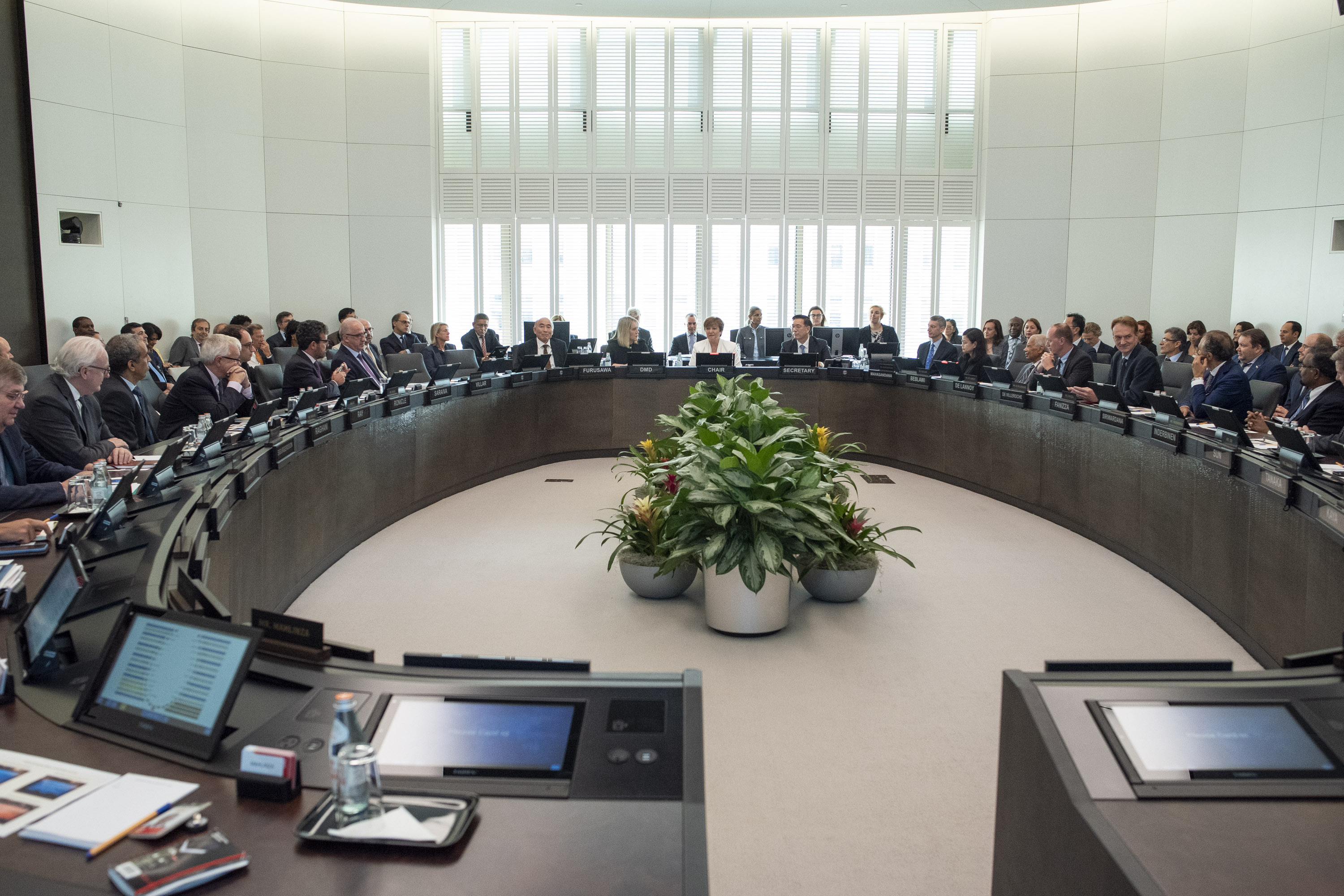
IMF Executive Board Completes Second Reviews Under SBA and SCF Arrangement and Approves Augmentations of Access to Support Honduras’ COVID-19 Measures
IMF News, June 1, 2020
Source details
- Canonical URL
- IMF Executive Board Completes Second Reviews Under SBA and SCF Arrangement and Approves Augmentations of Access to Support Honduras’ COVID-19 Measures
Other formats
Bibliographic details
- Published: June 1, 2020
Key decisions and figures
- The Executive Board completed the second reviews of Honduras’ performance under a two-year Stand-By Arrangement (SBA) and a two-year arrangement under the Standby Credit Facility (SCF).
- The program was approved on July 15th, 2019 in the amount of about US$308 million (SDR 224.82 million), the equivalent of 90 percent of Honduras’ quota in the IMF.
- The Executive Board approved augmentations of access under both arrangements by about US$223 million (SDR 162.37 million), bringing combined total access under the SBA and SCF arrangement to about US$531 million (SDR 387.19 million, 155 percent of quota).
- The completion of the reviews will release about US$233 million (SDR 169.864 million).
- In late March, the authorities drew on available Fund resources for US$143 million (SDR 104.92 million).
Purpose and immediate use of funds
- Release of about US$233 million (SDR 169.864 million) to help Honduras meet urgent balance of payments and fiscal financing needs stemming from the COVID-19 pandemic.
- Funds are intended to support increased health care and social spending.
- Augmented access is intended to help the authorities cover external financing needs to mitigate the impact of the pandemic.
Macroeconomic context and program intent
- The COVID-19 pandemic and external spillovers are expected to hit Honduras hard.
- The augmentations of access are designed to support the authorities’ response to mitigate the impact.
- Prior to late March, the authorities had treated the arrangements as precautionary.
Authorities’ policy response (statement by Mr. Mitsuhiro Furusawa, Deputy Managing Director and Acting Chair)
- The authorities remain strongly committed to the Fund-supported economic program despite the significant impact of the COVID-19 pandemic and external spillovers.
- Despite a challenging economic environment in 2019, they have strived to maintain macroeconomic stability and protect social spending and investment.
- The authorities are articulating a strong policy response, including:
- Using the flexibility under the Fiscal Responsibility Law to temporarily increase the deficit and accommodate higher healthcare and social spending.
- Targeting measures that are temporary and aimed at supporting affected groups and mitigating structural vulnerabilities.
- Maintaining monetary policy geared towards price stability and adequate international reserves.
- Continuing efforts to strengthen the monetary policy framework and support the transition to a more flexible exchange rate.
- Strengthening tax administration to preserve tax revenue and protect critical spending, with a resumption of revenue mobilization efforts once the impact of the pandemic subsides.
Reform and governance measures included in the program
- Electricity sector reforms:
- Progress is being made, with steps taken to improve governance.
- Important measures have been incorporated into the program to improve governance and facilitate the unbundling of the national electricity company (ENEE).
- Tariffs continue to reflect the cost of electricity provision while providing subsidies to the poor.
- Public sector governance and anti-corruption:
- Ongoing efforts to strengthen public procurement and the institutional framework in the central bank and the Treasury.
- Reforms aim to enhance the Public Private Partnership, AML/CFT, and anti-corruption frameworks.
- Measures aim at securing transparency and accountability—including on pandemic-related emergency spending.
Press Release No. 20/230, June 1, 2020.