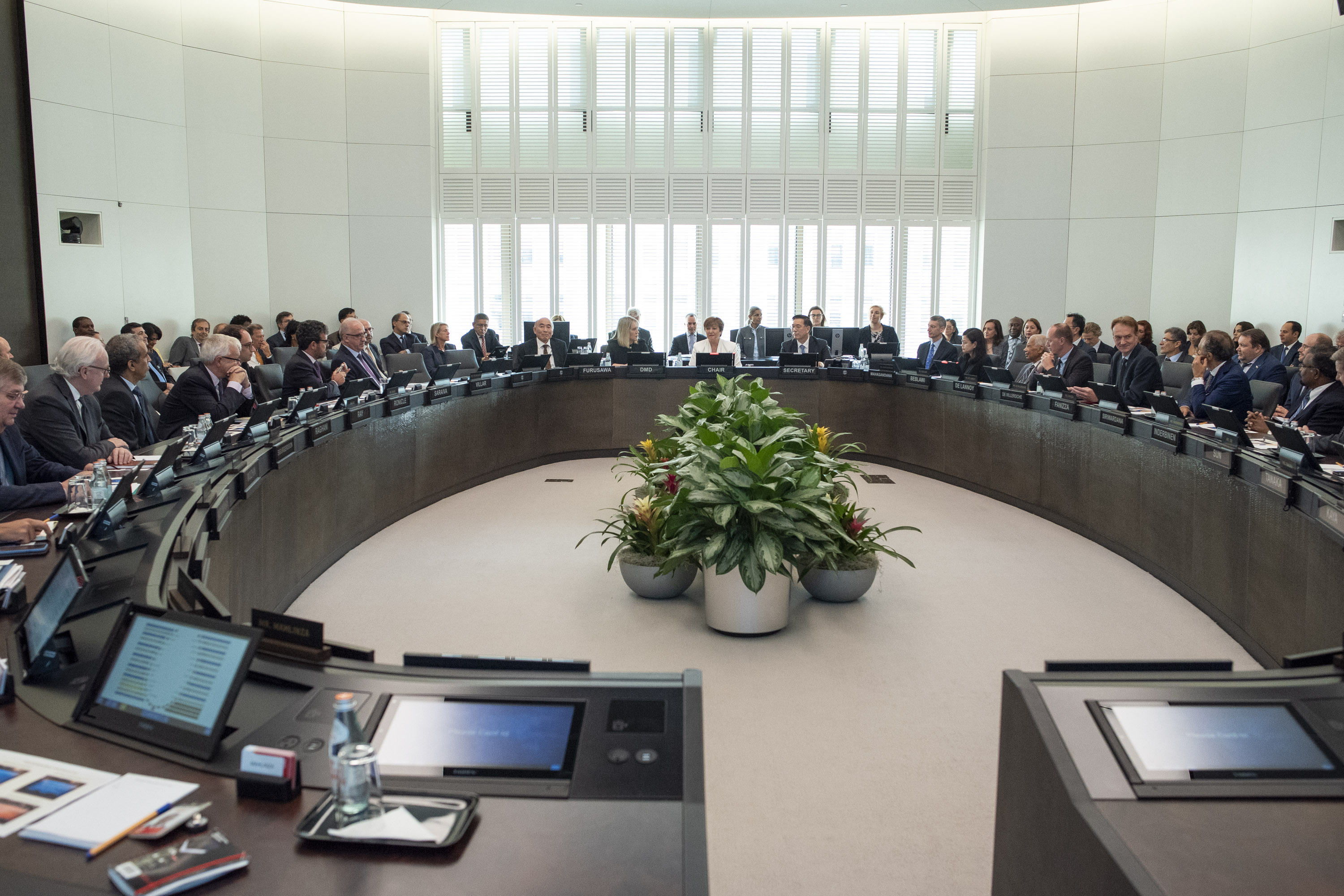
IMF Executive Board Concludes 2021 Article IV Consultation with Tunisia
IMF News, February 26, 2021
Source details
- Canonical URL
- IMF Executive Board Concludes 2021 Article IV Consultation with Tunisia
Other formats
Bibliographic details
- Published: February 26, 2021
Economic impact of Covid-19 and recent developments
- Real GDP is estimated to have contracted by 8.2 percent in 2020, the largest economic downturn since the country’s independence.
- The unemployment rate jumped to 16.2 percent at end-September, disproportionately affecting low-skilled workers, women, and youth.
- Inflation slowed because of the contraction in domestic demand and lower international fuel prices.
- The current account deficit narrowed to 6.8 percent of GDP, driven by lower import demand and resilient remittances, despite a strong hit on exports and collapsing tourism receipts.
Fiscal developments and public debt
- The fiscal deficit (excluding grants) is estimated to have reached 11.5 percent of GDP in 2020.
- Revenue dropped because of a lower tax intake.
- Additional hiring (about 40 percent of which was in the health sector, including to combat Covid-19) pushed the civil service salary bill to 17.6 percent of GDP.
- Higher outlays were offset by lower investment spending and energy subsidies.
- Central government debt is estimated to have increased to nearly 87 percent of GDP.
Near-term outlook and risks
- GDP growth is projected to rebound to 3.8 percent in 2021, as the effects of the pandemic start to wane.
- There are considerable downside risks around this projection, given the uncertainty from the duration and intensity of the pandemic and the timing of the vaccination.
- The medium-term outlook depends critically on the future path of fiscal policy and structural and governance reforms.
Executive Board assessment — findings
- Directors noted that the COVID-19 crisis is exacerbating Tunisia’s socio-economic fragilities.
- They commended the authorities' policy response to the crisis.
- Directors noted that while growth is expected to recover modestly in 2021, downside risks dominate.
- They agreed that the immediate priority is to save lives and livelihoods and stabilize the economy until the pandemic wanes.
- Economic policy should also focus on restoring fiscal and debt sustainability and promoting inclusive growth.
- Directors noted that Tunisia’s public debt would become unsustainable, unless a strong and credible reform program were adopted with broad support.
Executive Board assessment — policy recommendations
- Fiscal policy and reforms should aim to reduce the fiscal deficit.
- Underscored the need to lower the wage bill and limit energy subsidies while prioritizing health and investment expenditure and protecting targeted social spending.
- Called on the authorities to make taxation more equitable and growth-friendly and encouraged action to clear the accumulated arrears of the social security system.
- Broad-ranging reform of state-owned enterprises (SOEs) is necessary to reduce contingent liabilities.
- Encouraged adoption of a plan to reduce fiscal and financial risks of SOEs, strengthen corporate governance, and improve financial reporting and transparency.
- Monetary policy recommendations:
- Focus on inflation by steering short‑term interest rates, while preserving exchange rate flexibility.
- Urged the authorities to avoid monetary financing of the budget.
- Advised implementation of the roadmap to inflation targeting and preparation of a gradual and conditions-based plan for capital account liberalization, while closely monitoring financial sector soundness.
- Structural and private-sector recommendations:
- Promote private sector activity to increase potential growth and make it more job-rich and inclusive.
- Reform efforts should focus on lifting monopolies, removing regulatory hurdles, and improving the business environment.
- Welcomed efforts to increase financial inclusion and leverage digital technologies.
- Governance and transparency:
- Emphasized strengthening governance and called for effective implementation of anti-corruption and AML/CFT regimes.
- Emphasized that COVID-related expenditures should be effective and transparent.
- Environmental objective:
- Welcomed the objective to invest in renewable energy to combat climate change.
Institutional note
- It is expected that the next Article IV consultation with Tunisia will be held on the standard 12-month cycle.
Key statistics and selected indicators (from Table 1)
- Population (2019): 11.8 million
- Per-capita GDP (2020, US$): 3,323
- Quota (2020): SDR 545.2 million
- Literacy rate (2019): 82.3 percent (est.)
- Main exports: electronic and mechanical goods, textiles, energy, olive oil, tourism
- Poverty rate (2015): 15.2 percent
- Key export markets: France, Italy, Germany
Selected economic indicators, 2017–20
- Real GDP growth (percent): 2017: 1.9; 2018: 2.7; 2019: 1.0; 2020 Prel.: -8.2
- Unemployment (end of period, percent): 2017: 15.5; 2018: 14.9; 2019: …
- Inflation (average, percent): 2017: 5.3; 2018: 7.3; 2019: 6.7; 2020: 5.7
- Total revenue (incl. grants, percent of GDP): 2017: 24.6; 2018: 26.0; 2019: 27.7; 2020: 26.9
- Total expenditure and net lending (percent of GDP): 2017: 30.6; 2018: 30.5; 2019: 31.6; 2020: 37.5
- Overall balance (incl. grants, percent of GDP): 2017: -6.0; 2018: -4.5; 2019: -3.9; 2020: -10.6
- Gross central government debt (percent of GDP): 2017: 70.9; 2018: 77.5; 2019: 71.8; 2020: 87.6
- Broad money (percent change): 2017: 11.4; 2018: 6.6; 2019: 10.1; 2020: 11.8
- Credit to the private sector (percent change): 2017: 12.7; 2018: 9.3; 2019: 3.6; 2020: 6.8
- Current account (percent of GDP): 2017: -10.3; 2018: -11.1; 2019: -8.4; 2020: -6.8
- Foreign direct investment (percent of GDP): 2017: 2.0; 2018: 2.5; 2019: 2.1; 2020: 1.6
- Reserve coverage (months of next year's imports of GNFS): 2017: 2.6; 2018: 4.3; 2019: 4.1; 2020: (not listed)
- External debt (percent of GDP): 2017: 84.6; 2018: 97.4; 2019: 92.8; 2020: 94.7
- REER (end of period, percent change, "-": depreciation): 2017: -10.9; 2018: -7.7; 2019: 10.7
Press Release No. 21/52, February 26, 2021.