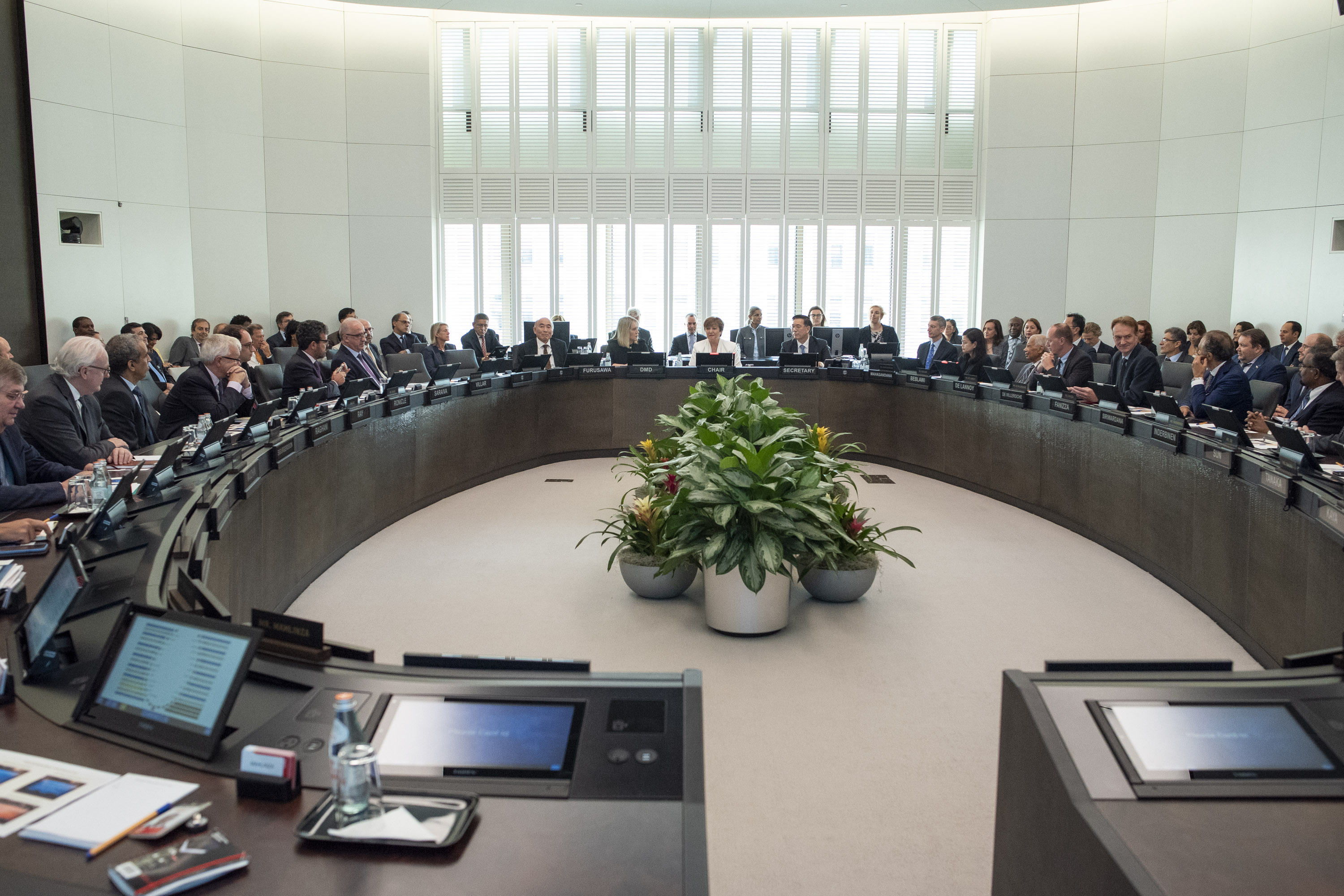
IMF Executive Board Concludes 2021 Article IV Consultation with Ghana
IMF News, July 20, 2021
Source details
- Canonical URL
- IMF Executive Board Concludes 2021 Article IV Consultation with Ghana
Other formats
Bibliographic details
- Published: July 20, 2021
Pandemic impact and policy response
- The Executive Board concluded the Article IV consultation with Ghana on July 19, 2021.
- The COVID-19 pandemic severely impacted economic activity: growth slowed to 0.4 percent in 2020 from 6.5 percent in 2019, food prices spiked, and poverty increased.
- The government response helped contain the pandemic and support the economy but contributed to a record fiscal deficit and increased public debt vulnerabilities.
- The fiscal deficit including energy and financial sector costs worsened to 15.2 percent of GDP in 2020, with a further 2.1 percent of GDP in additional spending financed through accumulation of domestic arrears.
- Public debt rose to 79 percent of GDP in 2020.
- External and domestic financing conditions tightened considerably at the start of the pandemic but improved subsequently; Ghana issued a US$3 billion Eurobond in March 2021.
- The Ghanaian Cedi remained stable against the US dollar, partly due to central bank intervention, and gross international reserves remained at 3.2 months of imports.
Economic outlook and risks
- Growth is expected to rebound to 4.7 percent in 2021, supported by a strong cocoa season and mining and services activity; inflation is expected to remain within the Bank of Ghana target.
- The current account deficit is projected to improve to 2.2 percent of GDP in 2021, supported by a pickup in oil prices; gross international reserves are expected to remain stable.
- The 2021 budget envisages a fiscal deficit of 13.9 percent of GDP in 2021, including energy and financial sector costs, and a gradual medium-term fiscal adjustment that would support a decline in public debt starting in 2024.
- Significant uncertainty surrounds the outlook, including from new pandemic waves and risks associated with large financing needs and increasing public debt.
Executive Board assessment — findings
- Directors agreed with the thrust of the staff appraisal and noted the pandemic’s severe impact: slower growth, higher food prices, and increased poverty.
- Directors commended the authorities’ proactive COVID-19 response, while noting it contributed to a record fiscal deficit and increased public debt vulnerabilities.
- While recovery signs are encouraging, Directors noted the recovery remains uneven across sectors.
- Directors concurred that risks to Ghana’s capacity to repay have increased but are still manageable and Ghana’s capacity to repay the Fund remains adequate.
- Directors noted the financial sector cleanup improved resilience but cautioned that banks’ growing holdings of sovereign debt create risks and crowd out private sector credit.
- Directors welcomed improvements in the AML/CFT framework that allowed Ghana to exit the FATF “grey list.”
Executive Board assessment — policy recommendations
- Entrench prudent macroeconomic policies, ensure debt sustainability, and press ahead with structural reforms to deliver a sustainable, inclusive, and green economic recovery.
- Fiscal consolidation is needed to address debt sustainability and rollover risks; Ghana continues to be classified at high risk of debt distress.
- To protect the most vulnerable, consider more progressive revenue measures and a faster return to the pre-pandemic level of spending, with a shift towards social, health, and development spending.
- Encourage timely completion of the planned audit of COVID‑19 emergency spending and of new expenditure arrears.
- Maintain a broadly appropriate monetary policy stance; adopt tighter policy if inflationary pressures materialize.
- Guard against erosion of external buffers, remain committed to a flexible exchange rate regime, and limit monetary financing of the deficit.
- Continue supervisory and regulatory reforms in the financial sector to protect financial stability.
- Support structural transformation and digitalization agendas, including energy sector review, tourism diversification, and the digital transition to reduce corruption, boost tax revenues, and improve service delivery.
- Continue capacity development efforts in these areas.
Key economic and financial indicators (2019–22)
- GDP at constant prices (annual percentage change): 2019: 6.5; 2020: 0.4; 2021: 4.7; 2022: 6.2
- Non-oil GDP (annual percentage change): 2019: 5.8; 2020: 0.9; 2021: 6.4; 2022: 5.9
- Oil and gas GDP (annual percentage change): 2019: 14.4; 2020: -4.6; 2021: -14.6; 2022: 10.3
- Consumer price index (p.a.)1: 2019: 7.1; 2020: 9.9; 2021: 8.9; 2022: 8.5
- Central government budget (cash basis) — Revenue (percent of GDP): 2019: 14.3; 2020: 12.9; 2021: 14.9; 2022: 15.0
- Central government budget (cash basis) — Expenditure (percent of GDP): 2019: 21.8; 2020: 28.2; 2021: 28.9; 2022: 25.4
- Central government budget (cash basis) — o/w financial and energy sector costs (percent of GDP): 2019: 2.7; 2020: 3.9; 2021: 1.0
- Central government budget (cash basis) — Overall balance2 (percent of GDP): 2019: -7.5; 2020: -15.2; 2021: -13.9; 2022: -10.5
- Central government budget (cash basis) — excl. financial and energy sector costs2 (percent of GDP): 2019: -4.7; 2020: -11.4; 2021: -10.0; 2022: -9.5
- Primary balance2 (percent of GDP): 2019: -1.8; 2020: -8.8; 2021: -5.9; 2022: -1.4
- Public debt (gross) (percent of GDP): 2019: 62.9; 2020: 78.9; 2021: 83.5; 2022: 84.9
- Domestic debt3 (percent of GDP): 2019: 23.9; 2020: 34.2; 2021: 39.3; 2022: 40.1
- External debt (percent of GDP): 2019: 39.0; 2020: 44.7; 2021: 44.2; 2022: 44.8
- Credit to the private sector (annual percentage change): 2019: 10.6; 2020: 8.6; 2021: 7.8
- Broad money (M2+) (annual percentage change): 2019: 21.6; 2020: 29.7; 2021: 22.1; 2022: 13.5
- Current account balance (percent of GDP): 2019: -2.7; 2020: -3.1; 2021: -2.2; 2022: -3.5
- Gross international reserves (US$ millions): 2019: 6,607; 2020: 6,962; 2021: 7,494; 2022: 7,435
- Gross international reserves (in months of prospective imports): 2019: 3.4; 2020: 3.2; 2021: 3.0
- Net international reserves (US$ millions)4: 2019: 5,247; 2020: 4,559; 2021: 5,212; 2022: 5,285
- Memorandum item — Nominal GDP (GHS millions): 2019: 356,544; 2020: 383,486; 2021: 446,662; 2022: 510,652
- Government debt excl. ESLA (% GDP): 2019: 61.2; 2020: 76.9; 2021: 81.9; 2022: (not listed)
Press Release No. 21/221 — IMF Communications Department