IMF Executive Board Completes the Fourth Review Under the IMF’s Stand-By Arrangement and Arrangement Under the Stand-By Credit Facility for Honduras
IMF News, September 13, 2021
Source details
- Canonical URL
- IMF Executive Board Completes the Fourth Review Under the IMF’s Stand-By Arrangement and Arrangement Under the Stand-By Credit Facility for Honduras
Other formats
Bibliographic details
- Authors: Arrangement, Arrangement Under
- Published: September 13, 2021
Program actions and financing
- The Executive Board completed the fourth review under the Stand-By Arrangement (SBA) and the Standby Credit Facility (SCF).
- The completion of the review enables an immediate disbursement of SDR 87.4 million (US$125.8 million).
- The Board approved an augmentation of access by SDR 149.9 million (US$215.8 million).
- The duration of the SBA and SCF was extended by two months until January 14, 2022.
- The two-year arrangements were originally approved on July 15, 2019.
- Including the augmentations approved on June 1, 2020 and the augmentation approved with this review, the two-year arrangement provides access to about SDR 537.1 million (about US$773 million).
- The disbursements are intended to help Honduras meet balance of payments and fiscal financing needs exacerbated by the pandemic and tropical storms Eta and Iota.
Economic context and near-term outlook
- Honduras experienced a worse than expected economic contraction in 2020; the contraction will only be partly reversed in 2021.
- The ongoing health emergency and significant reconstruction needs from tropical storms Eta and Iota warrant a temporarily looser fiscal stance in 2021-2022.
- The authorities triggered the escape clause under the Fiscal Responsibility Law to support the economy without jeopardizing the debt trajectory.
- Honduras’ risk of debt distress remains low.
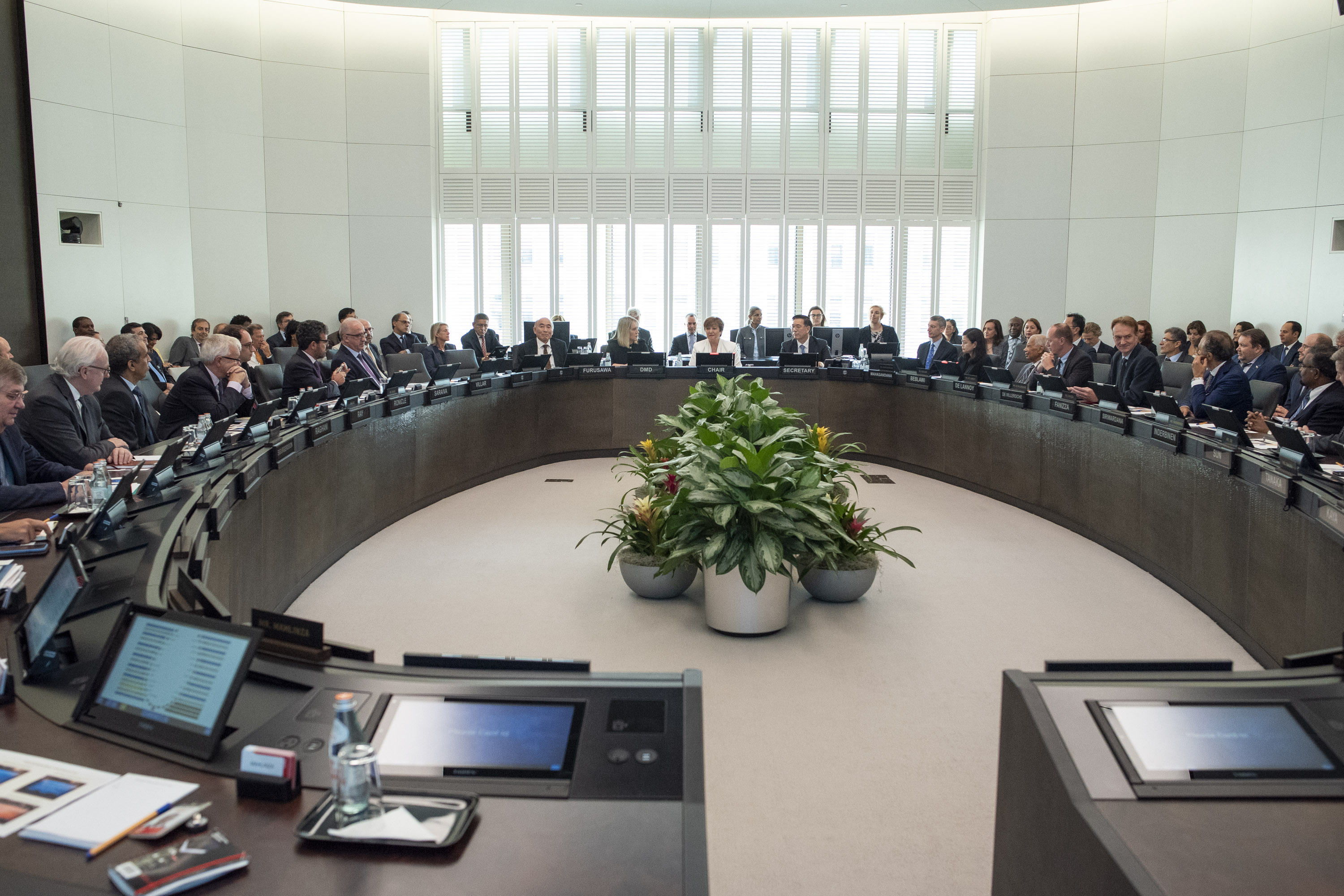
Policy assessment and recommendations (from Mr. Mitsuhiro Furusawa, Deputy Managing Director and Acting Chair)
- Fiscal policy
- Temporarily looser fiscal stance in 2021-2022 is appropriate given the health emergency and reconstruction needs.
- Further advancing procurement and electricity sector reforms, together with the revenue mobilization agenda, will be key to preserve gains.
- Authorities’ commitment to fiscal prudence over the medium term is crucial to anchor debt sustainability.
- Monetary and exchange rate policy
- Monetary policy accommodation remains appropriate in the current conjuncture.
- Authorities should continue efforts to strengthen the monetary policy framework.
- Continue the transition towards a more flexible exchange rate regime to help anchor price stability and safeguard international reserves.
- Structural and governance reforms
- Sustained efforts and steadfast implementation of structural reforms, especially in the governance and financial management of the electricity sector (ENEE), are urgently needed.
- Expeditiously improving governance in ENEE and strengthening its financial situation is key for fiscal sustainability and improving the business environment.
- Restarting the loss reduction strategy and containing the recurrence of arrears should be focal points.
- Financial sector stability
- Continued vigilance, together with prudent provision of liquidity and support for credit growth, will bolster financial stability.
- The new requirement for supervised institutions to establish equity reserves will help build buffers.
- Authorities continue to enhance crisis preparedness and stand ready to act as needed.
- Anti-corruption and public-sector governance
- Continued institutional strengthening is essential to step up the fight against corruption.
- Authorities have aligned public officials’ asset declarations with international standards.
- Authorities are finalizing the completion of a comprehensive beneficial ownership registry.
- Implementing the new procurement portal and streamlining administrative procedures are important next steps.
- Climate and resilience
- Expanding investments in climate-resilient infrastructure will be key to sustainable development given Honduras’ vulnerability to climate shocks.
- Political economy
- Engaging Congress for a swift passage of the draft laws submitted during the program will help anchor policy continuity.
International Monetary Fund. Press Release No. 21/262, September 13, 2021.